Don’t Hold Tinubu Responsible For Nigeria’s Problems — Wike
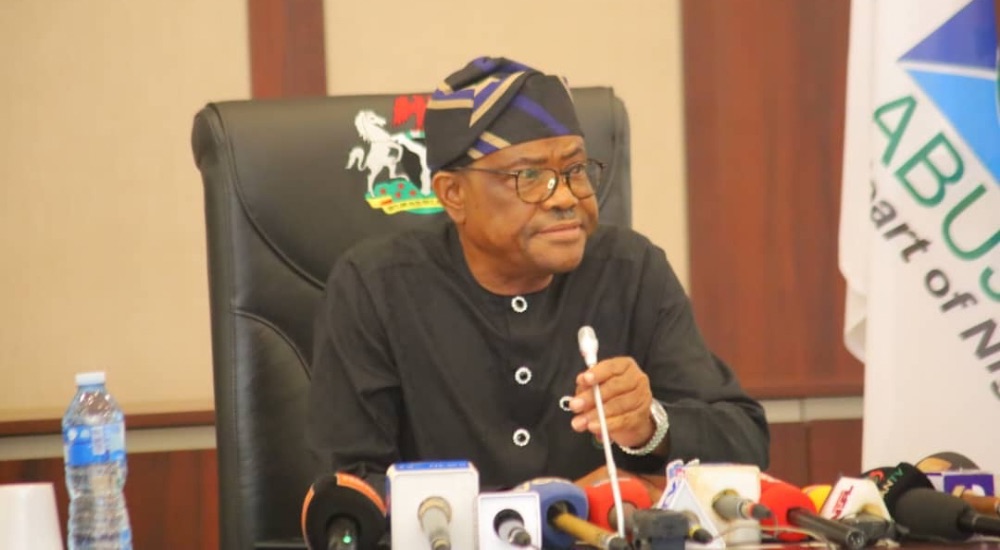
Minister of the federal capital territory (FCT), Nyesom Wike, has attributed Nigeria’s persistent development challenges to a “chronic failure of leadership” rather than shortages of resources or ideas.
In a lecture delivered at the University of Abuja’s faculty of social sciences on Tuesday, Wike singled out President Bola Tinubu as a rare example of visionary and courageous governance.
He said the nation’s struggles with basic infrastructure, healthcare, and institutions reflect the poor leadership.
“Nigeria’s most persistent obstacle to development is not the absence of ideas or resources, but the scourge of poor and mediocre leadership,” Wike said.
“Too often, leadership has emerged from self-serving arrangements detached from national vision, public interest, and developmental purpose,” he said.
Advertisement
He contrasted this historical pattern with Tinubu’s approach, praising the president’s long track record in democratic activism and his Lagos governorship achievements in revenue generation, infrastructure, and reforms.
He cited Tinubu’s immediate removal of the fuel subsidy upon taking office as proof of “uncommon resolve” and political courage, a decision he said previous administrations avoided despite its acknowledged economic harm.
“While the reform has generated short term pains and resistance, it has also freed resources for subnational development, halted the spiral of unsustainable debt, and initiated the difficult process of restoring market discipline to the energy sector,” he said.
The FCT minister pointed to Tinubu’s broader initiatives, including security reforms, increased military funding, and devolution through zonal commissions, as steps to correct structural imbalances and rebuild state capacity.
Wike said even critics acknowledge visible progress brought about by Tinubu’s leadership.
Advertisement
“Even the sternest critic of President Bola Ahmed Tinubu will concede that Nigeria is witnessing tangible improvement in infrastructure,” he said.
“His Renewed Hope Agenda is more than a slogan; it represents a deliberate reordering of national priorities toward sustainable development.
“Without infrastructure, development stalls; with it, progress becomes not only possible but inevitable,” the minister said.
Wike also said his lecture examined the relationship between political leadership and infrastructure delivery, arguing that democracy must be redefined beyond elections and rhetoric.
“Nigeria stands at a critical juncture where democracy must be re-examined not as a ritual, but as a responsibility; not as a slogan, but as a living system that must deliver tangible value to the people,” he said.