
How Africa-Caribbean Cooperation Will Create New Opportunities For Nigerians
For centuries, the Atlantic Ocean symbolised separation for Africans and people of African descent in the Caribbean. It carried millions into slavery, disconnected families and cultures, and created economic systems that enriched others while leaving Africa and the Caribbean struggling with underdevelopment, dependency and fractured identities.
Leaders on both sides of the Atlantic are attempting to redefine that history. Increasingly, the conversation is no longer only about culture, ancestry and historical justice. It is also about economics — trade, investment, tourism, education, innovation and market access.
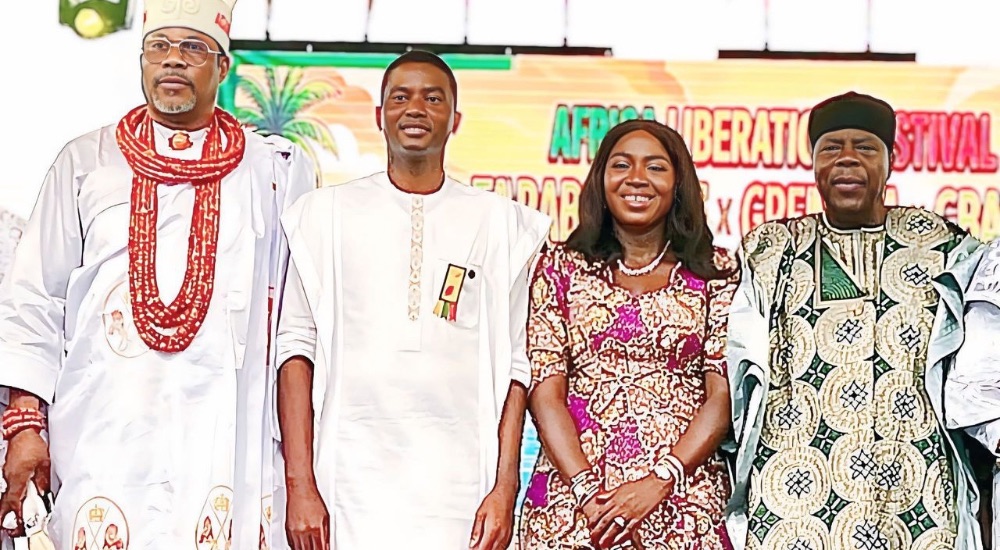
That vision came into sharp focus during the African Liberation Day celebration in Grenada, where political leaders, diaspora groups and African representatives made a passionate case for stronger Africa-Caribbean cooperation.
Speaking at the event held under the theme, “African Rooted, Diaspora Rising, Identity Reclaiming,” Prime Minister of Grenada, Dickon Mitchell, argued that Africa and the Caribbean must move beyond symbolic connections into practical partnerships capable of transforming both regions economically and politically.
“We are descendants of Africa and we must reclaim that,” Mitchell declared before a gathering that included Nigerians living in Grenada, Caribbean officials and traditional rulers from Nigeria’s Niger Delta region.
For the Grenadian leader, reconnecting with Africa is not merely emotional or historical. It is strategic.
Advertisement
The economic relationship between Africa and the Caribbean remains surprisingly small despite deep cultural and historical links. Trade volumes between both regions are limited, direct air connectivity is weak, and investment flows remain far below their potential.
Yet both regions share many similarities. They possess youthful populations, rich cultural industries, expanding digital economies and vast untapped tourism potential. They also face comparable challenges, vulnerability to global economic shocks, dependence on foreign imports, debt pressures and limited influence in international economic systems dominated by larger powers.
Mitchell believes those realities should encourage collaboration rather than isolation.
“The future of Africa and the Caribbean must be built collectively through deeper economic partnerships, cultural exchange and investment opportunities,” he said.
According to him, Africa and the Caribbean can create opportunities for businesses and innovation by expanding trade and investment ties across sectors ranging from tourism and agriculture to creative industries and technology.
Advertisement
For Grenada, a small island nation heavily reliant on tourism and services, stronger ties with Africa could open access to one of the world’s fastest-growing consumer markets. For African countries, the Caribbean offers strategic diplomatic partnerships, tourism networks and diaspora connections that can strengthen global influence.
Mitchell noted that although Grenada is small geographically, it does not see itself as insignificant within the global African family.
“Though Grenada may be small in size, we are not small in identity, courage and commitment to building a modern nation with Africa,” he stated.
One of the clearest examples of growing Africa-Caribbean cooperation is the increasing presence of Nigerians across Caribbean nations, including Grenada.
At the event, Mitchell openly acknowledged the contributions Nigerians are making to the country’s economy and social life.
“We value your contribution to our national life and this gathering is testimony to the role that Nigerians play in the economy of Grenada,” he said.
Advertisement
That recognition reflects a broader trend. Across the Caribbean, African professionals, entrepreneurs, academics and creatives are gradually building bridges between both regions.
In sectors such as education, healthcare, entertainment, hospitality and small business development, Africans in the diaspora increasingly serve as connectors between markets that historically had little structured engagement.
Guest speaker and President of the Nigerian Community in Grenada, Dr. Steven Olaoluwa Onigbinde, described identity reclamation as more than cultural pride. According to him, it is also about economic confidence and intellectual independence.
“The ability to hold your head high irrespective of where you find yourself, the ability to tell your story with the balance of history, is identity reclaiming,” he said.
He argued that Africans globally must stop depending on others to define their value or tell their stories.
“It is our responsibility to tell our own story,” he added.
That philosophy increasingly aligns with economic realities. African and Caribbean nations are beginning to recognise that closer cooperation could reduce dependence on traditional Western markets while creating new south-south trade opportunities.
Experts say there are enormous opportunities for Africa-Caribbean trade if both regions can overcome structural barriers.
Agriculture is one such area. Many Caribbean nations import large volumes of food products annually, while African countries possess vast agricultural capacity. Improved shipping arrangements and trade agreements could open new export opportunities for African producers.
Tourism is another major area of potential. Africa’s tourism industry continues to expand, while Caribbean countries possess globally recognised expertise in hospitality and destination branding. Joint tourism packages, cultural festivals and exchange programmes could benefit both regions.
The creative economy also presents enormous possibilities. African music, film and fashion are already enjoying global popularity, while Caribbean cultural products such as reggae, calypso and carnival remain internationally influential. Closer collaboration could create powerful entertainment and media markets.
Grenada’s Minister of Tourism, Creative Economy and Culture, Senator Adrian Thomas, emphasised that reconnecting with Africa must involve practical cooperation rather than rhetoric.
“Africa and Grenada can no longer sit idle and beg others to solve their problems,” he said.
“We cannot continue to complain about the chains while refusing to break them.”
Thomas argued that Africa and the Caribbean possess enough cultural strength, human capital and entrepreneurial energy to build independent economic networks capable of generating prosperity for their people.
“We say to Africa: get up, organise, build,” he declared.
African Liberation Day itself carries deep historical significance. It commemorates the establishment of the Organisation of African Unity, now the African Union, in Addis Ababa on May 25, 1963.
But speakers at the Grenada event insisted that liberation today must extend beyond political independence.
For Mitchell, real liberation also means freedom from economic exclusion, weak connectivity and psychological distance between Africans and the diaspora.
“We long for the day our brothers and sisters will visit regularly without feeling that Africa is distant or unreachable,” he said.
That challenge remains real. Travel between Africa and the Caribbean is still difficult and expensive, with limited direct flights and complicated visa processes often discouraging movement between both regions.
Yet advocates of Africa-Caribbean cooperation believe those barriers can gradually be dismantled through political will and sustained engagement.
Founder of the Esther Matthew Tonlagha Foundation, Esther Tonlagha, said the future of leadership must be measured by impact, inclusion and sustainability.
“At EMT Foundation, we have consistently prioritised three pillars: empowerment, access and sustainability,” she said.
According to her, stronger collaboration in trade, education and investment can help create new opportunities for citizens on both sides of the Atlantic.
“As Africans, we are first of all brothers irrespective of the part of the world we find ourselves. We must remain committed to building a united front,” she added.
Her comments reflect a growing movement among diaspora groups seeking stronger institutional ties between African and Caribbean countries.
She added, “For the enlightenment of those who may not be familiar with the purpose of this epochal occasion, let me clarify that the African Liberation Day (ALD) is an annual global observance held on May 25 every year to commemorate the founding of the Organization of African Unity (OAU) in 1963.
“The ALD celebrates the continent’s independence from colonial rule and promotes Pan-African unity, cultural reclamation, and the ongoing fight for economic and social justice
“The theme of this year’s event, attests to the ever-resilient spirit of millions of Africans across the world, as they have consistently demonstrated over the past centuries, for a better world in which equality, fairness and justice are prioritized as shared values in our relationship as human beings worldwide.
“I feel very happy to say here that at EMT Foundation, these values align with our three pillars of empowerment, access and sustainability of the poor and needy in the society.
“Over the past years, through its Empowerment initiative, the Foundation ensures that people are equipped with the tools and confidence to lead, while Access ensures that opportunities for the needy are not restricted by circumstance. Also, the Foundation’s Sustainability goal ensures that the impact it is creating today will endure for the benefits of many generations in the years ahead.
“So, we are happy to be part of this year’s ALD and will be ready to collaborate with all promoters of our cherished African heritage of fairness and justice in order to transform the global community and make it a better world for all.”
For decades, discussions about Africa and the Caribbean largely revolved around historical remembrance and cultural solidarity. What appears to be emerging now is a more strategic conversation centred on economics and development.
That shift is partly driven by changing global realities. Africa’s population is projected to become one of the largest and youngest in the world over the coming decades. Caribbean nations, meanwhile, continue searching for ways to diversify economies vulnerable to tourism shocks, climate change and global financial instability.
Africa offers scale, natural resources and expanding markets. The Caribbean offers financial services, tourism expertise, diplomatic networks and strong diaspora influence in North America and Europe.
Mitchell repeatedly stressed that rebuilding the Africa-Caribbean relationship will require patience and deliberate effort.
“One step at a time, we must build the bridge between Africa and the Caribbean, one trade partnership at a time, one investment opportunity at a time, one diplomatic initiative at a time,” he said.
The symbolism of the event itself reinforced that message. Cultural performances from Taraba State performers and groups from the Gbaramatu Kingdom highlighted the enduring links between African traditions and Caribbean identity.
Traditional rulers from Nigeria’s Niger Delta, led by the Pere of Gbaramatu Kingdom, also attended the gathering alongside community leaders and diaspora representatives.
For many participants, the gathering represented more than a celebration. It was a statement that Africa and the Caribbean are beginning to see each other differently not simply as historical relatives, but as potential economic partners.
And in an increasingly uncertain global economy, that partnership may become more important than ever.
END