
How Soaring Building Materials Costs Are Crushing Nigeria’s Homeownership Hopes
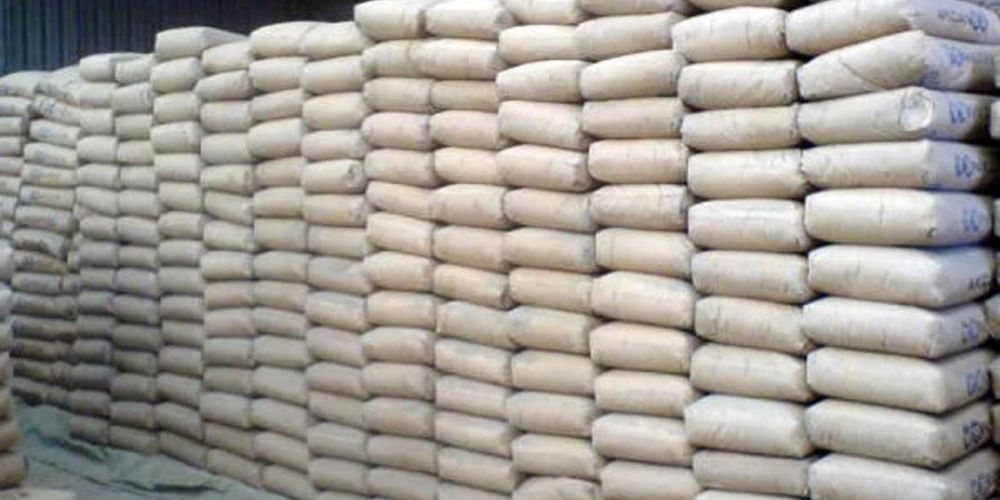
Rising costs of building materials, particularly cement, are rapidly eroding the dream of homeownership for millions of Nigerians, turning what was once a gradual aspiration into an increasingly unattainable goal, writes Chris UGWU.
For fifteen years, John Balogun has worked as administrative staff in one of public firms in Lagos, he has been punctual and diligent in the long corridors of offices where files gather dust faster than decisions are made.
His salary arrives in measured drops, never enough, always late. Yet he saved quietly, and consistently.
“I denied myself everything,” he told THE WHISTLER in a chat, his voice low but steady. “No new clothes unless it was necessary. No celebrations. Even family needs, I would say, let us wait.”
What he was waiting for was a modest dream: a three-bedroom bungalow on a small piece of land at Mowe town in Ogun State close to Lagos. Nothing extravagant. Just enough space for his wife, his children, and the dignity of ownership.
According to him, in 2012, he bought the land and in 2014, he began to gather materials, blocks first, then rods, then sand. He stacked them carefully, like hope made visible. At the time, a bag of cement was within reach, N2000.
Advertisement
Then the prices began to climb, at first, it was a slow rise, the kind people complain about but adjust to. Then it became something else, sharp and relentless. Cement, the very backbone of his dream, drifted further and further out of his grasp.
“Each time I saved enough to buy ten bags,” he recalls, “the price would increase, and I could only afford five”
“The foundation was laid eventually, after years of piecing resources together. It stands there now, solid but incomplete, a concrete outline of what could have been. No walls. No roof. Just a silent testimony to effort interrupted and grass has begun to grow within the foundation lines,” he said.
According to him, his children are growing. The eldest is already in the university. The family still lives in a rented apartment where the roof leaks during heavy rain. Every year, rent increases. Every year, the dream of leaving becomes more distant.
Balogun’s experience is not isolated.
Advertisement
A lecturer at one of the private universities in Ogun State, Adewale Johnson also told THE WHISTLER on further findings that he had spent years trimming his life down to essentials, saving small portions of his salary with a singular dream to build a modest home of his own.
“I have been saving for years,” he said quietly, his voice carrying the weight of repetition. “But every time I get closer, the cost of cement goes up again”
According to him, his unfinished foundation sits on a small plot of land at Ota in Ogun State, Sand has gathered in the corners. Weeds have begun to claim what was meant to be a living room due to his inability to continue the building following increasing cost of cement in the country.
A Widening National Crisis
Across Nigeria, Balogun and Johnson’s story is no longer unusual. What was once a distant economic concern, fluctuating construction costs, has become a deeply personal crisis.
According to findings by THE WHISTLER, the latest data presented by the National Housing Data Technical Committee and reported by the Federal Ministry of Housing and Urban Development in January 2026, Nigeria’s housing landscape is characterized by a high, yet redefined, deficit rather than a consolidated high homeownership rate.
Advertisement
The Technical Committee, led by Dr. Taofeek Olatinwo, officially pegged the national housing deficit at 14.925 million units for 2025.
Beyond the 14.9million unit gap, the committee noted that approximately 15.2 million housing units across Nigeria are structurally inadequate, often lacking basic services, safety, or durability, as reported in late 2025.
On homeownership, while the committee’s focus was on defining the deficit, previous studies have estimated Nigeria’s homeownership rate at approximately 25 per cent, with over 80 per cent of urban residents renting in some estimations.
The data was derived from a refined analysis of persons-per-room ratios and a National Housing Data Programme in collaboration with the World Bank.
The data showed that rapid urban growth and population increases are primary drivers of the deficit, alongside a slow pace of construction, limited long-term housing finance, and land title constraints.
Also, a recent study by NOI Polls found that 51 per cent of Nigerians live in rented accommodation, with many considering mortgage financing as an option for home ownership.
However, concerns about stable income and lack of data on housing prices are major barriers to homeownership. The Nigerian government was urged to develop low-cost housing across the country, rather than relying solely on private sector solutions.
Results from a study by NOI Polls show that 51 per cent of Nigerians currently live in rented accommodation, 40 per cent of which are paying between N20,000 and N100,000 yearly (across Nigeria). Only 31 per cent of Nigerians surveyed said they lived in their ‘personal house’ which they may have built, purchased or inherited.
Cement, and other essential building materials which are the backbone of Nigeria’s building industry, has surged in price over recent years, driven by inflation, currency instability, energy costs, and supply chain pressures. For developers, it squeezes margins. For ordinary citizens, it crushes dreams. Families delay building plans indefinitely, watching savings lose value in real time.
The duo is among millions of Nigerians whose hope of homeownership has dashed due to skyrocketing price of cement and other essential building materials across the country.
Their frustration reflects a growing national sentiment, the rising cost of construction is no longer just a business concern but a deeply personal crisis affecting everyday Nigerians.
Housing experts warn that Nigeria’s already severe housing deficit, estimated in the millions, is quietly widening. The implications stretch beyond shelter. Homeownership, long seen as a cornerstone of financial security, is slipping further out of reach for a generation already grappling with rising living costs and limited income growth.
Investigation by THE WHISTLER reveal a troubling pattern. Prices fluctuate wildly, often increasing without warning. Distributors blame manufacturers. Manufacturers point to production costs, energy prices, and logistics. Government statements come and go, promising intervention, stability, relief but no solution yet.
Available industry data and market observations show that the price of a 50kg bag of cement, which sold for about N8,000 in the first quarter of 2025, rose to between N10,000 and N11,000 at the beginning of 2026. The price has continued to climb and is now selling for between N11,500 and N15,000 in several parts of the country.
Similarly, within the last quarter, steel prices have gone up 20 per cent, sharp sand, 25 per cent, and wood/granite prices have also increased, but at a slower rate.
Also, 16 inches rods that were sold at N7,000 ten years ago has risen to N17,000 to N19,000 per rods depending on locations.
A sharp increase that is quietly but decisively closing the window of homeownership for low and middle-income earners. What was once a gradual climb onto the property ladder has now become for many an impossible leap.
Industry watchers warn that the current cement price surge could deepen the crisis, effectively locking a new generation out of property ownership.
Experts noted that cement prices play a critical role in determining the final cost of homes. As prices rise, developers pass on the added costs, making even modest housing units increasingly expensive.
A Housing Market Under Strain
In cities like Lagos, Enugu, Port Harcourt, Kano, Abuja, among other cities across the country, the price of newly built homes has surged in tandem with construction costs, placing them far beyond the reach of average Nigerians.
This has left the Nigeria’s housing crisis worsening as rental costs continue to surge across major cities, with experts attributing the trend to deep-rooted structural and macroeconomic challenges rather than arbitrary decisions by landlords.
Further findings by THE WHISTLER, indicate that rents have risen by between 50 and 200 per cent in the past two years, with some locations in Lagos, Abuja and Ogun State recording spikes of up to 300–400 per cent.
The development has pushed Nigeria’s rent-to-income ratio to about 70 per cent, far above the United Nations’ recommended 30 percent threshold.
These increases are already having impact on asset prices, especially urban rents, which have gone up over 100 per cent. “The impact of the surging input prices is evident on housing and rent prices across Nigerian cities,” a Professor and Founding Director of Centre for Housing and Sustainable Development (CHSD) at the University of Lagos, Timothy Nubi said.
Nubi cited Abuja where, he said, annual rent for a self-contained apartment now stands at between N800,000 and N1.5m, up from N400,000 per annum.
“In Lagos, annual rent for a self-contained apartment is N800,000 to N1m, up from N400,000, while Kano and Port Harcourt are also seeing significant increases,” he added.
A real estate expert, Mr. James Oyedele in a chat with our correspondent argued that inflation and the time value of money are key drivers of rent increases. According to him, landlords who fail to adjust rents in line with inflation effectively incur losses in real terms.
“A landlord who collected N1.5m two years ago and maintains the same rent today has effectively lost value due to inflation, which I estimate at about 50 per cent depreciation,” he said, noting that the issue reflects broader macroeconomic pressures.
On policy responses, experts expressed scepticism over rent control measures implemented by some state governments, including Lagos, Abuja, Enugu and other major cities, citing weak enforcement and structural misalignment.
A real estate Lawyer, Barrister Dele Johnson maintained that rent control policies have historically failed to address the root causes of housing shortages. He pointed instead to rising fuel prices, exchange rate depreciation, and mass displacement caused by insecurity as key drivers of urban population growth and housing demand.
“The economic law of demand and supply remains the dominant force. The solution is to build more houses to meet growing urban demand,” he said.
Johnson added that housing remains a critical indicator of economic performance, influencing employment, investment, and consumer confidence. He noted that increased housing investment can stimulate broader economic activity through demand for construction materials, labour, and financial services.
Analysts also linked rising rents to escalating construction costs, driven by inflation, currency depreciation, and high interest rates, which have made property development more expensive and homeownership less attainable.
A recent report by Fortren & Company ranked Lagos among Africa’s most expensive rental markets, with annual rents for luxury two-bedroom apartments in prime locations such as Ikoyi, Banana Island, and Victoria Island averaging about $19,379 (approximately N26.8m).
Experts Speak On Market Dynamics
Vice Chairman of Property agents at Ogba, Lagos, Mr. Dozie Ebikam in a chat with our correspondents explained that explained that the situation reflects basic economic principles. According to him, rising input costs inevitably translate into higher property prices.
“If your input costs double, your selling price must adjust. Unfortunately, incomes are not rising at the same pace,” Ebikam said.
He added that the widening gap between wages and housing costs is trapping many Nigerians in long-term rental cycles, with limited prospects for ownership. He also warned that affordability pressures may push individuals toward unsafe construction practices, increasing the risk of structural failures.
Similarly, real estate agent Wale Adeyemi emphasized the long-term implications of the trend. He cautioned that without urgent intervention, homeownership could become an exception rather than the norm in Nigeria.
From a development perspective, former President of the Real Estate Developers Association of Nigeria (REDAN), Alhaji Aliyu Oroji, noted that rising construction costs are forcing developers to increase prices, ultimately transferring the burden to buyers.
“We are creating a situation where only a small fraction of Nigerians can afford to own homes,” Oroji stated.
Government officials have acknowledged the seriousness of the situation.
The Minister of Housing and Urban Development, Ahmed Dangiwa, described the rising cost of cement as troubling, particularly given that a significant proportion of its raw materials are locally sourced.
Stakeholders, including Alhaji Aliyu Wamakko, former National President and Board of Trustees member of REDAN, have called for more proactive government intervention.
Wamakko emphasized the need for sustained engagement between the government and cement manufacturers to stabilize prices. He also pointed to increasing demand, driven partly by infrastructure development, as a contributing factor.
“As long as demand exceeds supply, prices will continue to rise,” he explained, adding that the lack of effective price regulation has worsened the situation.
A building developer, Mr. Sesan Jimoh blamed the development on monopoly being enjoyed by the few manufactures who controls more than 90 per cent of the market.
According to him the dominance of the few manufacturers limits competition and keeps prices high.
He noted that the implications are stark for aspiring homeowners. “When a few companies control the market, there is little incentive to lower prices. And when prices remain high, the people at the bottom of the ladder are the first to be excluded.”
Findings by THE WHISTLER showed that these Nigeria’s leading cement manufacturers — Dangote Cement Plc, BUA Cement Plc, and Lafarge Africa Plc, saw their combined cost of sales grew moderately to N2.658trn in 2025, representing a 3.4 per cent rise from N2.571trn in the same period of 2024.
This surge, driven by persistent inflation, naira depreciation, and macroeconomic headwinds, eroded profit margins despite record-breaking revenues across the sector.
Data compiled from the firms’ audited financial statements showed that cost of sales accounted for 40.57 per cent of the industry’s total FY 2025 revenue of 6.551trn, compared with 49.57 per cent of N5.153trn recorded a year earlier.
The rising costs were attributed to higher prices for imported raw materials, energy inputs, and transportation, most of which are denominated in foreign currencies. Broader macroeconomic challenges, including the removal of fuel subsidies and the unification of Nigeria’s foreign exchange market, compounded the pressure.
Despite these headwinds, the three industry leaders posted robust topline growth and impressive profit figures, underscoring their pricing power, operational resilience, and efficiency gains.
Manufacturers, however, maintain that the rising prices reflect broader economic realities.
The Cement Producers Association of Nigeria attributes the increase to high energy costs, particularly diesel, as well as logistics and maintenance expenses.
Further investigation revealed that the cost of producing a 50kg bag of Dangote cement in Nigeria is high, driven by significant energy and foreign exchange pressures, although exact, real-time production costs per unit are proprietary.
According to public disclosures and financial reports, in April 2026, 52 per cent of the price of a bag of cement goes toward taxes (VAT, Corporate Tax, etc.), implying that if a bag retails at N12,000, roughly N6,240 is attributable to government taxes.
Other key cost drivers include energy costs such as fuel and power consumption which increased by over 70 per cent in 2024–2025, heavily impacting production costs.
Foreign Exchange & Imported Inputs following the devaluation of the Nigerian Naira has significantly raised the cost of imported machinery parts and some raw materials, despite local limestone availability.
Transportation/Logistics resulting to high costs of Automotive Gas Oil (AGO) for hauling materials and finished products also adding a substantial premium to the final price.
THE WHISTLER investigation also uncoverd corruption, racketeering, and artificial price manipulation among cement dealers and distributors and retailers in Nigeria. While manufacturers (such as Dangote and BUA) set ex-factory prices, findings shows that middle-level distributors often create artificial scarcity and inflate prices.
A retailer at Ikeja area of Lagos, who identified himself as Chidi Eze, highlighted significant corruption, hoarding, and price manipulation among cement dealers and distributors.
Speaking to THE WHISTLER, he blamed the increase on the distributors who create artificial scarcity to make huge profits. Despite high production capacity, these activities have kept consumer prices for a bag of cement exceptionally high.
“These people give us cement at high prices. When you ask them, they say it is no longer easy to get them. They say costs have increased, but I do not think so. They only pack them in their warehouses and create scarcity.
He told our correspondent that, while there are indications that prices might drop below N10,000, traders remain cautious, observing the market to assess the situation.
“The challenges in price regulation are attributed not to manufacturers but to wholesalers and retailers, who play a pivotal role in setting prices for end-users,” the dealer said.
He explained, however, that disparities in price arise from differing procurement methods, with some sourcing directly from manufacturers and others through dealers. He added that registering with manufacturers, such as Dangote, for regular truckloads of cement incurs significant costs, contributing to pricing discrepancies.
This explains why, according to Chidi, despite government pronouncements, prices have remained high because traders largely determine what is paid with some yet to fully comply with directives given to manufacturers to reduce prices.
Leading cement brands such as Dangote, Lafarge, and BUA, are all retailing cement bags at nearly similar rates, with each bag weighing 50kg.
It was gathered that, purchasing cement wholesale, equivalent to a trailer-load, presents a more cost-effective option, with all cement brands offering wholesale options.
However, a distributor in Ibafo, Ogun State who preferred to remain anonymous, told THE WHISTLER that the question regarding the high prices, should be directed to manufacturers, adding that they incur higher costs in transportation and miscellaneous.
A cement dealer in Lagos, who did not want to be mentioned, told our correspondent that the occasional scarcity and price hike were not because the manufacturers were inflating prices but because it is costly to transport cement to the market.
“There are no good roads and no rail lines. Poor road network also affects other commodities including farm produce. So, the price of cement is high because of poor road network”, he stressed
The Chairman of BUA Cement (Abdulsamad Rabiu) had also disclosed last year that in previous attempts to lower prices, the company sold to dealers at a reduced rate, the dealers continued to sell to consumers at high prices making over 100 per bag profit per bag.
The past national president and member of the Board of Trustees of the Real Estate Developers Association of Nigeria (REDAN), Aliyu Wamakko, blamed the development on lack of effective price control by the federal government, demand, and lack of engagement between the FG and cement manufacturers.
As a solution, he urged that the federal government should engage cement manufacturers in Nigeria as it did in March 2025 to reduce the price of the product and soften the economic hardship on Nigerians nationwide.
“The usage of cement in Nigeria is more now compared to before. This is because there is more demand in the market. The basic economics showed that as long as demand exceeds supply, the price of the product is bound to rise. The challenge is that cement is supposed to be cheaper, as 70 per cent of its raw materials are found in Nigeria.
“The other issue is that the government has started using cement to do roads, further worsening the demand challenge. Cement constitutes the primary target of any building as far as Nigeria is concerned. Two, there is no price control imposed by the government despite the Renewed Hope Agenda in housing.
“There is a need for the government to engage cement manufacturers as was done the other time when it was brought down to N7,000 per bag. Due to non-engagement by the government, Dangote Cement, BUA, Lafarge, and other products are now sold around N11,000 to 12,000 per 50-kg in other places,” he said.
He noted that this is the reason for the high cost of house rent and properties. It is simple arithmetic, adding that as long as the cost of building materials is high, the cost of rent and properties will remain on the high side.