How The Gulf Conflict Will Affect Nigeria — UNIABUJA Professor
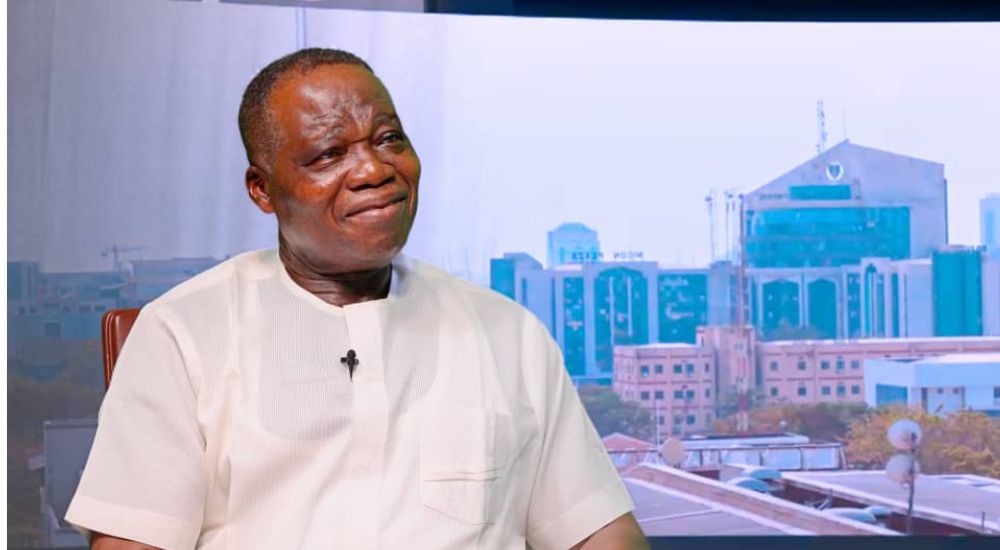
The ongoing exchange of hostilities by Israel, the United States, and Iran has escalated significantly, with far-reaching economic and geopolitical consequences. In Nigeria, prices of fuel have shot up, raising concerns that it could lead to inflation, with international relations and economic experts providing their views on what Nigeria can do to navigate the crisis. In this interview with Isuma Mark of THE WHISTLER, former Deputy Vice Chancellor, Academics from the University of Abuja, Professor Gboyega Kolawole addresses key concerns and what Nigeria can do.
Excerpts…
What should be the immediate response of the Nigerian government to this crisis?
Nigeria is a secular state, and its foreign policy is non-alignment. So, there’s very little it can do by way of taking sides with any of the warring factions.
However, this Israel/US and Iran war will have some economic impact. In fact, petrol is now over $70 per litre. You can see the ripple effect already coming. So, the sooner it is resolved, the better for our economy, too.
Advertisement
Does Nigeria possess the economic resilience and institutional capacity to absorb the potential shocks?
Nigeria is an oil-producing state. While it has no direct connection with what is going on over there in the Middle East, our economy is less organised. That is the problem, less organised. Then the shock absorber that we think we have can be very weak.
That’s why you see the price of oil is already biting. It is because we are not well organised. If not, an oil-producing state does not have any problem with anything that is happening at the international level.
It should be to our own advantage, because it is higher now. It is close to $79.00 per barrel at the moment, from $71.00 to $72.00.
Does Nigeria have this capacity to absorb this shock in real terms?
Advertisement
In any other realm where you have an oil-producing state facing this kind of thing, you can say there’s no need to worry. You are producing, and you can fix your price locally.
Now, if you talk about the international level, where, of course, demand and supply are tied to these forces at work, it’s even to our advantage. Some days back, it was 71. This morning, it was 79, so it’s to our own advantage. But we are suffering locally because we are not well organised.
What foreign policy framework or strategic orientation is guiding the government’s approach to this situation?
The non-alignment has been working for us because you are free to associate with any country. If it’s a socialist country, you know the axis. If it’s capitalist, essentially, you know the axis. The non-alignment thing enables you to associate with any state at your will and to your own advantage. Nobody has called for a review of our foreign policy, because it’s working.
Do the protests occurring in parts of the country in support of Iran suggest a lapse in internal security or governance?
Well, the Shiites, of course, are a minority Muslim group all over the world. It’s just that Iran happens to be the centre of Shiites. The majority of Muslims are Sunni. That’s why it appears the Arab states are lukewarm to what is going on in Iran. Yes, because Iran is Shiite. Most Arab states are Sunni.
Advertisement
The Shiite group, of course, is associated with radical Islam. Arab states in the Middle East are tired of radical Islam. So, what is going on now, if it is resolved, will make Iran become a less Islamic state. There will be less radical Islam, which could lead to relative peace in the Middle East.
What should be the government’s immediate reaction to this Shiite protest now that it’s still fresh?
The government has coped with it many times before. There is this regular movement by the Shiites on a festival basis, they are monitored.
If it doesn’t go violent, they allow them, because they have the freedom of association. But if it goes violent, they have a way of checking it. So I don’t think there’s any cause for alarm.
Does this war send a broader geopolitical signal to Nigeria’s strategic posturing or alliance to force Nigeria to align with the US?
Whatever the situation is, it is wrong to attack a sovereign nation. Go to Ukraine, Putin’s operation has lasted over three years. This is the fourth year. A sovereign state has been attacked, and you want to support it? It could be you next time. However, to be very objective, too, you ask the question, why would the United States focus on Iran?
Considering the US strikes in some part of Nigeria, which led to insinuation that President Trump was targeting President Tinubu’s administration, and the current war in the Middle East, is there a way Nigeria can navigate a way out and possibly be in the good books of the US?
I see these two situations as quite different. Trump has his own peculiarity as an individual. Yes, outlandish in claims, erratic in actions. That’s what likely caused the initial crisis in Nigeria.
His own opinion was that Christians were just being killed here and there based on information given by some people who knew their own interests. The reality is that terrorism does not distinguish between religions. Where they have been captured or perhaps brought down, those things you see around them don’t even point to any religion. Substance, drugs, and other things, condoms, etc. (the women carry them as they like). Where do you find that in the Quran?
So, terrorism is terrorism, and most of the time, it’s for profit wherever they carry out attacks. We’ve seen Muslims slaughtered in their mosque as early as 5 a.m. by these same people. But based on the wrong information given to him, he concluded, “Oh, Christians are being slaughtered in Nigeria. We are coming,” of course, to attack the place.
There was alternative information. They now realise that what is going on here, of course, is terrorism, banditry. The way they’re approaching it shows very clearly, of course, that the United States has accepted that there is no genocide in Nigeria.
Let’s look at the broader question of global power dynamics. Why does it often appear that might determines the outcomes of the international system? Because if you look at the Bakassi Peninsula question, Nigeria relinquished ownership of that territory because of the ICJ ruling.
Could Nigeria align with the US and reclaim it using this “might is right”?
The Nigerian Bakassi problem was even a conspiracy, to a very great extent, among our lawyers. The case was not well understood. That’s why we lost it. Those were perhaps revelations after the judgement. However, if you talk of might, what might can really solve it? What you are seeing in the Middle East is a pointer to what might can do. But is that the best way to resolve conflicts? The best way to resolve conflicts is a round table. You give and take. Everybody goes home with something. Then that conflict is settled forever. What you are seeing there will recur somewhere else, some day, because some people will feel hurt and they want to fight back.
The argument is that the US always gets whatever it wants. If Nigeria determines to get back the Bakassi Peninsula, should it align with the strategic interests of the US?
I would still say that this Bakassi thing should be left the way it is. Sometimes you want to be a benevolent brother to your sister-state. You have enough. If they don’t have, give them. Since that was an international ruling, leave it as it is. That’s my own way of seeing it.
Let me tell you, if you start to get back the Bakassi Peninsula, Russia is likely to support Cameroon. The Cold War is still there. Where the US will go is contrary to where Russia will go, forever and ever. The socialist, capitalist dichotomy, that is it. If you think you can be a predator to Cameroon, some countries will support them for the sake of influence.
So what would you suggest, looking at how the power equilibrium is going? Countries are arming themselves, trying to renew alliances, strengthening their military capacity, what should Nigeria do?
There’s this very strong defence industry coming up in Nigeria. There are a lot of innovations going on there. We may be a major player, eventually.
Economically, we’re a major player. We’ve played so many roles all over, so we are not an automatic big brother. Yes, but you can do better if you have what we call self-sustenance.
If you don’t need to depend on America for its jets to be able to fight Boko Haram and the rest, if you have your own innovations, you will depend less on them. And your surrounding countries will not depend on you, too. Yes, because it pays them to buy from you, because it’s cheaper. Yes, and they will align with you more. That is it. What I’ve seen there, the Middle East, they want peace, too. They want peace. The Abraham Accord, what is the meaning of it? It involves all the Arab states, including Sudan. Yes, so they want peace.
What do you think will be the implication for Nigeria as long as this war goes on?
First, if the war is resolved, especially in favour of the US/Israel, it will reduce radical Islam, obviously. Because if the regime changes in Iran, radical Islam will automatically diminish.
Do you think that will equally affect that radicalism in Nigeria?
It’s already diminished. Yes, it’s already diminished. Have we forgotten El-Zak-Zaki? In those days, even soldiers could not pass through their routes. On a good day, they would tell them to go back. That was the situation especially during Buhari’s government, and the government faced it headlong.
As Abacha said, if any insurgency lasts more than six months, politics has entered it. In other words, the government also has an interest in it. So, if you don’t have interest in it, there’s no way a militia group can overcome a nation, if there’s no conspiracy. So, if it goes on, the price of things is definitely going to rise because of the oil price in the international community.
Will you suggest the government should prepare to give out some handouts to Nigerians if the war makes the economic crisis worsen?
I’m not as pessimistic as that. The reason is this. If you monitor what is going on, of course, in Iran right now, the probability of regime change is very clear. Pahlavi is being prepared to come back and lead the opposition there. What it means is that the IRCG, the Ayatollah dynasty, or whatever you call it, will be no more. Before 1979, there used to be a very cordial relationship with Israel. In fact, Iran was the first country to congratulate Israel in 1948, when the state of Israel was established, the first Muslim-majority state.
There was a petrol pipeline between Israel and Iran at that time. But after that 1979 revolution, it collapsed. But that pipeline is still being used by Azerbaijan and Israel. That’s the pipeline linking the two countries. So, as I said, I’m not as pessimistic. If you talk about this six months ago, I would have told you it would be very gloomy. You don’t know the end of it. But as of this morning, what you can see, the extent to which they have even removed those killing them, you can see more than 40 of them have been killed. He, the man, the wife, even the successor, has been killed. So, if the regime change happens the way it has been predicted, I think it’s going to be a short thing. It may not have so much effect that would require giving handouts.
We used to buy petrol for 1,100 at one time, until it came to 700. But why I even said we were not organised is that, let me tell you, some people are saying that petrol shouldn’t cost more than 700 Naira. And I think that’s where the government should come in.
If there’s no conspiracy, if government people are also not interested in this petrol thing, there ought to be some intervention. Yes, you buy it for 900 today, and tomorrow it’s another thing. In a natural sense, it doesn’t happen in other places like that. Those are oil-producing states. That’s where, of course, the current administration should intervene.