
INTERVIEW: Obi, Kwankwaso’s Exit From ADC Will Be Victory For APC— Prof. Fagge
As the African Democratic Congress battles a succession of court disputes and an internal leadership crisis with barely days to go before a critical regulatory deadline, strong signals have emerged that two of its most prominent figures — Labour Party’s 2023 presidential candidate Peter Obi and former Kano Governor Rabiu Musa Kwankwaso — may be on their way out.
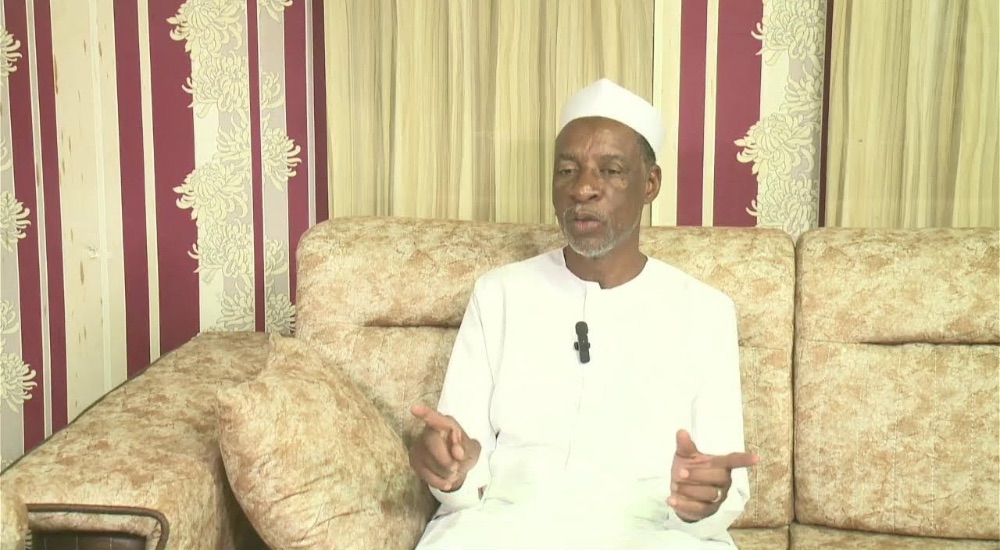
The potential exit of both men has raised fresh anxieties about the fate of opposition politics ahead of the 2027 general elections. Professor Kamil Sani Fagge, a political analyst, Bayero University Kano, speaks with THE WHISTLER on what it all means for Nigeria’s democratic future.
There is a view that the ADC was never really a serious political vehicle — that it was always a platform of convenience. Does the reported exit of Obi and Kwankwaso prove that?
ADC raised a lot of hope — for Nigerians and for politicians alike. There were genuine expectations that if the party’s ambitions materialised, it would provide a credible opposition to the ruling APC, especially given the calibre of politicians who moved into it. Despite the internal crises, which to a large extent have been fomented by the government and the ruling APC, I think there were still hopes that ADC could become a strong alternative opposition platform.
But what is happening now is that this hope is gradually being dashed in the minds of many Nigerians.
The outstanding court cases bedevilling the party, combined with the fact that we have barely seven or eight days before the deadline, are making people increasingly pessimistic. Some of the big names that people were counting on to unite within ADC have already left.
Advertisement
The Bauchi State governor, for example, was expected to join, but he went elsewhere. Now there are strong rumours that Obi and Kwankwaso are also on their way out. So yes, that view is not unfounded.
Who bears more responsibility for the unravelling of the alliance between Obi and Kwankwaso — the principals themselves, or the party structure that was supposed to hold them together?
I think it is primarily the principals themselves. What really motivated them to join ADC is the same thing that is motivating them to leave — personal interest. They are not concerned with principled politics. They are not concerned with any ideology. They are not concerned with any programme or ideals beyond their own personal interests.
That was what moved them into ADC, and that is what will move them out of it. Obi and Kwankwaso, like Atiku, like Amechi — they are all in it for their own personal interests. The party structure obviously has its own weaknesses, but you cannot separate the crisis from the motivations of the individuals involved.
What do you consider the most likely reasons driving this exit — the internal crisis within ADC, incompatible political ambitions, or pure 2027 strategic repositioning?
Advertisement
All three are connected, but the dominant thread running through all of them is personal interest and strategic calculation for 2027.
The internal crisis within ADC has provided a convenient cover, but the underlying driver is that each of these politicians is assessing where they can best advance their own 2027 agenda.
They are not asking what is good for the opposition, or what is good for Nigeria — they are asking what is good for themselves. That is the honest answer.
If both men exit, what are their realistic options? Can either remain a credible presidential contender without a major party structure?
It will be very difficult. Their movement out of ADC will, first of all, take a chunk of their followership with them — but into different directions, which means fragmentation. The more important consequence is that by leaving, they will have successfully divided the ranks of the opposition.
And a divided opposition cannot mount any serious challenge to the APC. Without a strong, united platform, the credibility of any presidential ambition is severely undermined.
Advertisement
People vote for parties, but they also vote for the sense that a candidate has the machinery and the coalition to govern. If you are moving from party to party in the months leading up to an election, that does not inspire confidence.
Does this development effectively kill any hope of a united opposition front against the APC in 2027?
It deals a very serious blow. The ruling APC has already secured enormous structural advantages.
They now have 32 governors on their side, and the majority of those are seeking a second term, so they will fight hard for both themselves and the presidency.
Look at INEC — there are strong indications that the current electoral commission is more aligned with the ruling party, and there are legitimate concerns about whether the judiciary, despite its recent ruling on ADC’s leadership, will remain a neutral arbiter. The National Assembly is, in practice, operating almost as an extension of the executive.
Add to that the incumbency advantage, the stranglehold over party primaries, and the sheer weight of money politics — no opposition party can match the APC naira for naira.
So when you then compound all of that with a divided opposition, the ruling party’s path to 2027 becomes extremely comfortable.
If you were advising either Obi or Kwankwaso right now, what would your single most important counsel be?
I would tell them to stop and think about the plight of ordinary Nigerians. Nigerians are suffering — and I use that word deliberately.
The ordinary man is carrying an impossible burden: insecurity, inflation, poverty, hunger. Nigeria is now regarded, by multiple indices, as one of the world’s poverty capitals.
Some estimates put the number of Nigerians living in multidimensional poverty at 70 to 80 percent of the population.
These are not just statistics — these are the people these politicians claim to represent. That suffering should have been the entire basis of any credible opposition agenda. But because the politicians are consumed by their own interests, these issues are being abandoned.
My counsel is simple: justice is the key to stability and peace in any society. Where you have poverty and hunger at this scale, you have a high-risk crisis waiting to happen.
These politicians owe it as a duty — not just to voters today, but to generations yet unborn — to leave behind a peaceful and functional Nigeria. Right now, they are doing the opposite.