
INTERVIEW: Why I Chose Nigeria Over The U.S – American Activist
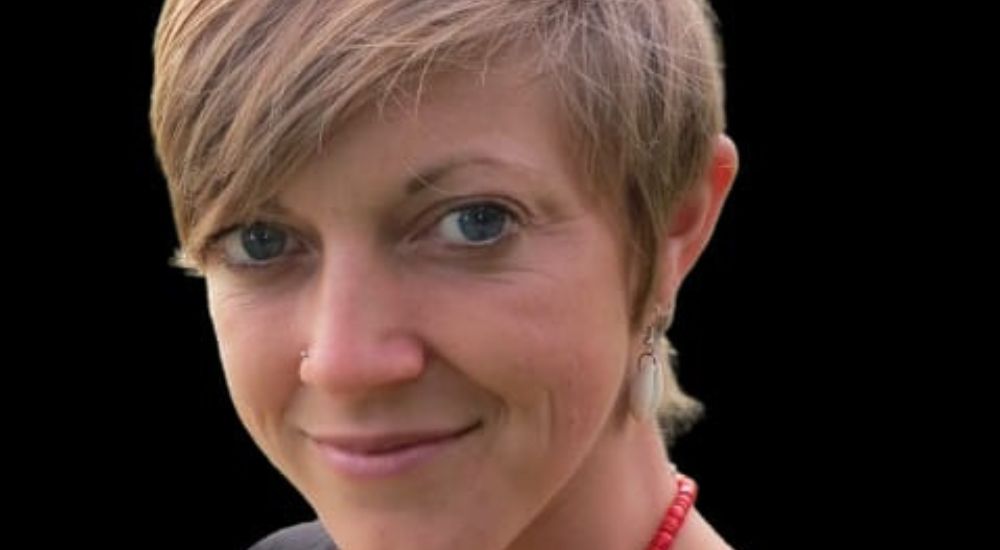
At a time when many Nigerians are leaving the country in search of safety, opportunity and a better life abroad, American rights activist and Co-Executive Director of Justice & Empowerment Initiatives, Megan Chapman, has chosen a different path. For about 15 years, Chapman has made Nigeria her home, drawn by the resilience, creativity and strength of its people.
In this interview with THE WHISTLER’s Ikenna OMEJE, she speaks on her journey to Nigeria, her passion for human rights advocacy, and why she remains committed to working with vulnerable communities. She also talks about her favourite Nigerian foods and what keeps her going despite the challenges.
Chapman, who has consistently spoken out against forced evictions in Lagos waterfront communities, also offers a scathing assessment of the repeated demolitions by the Lagos State Government, including the recent exercise in Makoko. Excerpts:
You have been working in Nigeria for quite a long time. Do you eat Nigerian food? If yes, what is your favourite Nigerian delicacy and why?
Well, I have a challenge, which is that I don’t eat meat. I’m a vegetarian. So, there’s so many things I can’t eat, but I do enjoy the things that I do eat.
One of my favorites is Akara (kose in Hausa). So, I always take kose everywhere I go and dundun (Yoruba dish made from egg coated fried yams) also. So, those are some of my favorites.
Advertisement
And we use mostly the local ingredients as well, but we do our own cooking. So, I eat ugu leaf. We prepare it every day.
So, that one is very good for health to make sure you have green vegetables. So, I make sure I take ugu every single day.
Aside from food, what do you enjoy most about Nigeria?
I love the people. That’s why I came. That’s why I’m still here.
The people have an amazing resilience, creativity, ingenuity, capacity to survive the most challenging circumstances and still have fun, still find a way to laugh, still find a way to smile. And so, that is what keeps me going every single day because I look at the people around me that I’m working with and I say, if they can keep going, I can also keep going.
Advertisement
Which country are you originally from?
I’m from (the) U.S (United States).
Could you briefly tell us about your upbringing and educational background?
I was born and raised in the United States. I studied history at the University of Chicago and then I went on to work in immigration law in the United States and got to see that so many people were leaving their countries to come to U.S., not necessarily because they didn’t want to be where they came from, but because of the condition where they were coming from.
Economic hardship, violence, lack of respect for rights. And I said, let me see how to go and work with people where they are and to see how they can support people to better their conditions and fight for a better life for everyone around the world. And so, I started that journey by traveling across West Africa, about 13 different countries.
And eventually, I passed through Nigeria and I saw something that I really wanted to come back to. So, I went back, I studied law. I got my law degree in the United States.
Advertisement
I was called to bar in New York and I specialized in human rights law. And just shortly after that, I came to Nigeria and started working with many of the communities that I’ve been working with for about 15 years, here in Lagos, also in Port Harcourt. And we do also work in Benin Republic.
Your work largely focuses on the defence of human rights.
That’s right.
What influenced your decision to pursue a career along this path?
I am a strong believer that no one should be sitting back and enjoying the quote-unquote good life while other people are suffering and struggling. I think that the only way we can build a sustainable world for everyone is for things to be shared equally and for people to always look at what another person is going through and stand in solidarity with them and see how we can have the same respect for rights, the same access to basic needs for everyone around the world. So, that’s my major mission.
I don’t believe that we achieve that by putting up borders, doing apartheid system, because what I see is we have a sort of global apartheid where the rich are kept from the poor. And there’s also local systems of apartheid where the wealthy are living inside of estates with big walls and the poor masses are outside. It’s not sustainable.
It’s not the way we need to live our life. So, I also learn from the communities that I work with. When I go to the communities, I see how people are managing.
People can innovate and find solutions to every problem. So, we need to tap into that resourcefulness. That’s how we can actually do development that works for people.
Tap into the resourcefulness of people to do with little, a lot. And I believe that that’s how we can build a sustainable future and break down the systems of apartheid, the huge gap between the haves and the have-nots.
You have been a critic of forced evictions in waterfront communities in Lagos. In your view, what is the motive behind the constant demolition of waterfront communities by the Lagos State Government?
I think the facts speak for themselves. The facts are that when you get to a place that was demolished some years ago, there’s been a transfer of that land from the less privileged who are living there. Usually, in a very efficient way, where people are making efficient use of the resources, living there sustainably, living in harmony.
And there’s been a transfer of that land to the wealthy, to private interests, or sometimes to government projects that are not even completed. We have so many of these examples. If you get to the land at Lekki Phase 1, where Otodo-Gbame community was located, demolished from 2016 to 2017 in violation of court orders.
You go there now, there’s something called Periwinkle Estate. It’s a wealthy development. There was no legal process for the transfer of the land to the people who have developed that Periwinkle Estate.
It’s just like that. We’re seeing the same thing at Ilaje Otumara. When you get to the place, there were years of engagement between the community, the 13,000 people that were living there, and the government, planning for win-win partnership regeneration that should benefit the people.
When you get there now, you see a huge expanse open, sand filling ongoing, and an estate that’s coming up called Metroview Estate. The land was sold to a private company, Zenko Properties, and is being developed, sold 200m per plot. And the people are under bridges.
It’s clear. I usually tell people, you know, you can call it forced eviction, you can call it so many things. What it is, is theft.
You’re stealing something that belongs to somebody, belongs to a particular community. They’re living there, they’re making use of it, they’re living in harmony, and you’re transferring it to the wealthy. We call it land grab, but it’s theft.
How would you describe the recent demolitions in Makoko?
It’s also a forced eviction. It’s a violation of fundamental rights. It’s one thing parading as another.
It’s a land grab with the justification that they’re living close to the power line, that there’s a building control reason that we need to come there. But if you go to the building control regulations of Lagos State, it says 30 meters from the power line. The community actually cooperated with the first 30 meters setback.
They marked it themselves. They made sure the people cooperated with the process. The next thing you know, the government said, OK, now we need 100 meters.
And they started demolishing. Next thing you know, it has gone up to 522 meters from the power line. What is that? And now they invited them to come to meet with the House of Assembly.
People went to meet there. They had different discussions. And the next thing you know, they’re now saying that all the people there, (this is the latest press conference from Lagos State government), they’re illegal.
So we can’t do anything for them. But the people who are still in Makoko, the remaining part, we’re going to relocate them to Agbowa. It’s not possible.
You have 80,000 people who are living in Makoko, and you want to take them to a very small piece of land at Agbowa, where it’s just open land. There’s no building there. How is it possible? And the space they’ve already demolished is 35.7 hectares.
That’s over 90 acres. And the place at Agbowa is about seven (7) acres. So it’s not possible to relocate this community to that place.
So it’s a kind of game that they’re playing, trying to deceive people. And the community has seen it for what it is, and they’re standing up and they’re resisting. And they have so much solidarity. I’m sure they can win.
With all the work that you do, how do you relax when you’re not working?
I’m blessed to have two children. They’re five and eight. So I can say that there’s not much rest. But the time I have that’s free, I always spend with them.
Just reading books, you know, going for swimming, different things like that, you know, whatever you can do to just relax and getting exercise as much as you can. I love to run in the railway compound. If you know the railway compound, that’s a nice place to go for exercise.
So I’ve been doing that for many, many years there.