
More Girls Registering For UTME, WASSCE As Experts Explain Shift
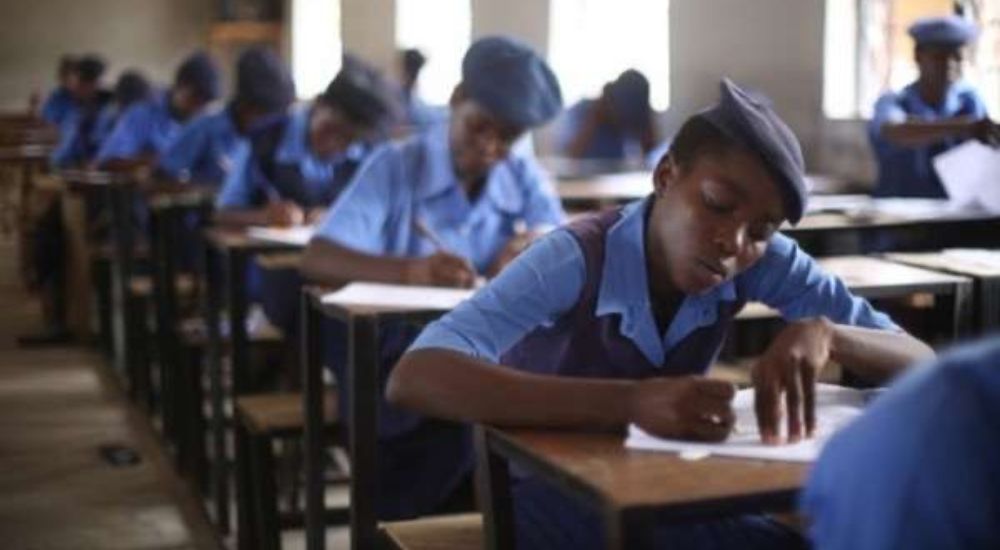
“It is like it is time for men to start shouting affirmative action,” the Registrar of the Joint Admissions and Matriculation Board (JAMB), Prof. Ish-aq Oloyede, said jokingly on Monday during the annual JAMB Policy Meeting.
His statement stemmed from the fact that females were taking over in the registration for the Unified Tertiary Matriculation Examination (UTME).
Revealing the statistics, Oloyede stated that more female candidates had registered for the examination compared to their male counterparts.
He stated that more female candidates from 23 states registered for the UTME in 2026.
“All states of South West, South East, and South South, Kwara, Kogi and Plateau in North Central and Kaduna and Kano on North West,” he said.
Oloyede’s comment was reinforced when the West African Examinations Council (WAEC) revealed the same trend later that day.
Advertisement
According to WAEC, female candidates registered for the 2026 West African Senior School Certificate Examination (WASSCE) outnumbered their male counterparts, marking a shift in enrolment figures compared to the previous year.
The council’s head of the Nigeria national office, Amos Dangut, said a total of 1,959,636 candidates from 24,207 schools enrolled for the examination.
Of this number, 1,001,072 candidates, representing 51.08 percent, are female, while 958,564 candidates, representing 48.92 percent, are male.
Dangut said the figures reflected an increase in female participation and a decline in male participation compared to the 2025 examination cycle.
Women’s World Just About To Be Unveiled In Nigeria
Advertisement
Speaking to THE WHISTLER on the issue, former Director of Press, Federal Ministry of Education, Bem Goong, said the trend aligns with demographic and socio-economic factors.
“First, the number of females, even by the National Population Commission, is higher than the number of males,” he said.
Goong who worked in the sector for over seven years, also listed other factors:
“Number two, in the Southeast, it’s a historical factor. The war several years ago led to the depletion of the male population.
Number three, as we speak, you find more and more boys going into apprenticeship in the skills sector. Even government policies have been emphasising skills acquisition, and more boys are going into that. People are beginning to realise that it’s not really about university degrees.”
Goong added that for many girls, the path still leans toward formal education. “If you look at professions like medicine, law, mass communication, the dominant gender there is also girls. So I’m not surprised. The position is correct, and it’s backed by the National Population Commission.”
He said the development has no immediate negative implication.
“It’s not. The women’s world is just about to be unveiled in Nigeria. If you attend an assignment and have 20 journalists, 14 would be women. The women’s world is coming up in Nigeria.”
Advertisement
A Disturbing News…
However, for Nkechi Macaulay, Founder of Boys Lives Matter, the trend should raise concern about boys’ engagement with education.
“It’s quite disturbing news, and I’m troubled by it because it shows boys are spiralling down when it comes to education. If we don’t pay attention, we’ll have more boys out of school,” she said.
Macaulay argued that the education system has been structured in ways that favour girls.
“Over the years, in a bid to boost girl-child education, we have tweaked the curriculum to attract more girls. We’ve abandoned the needs of the boy. Boys and girls are not alike, and our school system is designed to make girls enjoy school while it’s boring for the boy child,” she said.
She pointed to the lack of male teachers and teaching methods that don’t account for how boys learn.
“You can’t ask a boy to sit down for two or three hours and keep talking. Boys are restless. The novels, the books they read, are tailored to impress girls. A boy will say, ‘This is boring, there is no action,” she explained.
For Macaulay, the solution is balance. “Until we get back to a point where we understand that boys and girls see things differently, and tailor education to impress both, we’ll keep seeing this gap. I’m not happy that we’re in a time where more and more boys are not thinking about going to school.”
The JAMB and WAEC data suggest a measurable shift in who is registering for key national exams. While experts disagree on whether this is a concern, both agree the trend reflects deeper changes in population demographics, career choices, and how education is perceived across genders.