Obi, Other Advocates Of Real-Time Election Results Transmission Lack Party Structure, Says Omokri
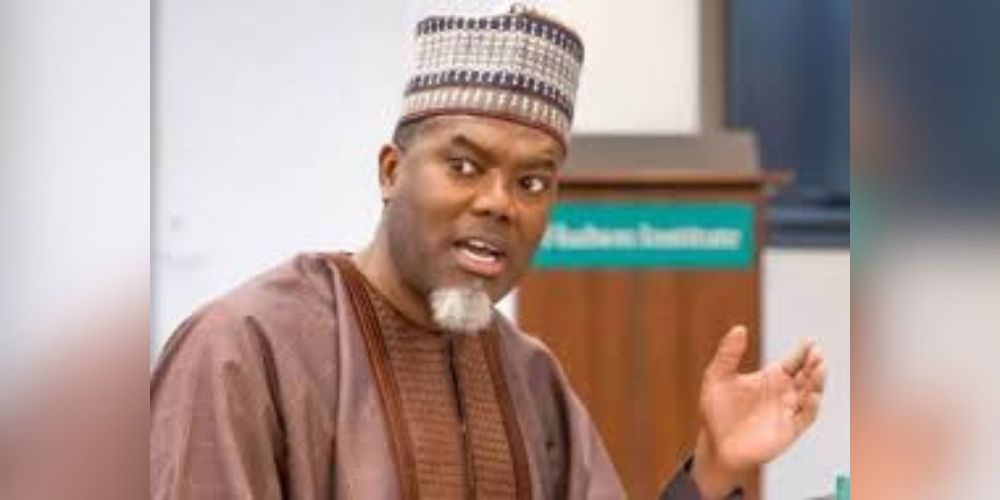
Former presidential candidate and Ambassador-designate Reno Omokri has said calls by Peter Obi and other opposition figures for real-time electronic transmission of election results largely reflect weak grassroots party structures.
He said this while insisting that credible elections depend more on party presence at polling units than technology alone.
Omokri made this comments on Wednesday during Channels Television’s Politics Today while addressing the growing national debate on electoral reforms and election credibility, following public scrutiny surrounding his ambassadorial nomination.
Speaking, He argued that political parties with strong structures should focus on deploying agents to every polling unit to monitor the electoral process and sign official result sheets rather than relying heavily on electronic transmission.
“If you have your party agents in every polling unit, it is impossible to rig. At the polling unit, the presiding officer signs the result and all party agents sign. If anything different is declared elsewhere, you can tender that result sheet in court.
Advertisement
“The EC8A form signed by the presiding officer and party agents is the real result. If what is transmitted electronically differs from that physical document, it is the physical document that the court will rely on,” he stated.
He claimed that during the 2023 general elections, the Labour Party lacked agents in several polling units nationwide, especially in areas where it performed poorly, leading to suspicions of manipulation.
“In polling units where they lost and did not have agents, they assumed they were cheated. The issue is not about real-time transmission. The issue is structure. Whether it is ADC or Labour Party, get your party agents in every polling unit in Nigeria,” he said.
Despite his criticism, Omokri maintained that he supports electronic transmission of election results but warned against what he described as emotional or unrealistic demands for real-time transmission.
“I support electronic transmission of election results. Anyone who is patriotic should support that. But what some people are asking for is real-time electronic transmission, and that is not practicable, even in countries that are far more technologically advanced than Nigeria,” he said.
Advertisement
He explained that results quickly announced on television in countries such as the United States are often media projections based on exit polls rather than official figures released by electoral authorities.
“The official results are announced later by the electoral authorities. We saw the danger of relying on that in 2000, when the media wrongly declared a winner and had to reverse itself,” he added.
According to Omokri, electronic transmission is meant to enhance transparency, public participation and accountability rather than replace manual collation or physical documentation of results.
“Electronic transmission is not the substantive or primary way of declaring results. It is a backup meant for transparency and accountability. Even if you hack the electronic system, it does not change the physical result,” he said.
However, he cited Nigeria’s infrastructure limitations, noting that even banks with millions of customers still struggle to deliver uninterrupted real-time services nationwide.
“If banks cannot guarantee 100 per cent real-time transfers, how do you expect INEC to do real-time transmission across thousands of polling units, including areas without network coverage?” he asked.
Advertisement
He said this connectivity gaps are not unique to Nigeria, noting that even technologically advanced countries such as the United States have areas with limited or no network coverage, which is why alternative voting methods like mail-in ballots exist.
While acknowledging public concerns about improving electoral transparency, he maintained that strengthening grassroots party structures and ensuring full deployment of polling agents remain the most reliable safeguards against electoral malpractice.
Responding to criticisms surrounding his nomination as ambassador, Omokri defended his past conduct, saying he has consistently aligned himself with facts, even when they conflicted with his political interests.
“When the facts changed, I changed with them. I went to Chicago State University myself to verify the truth, even though it went against my own political interest. I deal with facts, not emotions,” he said.
He also rejected claims of hypocrisy for accepting a government appointment after previously criticising the administration.
According to him, he has never said he would not take any offer from the President Bola Tinubu-led Federal Government.
Recall that Reno Omokri is among the list president Tinubu forwarded to the Senate for ambassadorial consideration.
“That’s not what I said. The question you asked me was that if Tinubu asked me to work with him, would I accept? I said no, it’s not in my DNA.
“When I met with the administration’s officials, I said I can’t take certain positions because of certain things that I said earlier. However, I never said I cannot work for Nigeria.
“As an ambassador, I’m going to work for Nigeria. I will be an ambassador of the Federal Republic of Nigeria,” he said.
Omokri also commented on human rights activist , Omoyele Sowore saying he is worried about his state of mind.
According to him, when Sowore was asked, as a presidential candidate, how he intended to grow Nigeria’s economy, the rights activist said the country should grow marijuana.
“This is a drug considered ‘Class B’ in the UK and banned in so many countries. And this man said that is the key to Nigeria’s economic survival?
“If Nigeria’s ground is fertile enough to produce Indian hemp, then it should be fertile enough to produce more valuable cash crops,” Omokri said.
“I don’t understand why Sowore is doing this. If you go to court and you are charged with a crime, you don’t say, ‘This person did this.’ No. That’s a very childish defence.
“You come out and defend yourself because there is a situation in law. It’s a principle. No government on earth can afford to prosecute everybody who commits a crime. Sowore should defend himself.” Omokri added.