
Of Bridges And Walls: Finding Common Ground, Rising Above Divisions
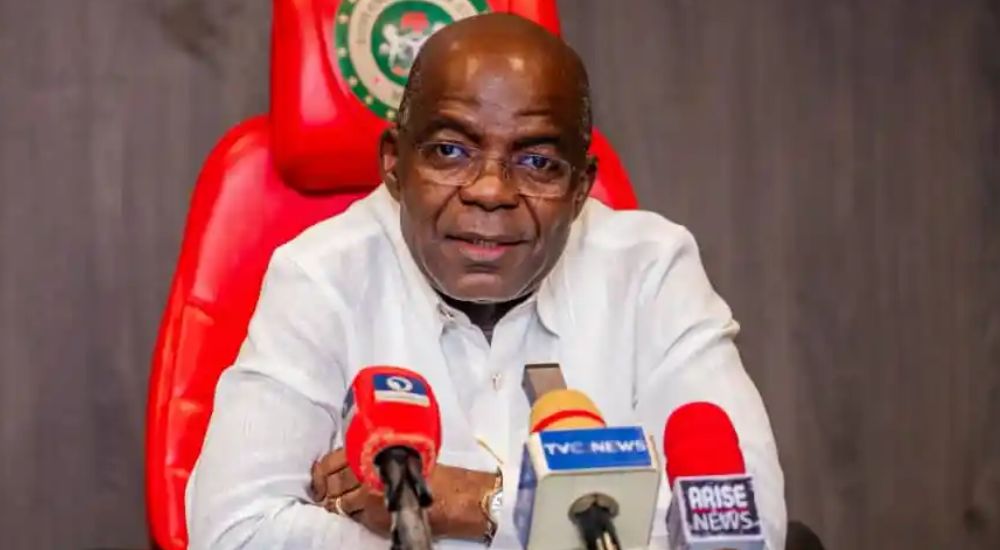
On a special event like this, it is only appropriate that we begin on a note of profound gratitude, first to the Management team of the University of Northampton led by the Vice-Chancellor, Professor Anne-Marie Kilday, for opening its doors to ideas and thoughts that enrich the quality of critical public conversations. I would also like to appreciate the thought leaders and decision-makers at the University’s Centre for the Advancement of Racial Equality (CARE) and the Global Ethnic Majority (GEM) for their untiring commitment to the pursuit of fairness and balance through mindful interactions and engagements across board. I am optimistic that the lessons we shall all go home with at the end of this event will deepen the awareness of our interconnectedness and the place of equality in our exchanges across multiple frontlines.
The world around us continues to evolve as social and economic dynamics change. In this regard, adaptability means coming to terms with the reality of these changes as they affect our classrooms, workstations, communities and other centres of human interactions. The new order of exchange demands openness and a disposition to knowledge-sharing for this is the worst time to function in the exuberance of ignorance.
It is for this reason that I am delighted with the theme of this conference: Race in Action: Power, Partnership and Change. The truth is that there can never be an end to these conversations and the more freely we engage respectfully and stay open to learning, the better for our civilisation. May I quickly state that the debate is not exclusively about skin colour or the difference in the environment where we took our first breath, it is all of these and more. In discussing race and racial differences, it may help to look beyond surface-level observations and probe deeper, this time, not to find differences but to establish some level of understanding about the individuality of each person we encounter in the search for our own uniqueness.
To build the sense of clarity that the modern environment requires, it is important to appreciate that for all our powers, many events that tend to define us are entirely outside our sphere of control and that includes where we were born, who we are born to and the general outline of our first contact with the world. None of us chose to be born Black, White, Mongoloid, Australoid, Amerindian or any of the other race variants that researchers continue to identify in the unending push to guide how we interact amongst ourselves as members of one human community. If we accept that none of us had a say in choosing their birthplaces, is it then fair to antagonise anyone or group just because they don’t look like us or speak the language we understand? I would like to streamline this discourse to what happens amongst the major races as already identified but it may also interest us to know that the context of interactions like this are often more nuanced than can be dissected within the limit of time available to us. Be that as it may, our objective shall be firmed on building a common understanding of the dangers of different variants of racial antagonism.
Being members of one human community, it is actually strange how anyone would imagine themselves or their racial group to be superior to others, even after it has been accepted, as the text of the US Declaration of Independence did state, that we are all “created equal and had been endowed with certain inalienable rights by the Creator.”
The rights to life, liberty and pursuit of happiness are clearly listed as non-negotiable. However, beyond the shores of the United States where this declaration was first made, the substance of its meaning applies universally, irrespective of where one was born or where and how their boat sails. To then deny anyone or a group of people any or all of these rights is to live in vehement, often painful, denial of the truth.
Advertisement
Every form of racial discrimination, whether expressed explicitly or subtly hinted, is a direct attack on the human conscience and a sore point in our social relationships. To assume that an entire group of humans are inferior on the basis of their skin colour or geographical background puts a certain question mark on the humanity of those who hold such assumptions.
While there is a wide consensus that racism has no place in interpersonal or community relations, the difficult truth, however, is that we cannot wish it away for there will always be individuals in high and low places whose entire worldview revolves around prejudices drawn from basic human features like skin colour, skeletal structure, hair texture and accent. To them, humans are defined entirely by the reports of the basic senses and no more. At times, however, there are others who deep in their hearts, appreciate the limitless potential of the human specie but for reasons of mischief or in pursuit of a hideous agenda, elect to swim in the ocean of racial ignorance, convinced that popular narratives are synonymous with facts.
Recall, however, that I had alerted us that racial discrimination at its core, is an exercise in self-torture because it is entirely about lying to oneself that a fellow human is inferior for the singular reason that his physical characteristics are unlike yours. Such mental framework is built on the foundation of delusional ignorance but as we have also learnt overtime, ignorance can quickly morph into extreme behaviours and widespread bigotry leading to wanton destruction and diabolic expressions of hatred. It then holds that matters of racial bias should not be taken casually in the light of its potential to instigate violence against innocent individuals and groups.
At any rate, my view is that the most effective response to the error of racism is enlightenment through education and consistent engagement with different stakeholder groups, especially teachers and persons of influence within the society. It may also help to set up robust race-blind institutional processes in public and private establishments for activities like recruitment, business and scholarship grants and all such events that invite interests from persons of diverse racial origins. The truth is that we cannot shy away from discussing these issues for that is the only way to deepen public awareness on the ills of racism and the mindset that enables it. I am pleased that we are alive to our responsibility in this regard as intellectuals, thought leaders and role models to millions of young people across racial divides.
As we may have learnt through the decades, the troubling return of racial disharmony in several parts of the world is fuelled in the main by political actors who have mastered the art of public manipulation and misrepresentation of facts to win votes. I know a few of us can readily point to several notable politicians around the world who have carefully reinvented the art of race-baiting as a tool of political dominance.
Advertisement
Unfortunately, that would only be an overly simplistic way of looking at the crisis. The truth is that if public outcry forces one of such tricky characters out of office, more vicious individuals of similar orientation would emerge to continue the chaos. In discussions such as this, we have to carefully look at the environment that gives room for race-driven politicking, the voters who take such bait and the failure of institutions to check exploitation of voters through racial appeals. My position is that the challenge is deeper than many of us acknowledge; perhaps this may be a good time to look at things more holistically.
I have also observed that oftentimes, analysts fail to present a comprehensive view of the challenge and elect rather to go with cheap stereotypes. As the great Nelson Mandela taught, the struggle should be targeted at all designs at racial domination, whether by Whites, Blacks, Asians, Australians or Indigenous Americans. Our campaign should never be targeted at individuals or groups but against structures, institutions and systems that directly or subtly promote interracial suspicion and disharmony.
Balance and fairness are the two critical elements that must be brought to the centre of these discussions. The overarching agenda should be to find answers to the very important questions that objective commentators have continued to ask. For example, how does it advance our collective humanity to put down an entire race under whatever guise? How do you balance equality and merit? How do you keep the focus on excellence even in the pursuit of diversity? Do we have to bring down standards as we pursue the ideals of inclusion? Clearly, there are several more questions that can be asked but I remain unyielding in the conviction that no individual should be denied what is due him for primordial considerations.
It would be more ideal to set clear standards that everyone, irrespective of their racial identity should aspire to. I do not buy the argument that the standards have to be lowered to accommodate everyone. My view is that the opportunity, tools and resources for adequate preparation should be liberalised such that no one suffers the disadvantage of unpreparedness. From education to sports, recruitment into strategic institutions and agencies, and across all other competitive career fields, merit and objectivity should be at the centre of decision-making, nothing else.
What hurts society in the long run is not the colour mix of the stars we see on television screens, the long-term danger is giving any group the impression, whether expressly or tacitly, that they cannot compete with the best so the standard has to be lowered to let them in. The short-term optics may look good but when a group of children grow up with the mindset that their maths score or performance in sciences need not equal the output of their peers for a chance to get into certain institutions, what follows is a pervasive culture of mediocrity arising from refusal to push oneself as hard as necessary to earn a place at the top.
I am not sure this is something anyone should encourage, for while we insist on the right to appear in the frame, it is of equal importance that we spread the truth that there is no limit to the capacity of the human mind to achieve anything it commits to. This brings me to the ongoing FIFA World Cup in North America and the marvel of diligence across multiple frontlines. The central takeaway for me thus far is that excellence has no skin colour for in the final analysis, it is the level of preparation, brilliance of strategy and the unyielding determination to win that count. To address the challenge of racial bias, it would help to keep insisting that every race-based barrier on the road to success be dismantled so that everyone gets the opportunity to pursue and live out the fullest expressions of their dreams, whether it is in sports or sciences, drama or political leadership.
Advertisement
I am particularly glad to observe that we are broadening the scope of the conversation as this conference has done by welcoming speakers and resource persons from different backgrounds to share their stories and perspectives on the evolution and dynamics of the issues. A key lesson for me is the importance of respectful engagements across races. Not much can be achieved by hectoring and proselytising or perhaps assuming that we know better.
Pride will only lead to hardening of positions. Therefore, it is important to understand the concerns of our friends with a different skin colour. It is advisable to learn about the fears of the other group, whether they are real or imagined, efforts must be invested in building bridges and breaking walls for those are the principal demands of honest engagements. Neither the victims’ mindset nor the conquerors outlook is required in this regard because whether we accept it immediately or later, the indisputable truth remains that we need one another. The world is made richer when we combine our best traits in pursuit of ideas and values that enrich the human experience; here, the desert walker’s story is as valuable as the knowledge of the ocean diver. In the end, it needs to be made clear that the global war against the menace of hunger and extreme poverty, illiteracy, diseases, war and violence cannot be won by promoting racial divisions and hatred for no one race holds the key to tackling the multitude of existential crises facing our world.
The invitation to all of us at a time like this is to look at the human race as one big family and collectively tackle the universal challenges that steal from our joyful inheritance. Again, let me repeat that we do not suffer any disadvantage for the reason of our skin pigmentation, rather we are limited by the stereotypes we accept or promote. The hard truth, however, is that we are individually and collectively capable of infinitely great accomplishments — if only we put our minds to it. Ultimately, what we need are bridges of understanding and dialogue, not walls of division and hatred.
I would like to state that oftentimes, racial divisions are deliberately promoted, not only by politicians and their supporters, but also by persons of influence working in public-facing institutions, including media, religious and cultural organisations, academia and others who for some strange reasons, believe that stoking the embers of racial division wins them laurels. Our message to them this afternoon is a direct one: we are done; we are done listening to narratives that only see evil in others; we are done paying attention to sermons and editorial ideas that promote division, we are done taking instructions and advice from those who exploit racial suspicions for political and economic gains. Our major assignment going forward is to embrace a more optimistic worldview in our relationship with one another, appreciating that all of us, irrespective of skin colour, come from the same origin and shall be remembered in the end, not by how biological anthropologists describe us, but by the efforts we commit to improving the social experiences that define our community.
This brings me to the subject of power and power relations. Power within the context of this interaction shall be taken to mean the capacity to influence outcomes. It can be derived from positional privileges or by virtue of one’s moral stature. Understanding power dynamics in our community presents a critical pathway to appreciating how race relations shape social behaviours and expectations. Every community has one or two dominant groups with extensive influences within social and economic institutions and structures.
In the global context, however, you find different racial configurations and patterns of dominance across multiple frontiers of expressions. You can attribute this to all manner of factors from historic and geographical advantages to genetic configurations and cultural appetites. In different cosmopolitan environments, you may realise that individuals of certain racial origins naturally gravitate towards particular fields of endeavours while others are drawn to other pursuits as they seek distinct pathways to attaining the promise of fulfilment over the course of their lives. I am in no position to question what path an individual or a group chooses in its quest for economic and social freedom because again, we are all built differently and what appeals to one group may not excite others on account of unique natural dispositions.
At any rate, while it is fine to freely seek and follow our preferred path in life or pivot elsewhere with time, it is unacceptable to deliberately create structures that shut out other members of the society from certain paths for reasons of racial prejudice. When persons of a particular racial identity assume, for whatever reasons, that they are being shut out of certain fields, resentment and suspicion are bound to follow but the appropriate response to such development need not be bitter hatred. This, again, is where respectful dialogue comes in.
The key to progress lies in the willingness to engage, ask questions, present the facts and insist that every expression of racial injustice be addressed fairly. Changes may not happen immediately but it helps to take the first step which is to open up a front for regular conversations with those who pull the levers of power; whether they are financiers, politicians, administrators, media moguls or heads of institutions. It is necessary to express our fears and seek a holistic remedy, not out of pity but as a matter of right. In seeking balance and fair representations, one must also resist the temptation to seek to replace one dominant race group with another for what may eventually follow could be endless cycles of race agitations and suspicion. One must also point out that the success of this approach is dependent on the willingness of the other party to engage.
In all of these, it is quite critical to guard against racial indoctrination, whether it is telling one group that they are superior or suggesting to the other that they are victims. Such mindset makes it impossible to build consensus. It is best to keep the focus of every interaction on our shared human heritage, common dreams, fears and hope for the future. Whether we accept it readily or not, the threats that we face in the modern age affect all of us. From poverty and social tension in the developing economies to the epidemic of loneliness and political distrust in the west, it helps to be mindful of the truth that there is no society without its set of peculiar challenges.
As earlier stated, our campaign at all times should never be directed at individuals but at structures and systems that take attention away from our common problems as members of one human family. Being a community of enlightened people, we have to be on the watch out for bigots and race profiteers, whether they are seemingly on our side or against us for in the end, it comes down to the same thing: pursuit of private agenda masked as group interest. We should rather emphasise the philosophy of fairness to all, ill-will to none. Above all, individuals who wield whatever form of power in the community would do well to keep an eye on the common good; power owes a distinct responsibility to the society; whether it is derived from the office we occupy or the status attained on account of intellectual, political or economic advantage. The privileges that come with power should be targeted at expanding the field of opportunities for everyone, creating platforms for open competition — one that promotes success earned through the brilliance of enterprise and persistence of efforts.
In our State, Abia, located in the south-eastern part of Nigeria where I serve as the Governor, we are guided by our faith in the infinite possibilities of the human mind. This conviction explains why we are investing rapidly in systems that expand the capacity of the mind to dream and dare. Over the last 3 years, we have consistently earmarked 35% of our annual budgetary outlay to education and health in pursuit of distinct outcomes in the area of human capital development. We are sold to the belief that when the right environment is created and individuals, especially the young people, are given the leverage to become all they can be, again through hard work and discipline, the entire society becomes better as output levels rise, just as the streams of opportunities expand for everyone.
We are careful to leave no one behind so we have not only made basic education qualitative and free, it has also been made compulsory that every child of school age must be in school and nowhere else during school hours. We currently have an active taskforce that goes all over the place to monitor compliance; any child seen outside the school environment during school hours is supposed to be picked up and taken to either the parents or guardian for questioning and possibly sanction.
Interestingly, in close to 2 years since we introduced this, no child has been picked up. It is therefore not unexpected that school enrolment has jumped by more than 150% in the last academic session alone. We are deliberately committing generous resources to training, school infrastructure, technological tools and other systems that are relevant to building the technical capacities of the products of our school system at basic, secondary and tertiary levels. The target is to expand the capacity of our people to be active participants in the emerging global economic order.
It is important to take this discussion beyond race and briefly extend it to other prejudices within race. What immediately comes to mind is the issue of xenophobic attacks in South Africa. Here, fellow Africans are scapegoated for all sorts of issues and people have been killed. At micro levels, people get discriminated against in the same state for reasons of what part of the state they come from and in the country on the basis of what state of the country they come from and sometimes, what language they speak. To deal with this in Abia, we came up with the directive that once you live in Abia, you are from Abia. In recruiting close to 10,000 teachers recently and close to 1,000 healthcare professionals in the last one year, we paid no attention to state of origin. It was strictly based on merit. The two times we have appointed Permanent Secretaries and Heads of Service; they were strictly based on merit. It was on that basis that for the first time, a Head of Service who was neither from Abia State nor from the Southeast was appointed. Finally, I would also like to acknowledge that Nigeria and probably some other countries have had to design models that aim to address inequality and uneven development by coming up with quota systems and what we refer as “federal character.” The jury is still out on whether this approach does not end up creating its own challenges with unfair practices and prejudices.
The abiding commitment to human capital development through formal and informal education and my belief in equality of humans irrespective of race or creed explain my delight at being part of this event. Beyond the opportunity to address a global audience on the important subject of racial harmony and the superiority of bridges over walls, I was also drawn to this event because of the opportunity it presents to visit this magnificent campus community, interact with the officials and see what valuable lessons we can pick to further strengthen our own system back home. I want to once again thank the University management for opening its doors to persons of different ethnic and racial backgrounds. Through your culture of openness, you are actively redefining the place of education in building a fair and just society where everyone is offered the room to dream and thrive. I am also happy to observe that you have several Nigerians schooling and working here.
Evidently, your influence is global. I am optimistic that these compatriots would leverage the knowledge they gain here to build something noble for themselves and the larger human community. I would also like to thank Dr Wisdom John Okoye and his team for the efforts and collaborations that made our participation at today’s event a reality.
Let me now end by talking to my compatriots and by extension, every participant from the developing countries. The development assignment before us is daunting but the worst thing to ever do is to throw our hands in the air and seek comfort elsewhere. Everything we see in the developed economies, the giant development strides, especially in the last 50 years, should simply inspire us to believe that yes, we may not have woken up as early as we should but as we say in my part of Nigeria, the dawn begins when you rise. The journey ahead may be difficult but we now have a long list of references to guide us as we fast-track our own development journey.
One advantage we have in the new age which was absent 70 years ago during the first wave of independence across our continent, is that we now know what works and what doesn’t; we now know with certainty that democracy drives prosperity but civil rule in itself is no guarantee of either freedom or development without the active participation and vigilance of the citizens. It is also now beyond dispute that corruption does not only stifle growth, it steals from the dignity of man. Therefore, fighting all expressions of corruption, from stealing of public funds to nepotism, is a key development priority that we must all pursue as we push to build a new narrative. Of equal importance is the consensus that war and all forms of violence would only entrench poverty and create opening for the continuous stealing of mineral resources from our backyards. Development requires peace and stability; therefore, dialogue and sincere engagement must replace arms and violent rhetorics.
Above all, efforts have to be targeted at building an inclusive society for no community thrives when any part of it feels sidelined. As we have learnt, the human potential is limitless; it does not matter the skin colour or ethnic identity of those you agree or disagree with, efforts must be made to bring everyone to the room, whether it is in the distribution of political opportunities or at the table where economic decisions are made; everyone is important and must have a fair sense of representation; that is what it takes to drive enduring development, one that makes us equal partners at home, and gives us a strong voice on the global stage.
— Being the text of a keynote address delivered by Dr Alex Otti, OFR, the Governor of Abia State; at the University of Northampton’s Annual Conference on Racial Justice on Thursday, July 2, 2026.