PANA Holdings GCEO Akobo Inspires RSU Graduates To Turn Research Into Wealth-Generating Patents
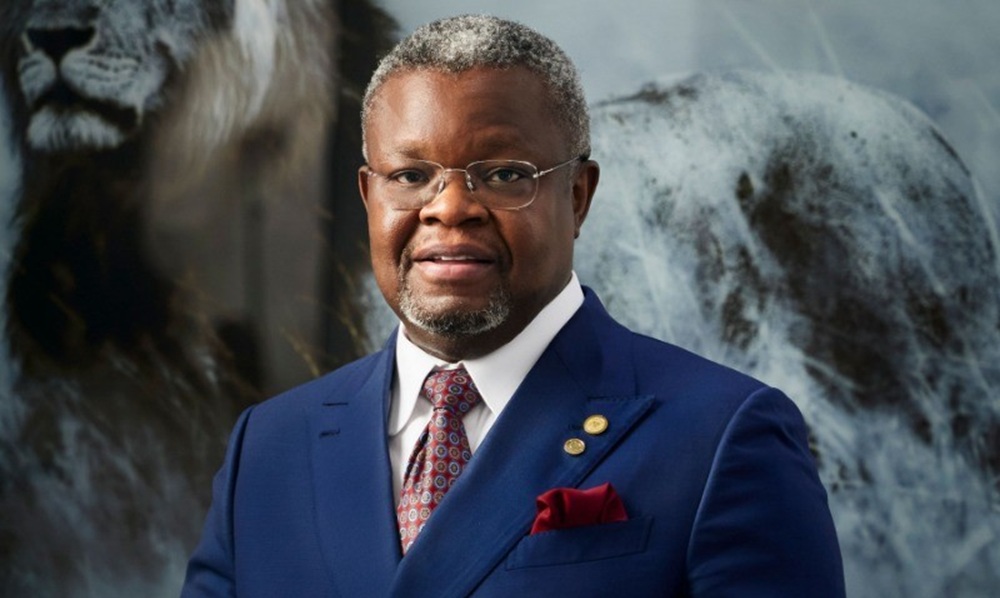
Dr Daere Akobo, Chairman and Group Chief Executive Officer of PANA Holdings, has challenged Rivers State University graduates to transform their academic research into patents that could generate wealth rather than leave them dormant in university libraries.
Speaking at the combined 37th and 38th convocation of Rivers State University, Nkpolu-Oroworukwo, Port Harcourt, monitored by THE WHISTLER on Wednesday, Akobo delivered a lecture titled “Joint University-Industry Ventures: The Entrepreneurship, Technology, Sustainability and People Nexus for Rivers State University.”
The businessman lamented that the entire country produces only two patents per one million people annually.
“How many of you have patents?” Akobo asked the audience.
“Unfortunately, in Nigeria, I did a study. The whole of NNPC, as a whole, does not have more than three patents. The whole of Nigeria, one in every one million, has one patent. In fact, the whole of Nigeria, as a whole, is only two patents in one million that we produce annually.”
Akobo, who is also the founder of PE Energy Ltd, said universities must shift from graduating students based only on exams to graduating them with commercially viable patents.
Advertisement
“How can we move from using tests to graduate students to using patents to graduate students? It is the patent that brings money,” he stated.
“When you have patents, people pay for patents. You are off the screen, but your patent is what they are using.”
The PANA Holdings GCEO, who has a background in applied physics and over 25 years of experience in the oil and gas sector, described himself as a commercialisation agent who takes people’s patents and innovations to market.
He cited an example when he discovered a patent in 2017 and wrote to the late former President Muhammadu Buhari about resolving issues in northern Nigeria.
“I take invention, I change the process on how to take that invention to the market,” he explained.
Advertisement
“Professors, graduates, some of your inventions, you have to collaborate with somebody to take them to the market. You have a thousand and one theses that you have written in the library. We need to begin to use accelerators to turn those into money so that the students can be called back to do it.”
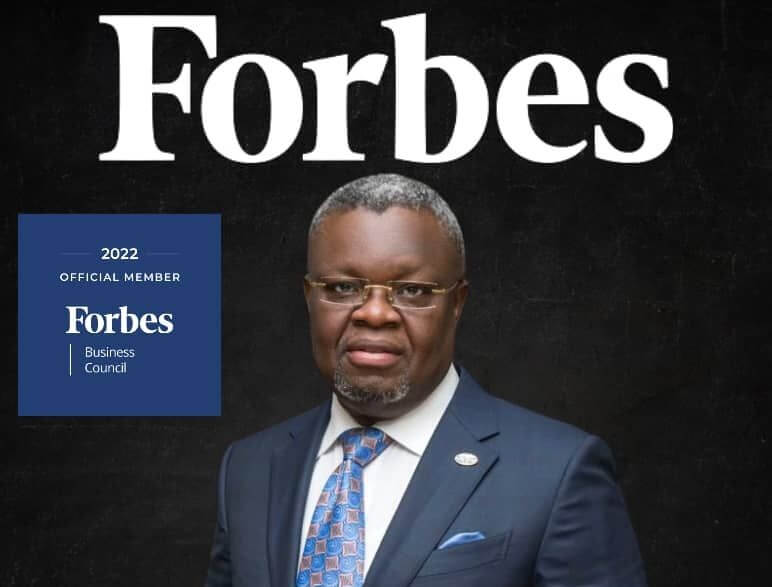
The philanthropist and Forbes Business Council member further spoke on what he called the “triple helix”.
He described it as the interconnection between universities, industry, and government, which is essential for economic transformation.
“It’s all about the university, the industry, and the government,” Akobo explained.
According to him, modern education must adapt from pre-Newtonian lectures to activities aligned with industry needs.
Advertisement
He cited the Massachusetts Institute of Technology (MIT) as a model and which has been dubbed the “47th world” because the GDP generated by MIT entrepreneurs exceeds that of several countries.
“This is where we need to be,” Akobo declared. He challenged Rivers State University to aspire to similar heights.
He also appealed to multinational oil companies operating in Nigeria to provide the same level of endowment funds to Nigerian universities as they do to institutions abroad.
“We operate here in this country with Exxon Mobil, Shell, and Chevron. You are hearing me. What they can donate to this university, their endowment fund. You don’t need the state to give you money,” he stated.
Akubo also cited the Indian Institute of Technology (IIT) Madras as another example where companies like Schlumberger, General Electric, and Shell provide research grants totalling hundreds of millions of dollars.
“They donated about 400 and something million dollars with a vast amount of land. Today, the Schlumberger of this world, the General Electric of this world, the Shell of this world, they have research grants.
“Why are we suffering the lecturers here? Why are we stressing them? When God has brought us out of obscurity, we should be able to bring research grants,” he asked.
“A typical oil and gas industry has more than 750 software, and these software are all developed in India, Pakistan (using) patents.”
“We cannot make more money without understanding the economies of GDP. And the economies of GDP are all about local goods, what is paid in the country and what is exported.”
Akobo also revealed that he is developing software called Lolia, named after his first daughter, and is working on building “the first African data refinery.”
He further called on the Rivers State government to help build the state’s capacity to drive industrialisation and economic development.
“We have a state. But I want to ask, do we have state capacity? Your Excellency, even if you are not here, you are the state governor. Do we have state capacity?” he queried.
Akubo explained that state capacity involves two dimensions, namely extractive capacity, which is the ability to mobilise financial resources from citizens and economic actors, and directive capacity, which is the ability to channel those resources toward national priorities.
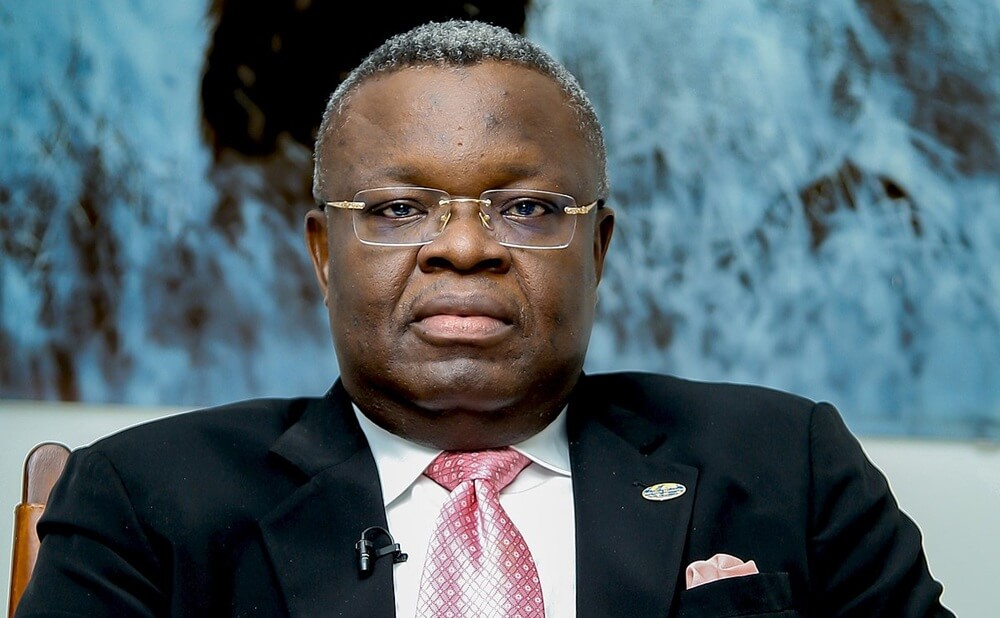
“I am calling on the governor of River State of Nigeria, all political bigwigs, to direct their effort, ingenuity, and magnanimity to this university. Imagine that I did not attend the university, where would I have been?” He asked.
Akobo said he deliberately chose to establish operations in Rivers State rather than Lagos despite the financial advantages of operating from the country’s commercial capital.
“I have an opportunity to build the same in Lagos. But I decided to bring mine to River State. Today, in my office in Port Harcourt, we have about 150 people, all of them paying their taxes in River State,” he revealed.
“If I took that money to Lagos, I probably would have done bad. The banking system favours you when you’re in Lagos than when you’re in Port Harcourt. We need to change that.”
Akobo finally challenged the audience to turn their vision into action, saying, “Remember that a dream without a deadline is what? A nightmare. Why will you wait for tomorrow to begin, to think about the day before yesterday?”