Ransom Paid, But Freedom Never Gained: Inside Nigeria’s Cruelest Kidnapping Cases

Ali Baho set out to save a friend, a choice that cost him everything.
Baho, a commercial driver, volunteered to deliver ransom to free his abducted friend and colleague, Kabiru Aliyu, only to become the next victim in a betrayal that shattered the fragile hope that paying up might mean freedom.
Baho lived in Nigeria’s northwestern Isa community of Sokoto State, supporting a large polygamous family through grueling hours on rural roads where armed gangs, locally called bandits roam with impunity, conducting mass killings and ransom operations. He was a commercial driver for two decades and had survived the menace of the bandits that escalated in 2019.
But in May last year, Aliyu, also a driver, was abducted along the Isa– Marnona road by bandits operating within the Sokoto/Zamfara border forest area.
Aliyu’s captors had demanded N20 million for his release. The demand was far beyond what his family could raise. After days of pleas and negotiations with the captors, the ransom was eventually reduced to N4 million with food supplies and hard drugs; items increasingly demanded by bandit groups to sustain their camps’ hidden lifestyles.
Advertisement
Baho then volunteered to deliver the ransom. According to Aliyu, when he arrived at the bandits’ hideout, the agreement collapsed.
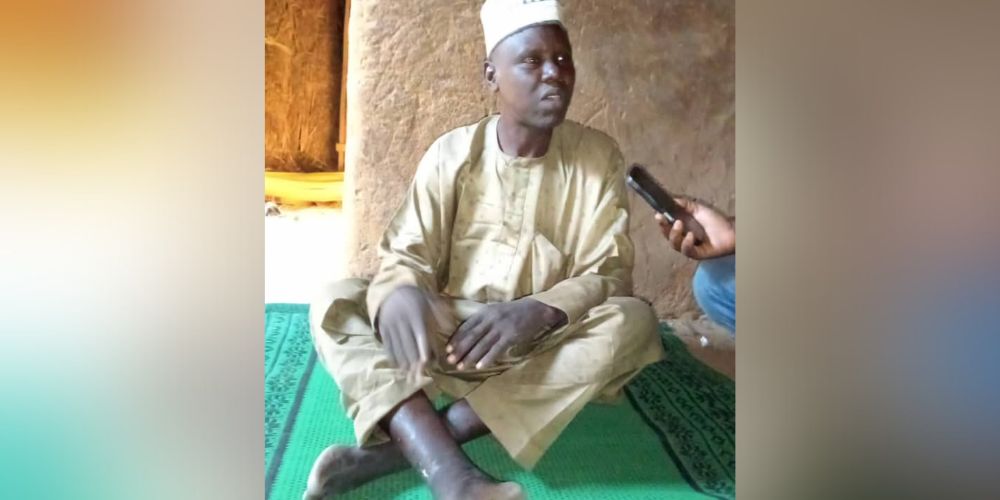
“Instead of releasing me, the armed bandits seized Baho in a twist. The ransom terms were altered on the spot in a fresh condition. Two Boxer motorcycles were demanded before we could be freed”
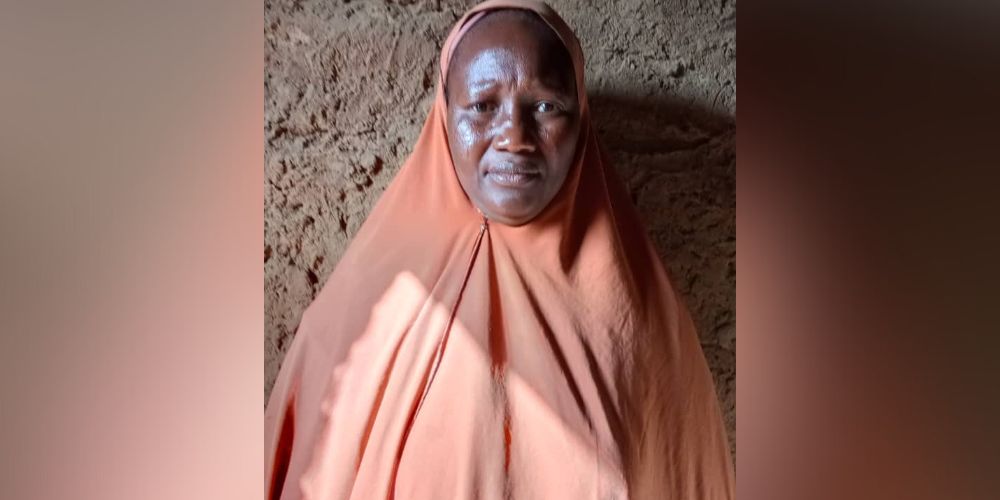
The battle for freedom was swift on Baho’s family again as they struggled to raise the motorcycles. Lauratu Ali Baho’s elder wife said, “We sold grains from our last harvest, our goats, and other valuables, and even borrowed money to get the motorcycles. But after we delivered them, neither of the men was released.”
Advertisement
As days turned into weeks, conditions in captivity worsened. Food was scarce, beatings were done in a routine, while negotiations stalled, and there was no sign of release Baho attempted to escape, he was caught and beaten mercilessly. “They beat him to death with heavy woods,” said Aliyu months after his own release.
“My bosom friend, Ali Baho, was killed after his family had paid everything demanded. I was in captivity for nine months after Baho’s killing. When I was eventually released, there was no effort from the security agencies to track my abductors and no help from the union that I belong to except my family and local government authority where I lived.” He further recounts.
When this reporter visited Baho’s house three months after his death, his home remained unfenced and exposed to the same insecurity that claimed his life. The household had no stable source of income, and the debts incurred during the ransom negotiations were still unpaid.
“Our house is still open and unprotected, there is no steady income anymore, and the debts we borrowed to save him are yet to be cleared.” said Lauratu
Ali Baho’s story is one of many windows into the cruelty of Nigeria’s kidnapping crisis, where families pay ransoms in desperation, only to discover that payment no longer guarantees freedom, or even life.
BAHO’S CASE IS NOT AN ABERRATION
Advertisement
Since his death, survival has become a daily negotiation with hunger and fear for Baho’s two wives, while the surviving children have dropped out of school. What was meant to save a life instead dismantled an entire family’s future.
“We don’t have a stable source of food, and our clothing is worn until it tears beyond repair. Schooling has effectively ended for most of the children, not because education is undervalued, but because it is unaffordable,” said Lauratu
She lamented how the children now grow up not only without a father, but with the knowledge that he died trying to save someone else and that even doing something “right” did not save him.
Across north-western Nigeria, families report paying ransoms only to face prolonged captivity, secondary abductions, or death. In some cases, victims are killed after payment to deter future resistance; in others, captives are retained to extract additional value from already-exhausted families.
Security analysts and community leaders say this pattern marks a shift in bandit strategy from transactional kidnapping to predatory extraction, where violence itself becomes the message. In this economy, the state’s absence is as valuable as the ransom.
Basharu Altine, a security expert in Sokoto, said Nigeria has no comprehensive system for compensating or supporting families of kidnap victims. According to him, once ransom is paid or a victim is buried, the state disappears from the story. For widows like Baho’s wives, grief is compounded by abandonment.
THE LONG CAPTIVITY SYNDROME
Kabiru’s nine-month ordeal reflects a wider trend in which victims are held for months after ransom payments, as armed groups impose new demands or delay release to extract maximum financial and psychological value from families.
Atine added that rural households affected by kidnapping suffer long-term economic decline, with many never recovering financially after selling productive assets like farmland, vehicles, and livestock to pay ransoms.
For survivors, freedom does not end the suffering. Many return with untreated injuries, post-traumatic stress, and survivor’s guilt, particularly when others die in captivity.
In Nigeria’s vast kidnapping economy, families cling to a grim rule like a life raft: ‘pay the ransom and your loved one will return alive’.
The transaction, though brutal, illegal, and dehumanising, has long been predictable. Across forests, highways, and rural communities, kidnappers negotiate, collect payments, and, more often than not, release their captives.
That fragile certainty drives families to sell land, withdraw children from school, empty life savings, and borrow at punishing interest rates.
But for an alarming number of families, even that rule has collapsed. Their loved ones are not freed. Payments are raised arbitrarily. Captives are held for months on end. In the worst cases, victims are killed after families have paid everything demanded of them
THE NUMBERS BEHIND THE PAINS
There are no official records of how many Nigerians have paid for freedom that never came. Families rarely report deaths, fearing retaliation or stigma, while law enforcement agencies seldom investigate cases that end in forest graves.
However, media reports have shown that families are paying huge sums in ransom, but higher payments do not guarantee survival. According to the National Bureau of Statistics, almost two-thirds of kidnapped households paid ransom in the reference period, even as kidnappings remained concentrated in rural areas, where security presence is thin and response times are slow.
The NBS’ Crime Experience and Security Perception Survey (CESPS) 2024, said that Nigeria recorded an estimated 2.2 million kidnapping incidents between May 2023 and April 2024, with 65 % of affected households paying ransom, averaging about 2.7 million naira per incident. The estimated total ransom paid in that period was 2.2 trillion naira, with the North-West reporting the highest share at 1.2 trillion naira.
Within 12 months from July 2024 to June 2025, geopolitical research firm SBM Intelligence documented 4,722 people abducted in at least 997 incidents nationwide, with kidnappers demanding about 48 billion naira in ransom but families paying just 2.57 billion. At least 762 people were killed in these abduction-related incidents.
These figures reveal a sprawling and evolving crisis where kidnappings have become both a lucrative criminal enterprise and a deep social trauma.
Even where payments are made, killings and prolonged captivity are rising, says Altine. He adds that armed groups are becoming less predictable, more fragmented, and less bound by informal “rules” that once governed ransom negotiations.
“The transactional logic of kidnapping is breaking down, before bandits’ kidnap for ransom, but now, even after paying the ransom, they brutally kill their victims. That increases both violence and trauma.” Adewumi George, a Sokoto-based public analyst said.
In response to the deepening insecurity, the government is employing a “multi-faceted” approach, including combat and non-military measures, the governor’s security adviser told THE WHISTLER.
“The state has also disbursed N293 million aid to victims of recent bandit attacks in Isa and Sabon Birni and is working with the community to crack down on informants,” Col Usman Ahmed Rtd, said.
He added that the state government is also exploring a defection and reintegration program for “genuinely repentant” bandits.
Col. Usman explained that other strategies include intensified military deployments across eastern local government areas such as Isa, Sabon Birni, and Goronyo.
He said that plans are underway to establish three additional military formations in Sokoto State to strengthen ongoing operations against banditry and related crimes.
“ The state has enhanced intelligence-gathering mechanisms and is providing logistics and operational support to security agencies across 13 frontline local government areas”
“These combined efforts of military pressure, community collaboration, victim support, and supervised rehabilitation are designed not only to restore peace but also to safeguard food security and economic stability in the state” the Rtd Col. added.
THE MORAL CRISIS
Alhaji Wakalla, a community leader in ISA, said that the likes of Baho’s story are not an isolated tragedy but emblematic of a wider moral crisis unfolding across Nigeria.
According to him, kidnapping is no longer only a crime or a security failure. It is a question of human value of what a life is worth when compliance no longer guarantees mercy.
He said that, as kidnappers kill even after payment, the social contract between civilians and the state erodes further. Communities are left to fend for themselves, negotiating directly with armed groups while the government remains distant or non active.
In Isa and similar LGAs of Sokoto, like Sabon Birni, Tangaza, and Goronyo, fear has become generational as children grow up knowing that survival depends not on law or justice, but on money and sometimes not even that.
Wakkala said perhaps the most dangerous consequence of cases like Baho’s is how quickly they fade from public attention. “There is no headline for a man killed quietly in a forest after ransom is paid. No official count for children pulled out of school. No memorial for widows left behind.”
“Yet these stories accumulate, shaping Nigeria’s collective consciousness in subtle, corrosive ways. They teach citizens that sacrifice may go unrewarded. That bravery is punished. That even total compliance can still lead to death,” Wakkala said.
Adamu Graba, a sociologist at the Usmanu Danfodiyo University, Sokoto says Baho’s children will grow up carrying more than grief. “They will carry the memory of a father who tried to save a friend, but the system that failed him, while the society moved on.”
In reaction to this, the Police Public Relations Officer in Sokoto Dsp Ahmed Rufa’i said that in most ransom cases, families of victims do not inform the police because of threats from the kidnappers.
As a result, they handle negotiations and payments on their own. He strongly discouraged this practice, explaining that the police consistently educate the public about the dangers involved.
According to him, paying ransom often encourages criminals to demand more money, and in many cases, families continue to face further extortion.
He noted that only a few incidents are officially reported, as many families fail to involve the police once ransom negotiations begin.
He therefore called on the public to always inform and work with the police in such situations, emphasizing that the police can provide professional guidance and, in some cases, successfully rescue victims unharmed.
Supported by Centre for Journalism, Innovation and Development (CJID) Investigative Story Grant