Rising Pad Costs Force Women, Girls Into Unsafe Menstrual Practices
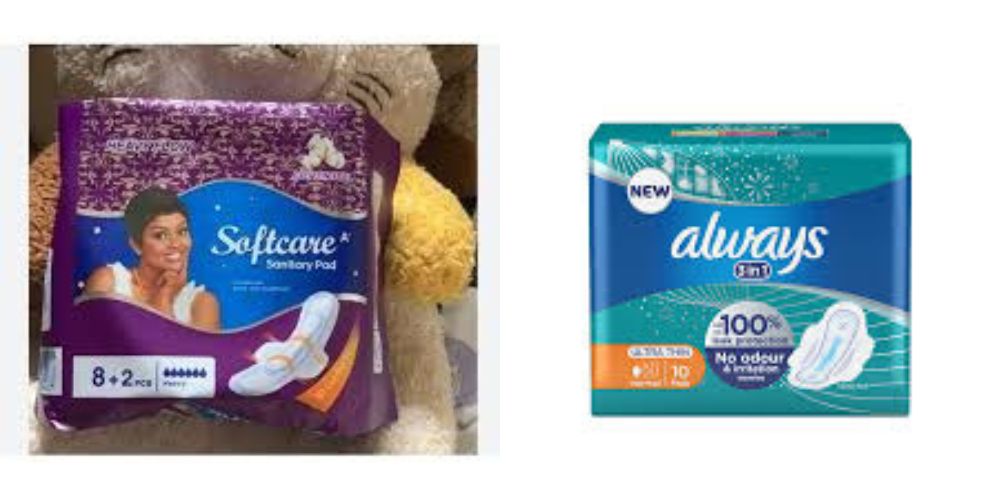
Grace Ameh, a 50-year-old mother of five, sells vegetables at Gwarinpa village market in Abuja. With three daughters, she struggles to afford sanitary pads due to rising costs. She resorts to using pieces of cloth to manage her monthly flow and that of her girls.
“The cost of sanitary pad is very high now, we have not even talked of feeding, now sanitary pad, I have to turn one of my wrappers to pieces for me and my three girls, we use and wash and keep for next time,” Ameh told THE WHISTLER.
This is just one story of many in Nigeria, where period poverty affects countless women and girls. Once considered an affordable necessity for menstruating women, especially in developing countries, sanitary pads, are now becoming increasingly expensive, placing a significant burden on vulnerable women and girls.
This issue extends beyond mere inconvenience as it affects health, education, and dignity as most vulnerable women resort to any possible available means to manage the situation.
While Ameh uses pieces of clothes, Jovita Enojo, a hair dresser at Gwarinpa village market, says she manages her flow using napkin which she had cut to her comfort.
Advertisement
“I hardly buy sanitary pad these days ooh. I used to buy white napkin, cut it to size that will be comfortable for me and wash them very well after use. After every period, I used to wash with hypo and keep them well for next time,” Enojo said.
“I only use sanitary pad when I am travelling on a far distance journey or if I am going for an occasion that I will stay long before coming back,” she added.
Wikipedia described sanitary pad as a hygiene absorbent product worn in the underwear when menstruating, bleeding after giving birth, recovering from gynecological survey, experiencing a miscarriage or in any other situation where it is necessary to absorb a flow of blood from the vagina.
THE WHISTLER’s findings revealed that prices of different sanitary pads increased by double the initial prices. The least price that was in the range of N500 to N600, is now N1000 to N1200, a situation that has left most low-income women with little or no knowledge of menstrual hygiene vulnerable to infections.
According to experts, the use of pieces of cloth for menstrual flow poses serious health risks, including infections and irritation. The lack of access to proper menstrual products has also forced many girls to miss school.
Advertisement
Latifa, a 14-year-old SS1 student at a school in Gwagwa, a suburb in the FCT, also shares her struggles to manage her period. Her mother, a petty trader, can’t afford sanitary pads, forcing Latifa to miss school during her menstrual cycle.
“I rarely go to school when am menstruating, and is because I always have my dress stained at that period, I manage it with pieces of cloths which gets full most times before school closes, coupled with the discomfort it gives me,” she lamented.
Sanitary pads are designed to provide quality hygiene and comfort during menstrual flow. The hygiene, when well applied, preserves women against infections during menstrual flow.
Health experts advised that sanitary pads should be changed at least every four hours interval to maintain a quality hygiene that protects against infections.
A new study by the World Health Organisation (WHO), and International Agency for Research on Cancer (IARC) published on February 3, 2026, revealed that among other causes of cancer, infections are 10 per cent globally responsible for cancer in women.
This report highlights the aftermath of the poor menstrual hygiene practiced by the vulnerable and low-income women in the country.
Advertisement
Seeking solution on how to curtail this issue of public concern, THE WHISTLER contacted Planned Parenthood Federation of Nigeria (PPFN), a non-governmental organization, widely known for saving lives through reproductive health and family planning services.
The Gender and Youth Focal head desk, PPFN, Halima Urah, decried the situation stressing that the rising cost of sanitary pads is not just an economic issue, but also a gender and social justice concern that directly affects the dignity, health, and participation of women and girls, especially those from vulnerable and low-income communities.
According to Urah, menstrual hygiene is a basic necessity which when unaffordable, deepens existing inequalities, exposes girls and women to health risks, and limits their ability to fully participate in school, work, and community life.
She further stated that the organisation is interested in exploring sustainable and inclusive solutions that ensure menstrual products are accessible and affordable for everyone, with the believe that this challenge requires collective action.
She also highlighted some ideas to mitigate the challenges of high cost of sanitary pad to include, local production of low-cost reusable pads, subsidies or tax waivers on menstrual products, public–private partnerships, and community-based distribution models.
“We are also open to learning from initiatives that integrate menstrual health into broader sexual and reproductive health programs, humanitarian responses, and social protection schemes,” she said.
Urah emphasisied that addressing period poverty through collaboration, is essential to advancing gender equality and inclusion.
“Through collaboration, innovation, and policy advocacy, we can work toward a future where no girl or woman is forced to choose between basic needs and menstrual dignity. PPFN remains committed to amplifying these conversations and supporting solutions that leave no one behind,” she added.