The Unintended Consequences Of The Gulf War On Global Business, Trade, Human Welfare
FROM TENSION TO CONFLAGRATION
Just days ago, I sat in a conference room in City Centre Rotana, Doha, Qatar, leading the capacity-building masterclass for senior executives of the Nigerian Maritime Administration and Safety Agency (NIMASA). Outside the windows of that magnificent city — a metropolis built on vision, ambition, and the bold spirit of the Qatari people — there was an unmistakable undercurrent of anxiety. Delegates whispered about troop movements, missile alerts, and diplomatic ultimatums. We pressed on with our sessions, hoping that reason would prevail, that the world’s leaders would step back from the edge.
They did not. On the morning of Saturday, February 28, 2026, the United States and Israel launched coordinated military strikes on Iran, targeting its missile infrastructure, naval assets, and strategic installations across Tehran and other major cities. Iran, which had been engaged in nuclear negotiations with Washington right up until the hour of the attack, retaliated swiftly and decisively. Iranian ballistic missiles and drone strikes rained down not only on Israel but on Gulf Arab states that host American military bases — Qatar, Kuwait, the United Arab Emirates, and Bahrain. The Strait of Hormuz, through which approximately 20 per cent of the world’s seaborne oil flows daily, was effectively announced as closed to transit. A semiofficial Iranian media outlet declared the waterway shut; tankers began diverting immediately.
The war we had feared, the war we prayed would not come, had arrived. This article does not take a political side. It does not adjudicate between the competing claims of nations, ideologies, or alliances. What it does is train a cold and honest analytical lens on the collateral damage — the devastating, far-reaching, largely unintended consequences of this conflict on commerce, travel, hospitality, energy markets, supply chains, and the ordinary lives of millions of people who never voted for war, never wanted it, and will bear its highest costs.
THE SKIES GO DARK — AVIATION IN FREEFALL
The most immediate and visible casualty of the Gulf War has been global aviation. Within hours of the first strikes, the airspace over Iran, Iraq, Israel, Jordan, Syria, Kuwait, Qatar, Bahrain, and the UAE was either fully or partially closed to commercial traffic. The consequences have been staggering. Emirates cancelled 38% of its flights, and Etihad cancelled 30% on the first day of the conflict, while Qatar Airways suspended all flights from Doha, with 41% of all its scheduled flights cancelled. Dubai International Airport — the world’s single busiest international airport — suspended all operations. Across the entire Middle East on Saturday, February 28, 2026, alone, 966 out of 4,218 scheduled flights were cancelled, representing a 22.9% cancellation rate. By Sunday, March 1, the disruption had intensified rather than eased.
The ripple effects have been global in scale. IndiGo of India cancelled at least 72 flights; Air India suspended all Middle East services until further notice; Air India Express extended its suspension of westbound international flights through March 1, offering free rescheduling or full refunds. Turkish Airlines suspended flights to Lebanon, Syria, Iraq, Iran, and Jordan. American Airlines halted its Philadelphia–Doha service. Delta Air Lines and United Airlines suspended flights to Tel Aviv. British Airways suspended flights to Tel Aviv and Bahrain. Lufthansa, Air France, Transavia, and Pegasus all cancelled flights to Lebanon. Virgin Atlantic rerouted its India and Maldives services to avoid Iraqi airspace, adding significant flight time and fuel costs.
Aviation analytics firm Cirium, which monitors more than 99% of commercial flights worldwide and supplies data and analytics to the majority of the top 100 airline groups, estimated that the three major Gulf carriers — Emirates, Qatar Airways, and Etihad — together handle approximately 90,000 passengers per day through their hubs. Every one of those passengers on Saturday and Sunday faced stranding, rerouting, or cancellation. In Bali, Indonesia alone, over 1,600 tourists were left stranded after five inbound Gulf connections were cancelled.
The financial hemorrhage for airlines has been severe. Rerouting flights around the Tehran Flight Information Region costs approximately $6,000 in additional operating costs per flight hour, while some routes have been extended by 30 to 90 minutes. War-risk insurance premiums have spiked dramatically. The already-strained post-pandemic aviation recovery, which had relied heavily on the Gulf hub model connecting Europe and Asia, now faces a structural blow at its most critical junction. As industry analyst Henry Harteveldt put it bluntly: “For travelers, there’s no way to sugarcoat this. You should prepare for delays or cancellations for the next few days as these attacks evolve and hopefully end.”
For African nations like Nigeria, whose diaspora populations, businesspeople, pilgrims, and professionals depend on Gulf connections through Dubai, Doha, and Abu Dhabi to reach Europe, Asia, and the Americas, the disruption translates directly into lost productivity, missed opportunities, and profound personal hardship.
THE HOSPITALITY INDUSTRY — EMPTY ROOMS, BROKEN REVENUES
The hotels of Doha, Dubai, Abu Dhabi, and the wider Gulf region were, just weeks ago, among the most profitable in the world. The Middle East had transformed itself into one of the globe’s most sought-after hospitality destinations — mega-hotels, world-class conference centers, luxury resorts, and MICE (Meetings, Incentives, Conferences, and Exhibitions) facilities that generated billions of dollars in revenue annually.
That industry is now in crisis. With airspace closed and flights cancelled across the board, there are virtually no incoming guests. Conferences and corporate events booked months in advance have been suspended or relocated. The NIMASA masterclass I facilitated in Doha just days ago — which brought together senior Nigerian maritime executives for strategic capacity building — was one of the last major events to conclude before the shutdowns. Participants who planned to extend their stays for leisure, business meetings, or regional travel found their plans shattered overnight.
Hotels in Qatar had been operating at near-record occupancies, buoyed by post-World Cup investment in infrastructure and a thriving MICE calendar. Today, those same properties face mass cancellations. Hotels in Dubai and Abu Dhabi, which Dubai Airports reported were edging toward the landmark of 100 million annual passengers at Dubai International, now face months of suppressed demand, revenue losses, and potential staff layoffs. The UAE government has condemned what it described as “a blatant attack involving Iranian ballistic missiles” on its airports and infrastructure — a statement that speaks not only to national anger but to the devastation visited upon its hospitality and tourism economy.
The hospitality impact extends far beyond the Gulf. In Lebanon, Jordan, and Egypt — nations that had only just recovered from COVID-19 and prior geopolitical shocks — hotel bookings were already falling because of proximity to the conflict. According to earlier S&P analyses of Middle East conflict dynamics, the tourism sector in Lebanon, Jordan, and Egypt combined could lose over $16 billion in tourism revenue due to war, with tourism accounting for 12% to 26% of current account receipts in those countries.
For every empty hotel room, there is a housekeeper who earns no commission, a bellhop who receives no tip, a restaurant that serves no covers, and a tour operator whose buses sit idle. The human cost is incalculable. I can tell you this as a Board Member in five-star hotels across Africa.
OIL, ENERGY, AND THE STRAIT OF HORMUZ — THE GLOBAL CHOKEPOINT UNDER THREAT
The Strait of Hormuz is the world’s most critical energy corridor. In 2024, approximately 20 million barrels of crude oil passed through the strait daily — equivalent to nearly 20 percent of global liquid oil consumption. Iran has now moved to restrict or close this waterway. A semiofficial Iranian media outlet described the strait as effectively shut, and ships reported hearing radio broadcasts purporting to come from the Iranian navy announcing that transit was banned. Oil and gas tankers began avoiding the waterway.
The economic implications of this single act are almost beyond comprehension. If Iran follows through on threats to mine or block the Strait of Hormuz, analysts suggest oil prices could surge past $120 per barrel, while Saudi Arabia’s bypass pipeline can only handle half its total capacity and the UAE’s Habshan-Fujairah pipeline can handle only 1.5 million barrels per day, leaving millions of barrels potentially trapped.
Insurance costs for tankers entering the Gulf have already jumped from 0.3% to 0.5% of the vessel’s value in early 2026, adding tens of thousands of dollars to every voyage of a Very Large Crude Carrier. These costs are ultimately passed to consumers worldwide in the form of higher fuel prices, elevated transport costs, and inflationary pressure on food, medicine, and essential goods.
For Africa — and Nigeria in particular — the implications are especially complex. As Africa’s largest oil producer, Nigeria might nominally benefit from higher crude prices. But the reality is more nuanced. Higher global oil prices translate into higher import costs for fuel, fertilizer, chemicals, and manufactured goods. Nigeria’s oil export earnings are undermined by domestic refinery limitations, meaning that foreign exchange from higher oil prices is partially offset by higher import bills for refined petroleum products. Inflation, already a stubborn challenge across the continent, will likely worsen.
GLOBAL SUPPLY CHAINS — FRACTURES IN THE ARTERIES OF TRADE
The Gulf region is not merely a destination for travel and tourism. It is the connective tissue of global trade, the junction through which goods, capital, information, and people flow between East and West. Dubai alone handles over 12 million metric tons of airfreight annually. The Jebel Ali Free Zone in the UAE is the world’s largest man-made harbor and one of the world’s top 10 busiest container ports.
With airspace closed and major hub airports suspended, airfreight has ground to a halt. The closure of Gulf megahubs chokes the busiest east-west transit point, leaving few parts of the planet untouched by disruption. Electronics, pharmaceuticals, perishables, spare parts, and time-sensitive industrial components that move through Dubai and Doha are now piling up in warehouses on multiple continents, unable to reach their destinations.
The shipping lanes through the Persian Gulf and the Red Sea — already disrupted by Houthi drone attacks in 2024 — now face fresh and more dangerous interdiction. Container ships are being rerouted around the Cape of Good Hope, adding 10 to 14 days to Asia-Europe voyages. Shipping costs, which had finally begun to normalize after post-COVID spikes, are surging again. For manufacturers, retailers, and consumers worldwide, this means delayed deliveries, cost escalations, and supply shocks in sectors ranging from automotive to agriculture.
African nations that rely on Gulf transit hubs for imports of Chinese-manufactured goods, Indian pharmaceuticals, and European technology will feel this acutely. For development projects across Sub-Saharan Africa — including the agricultural value chain programs, microfinance institution capacity building, and government infrastructure projects that Successory Nigeria and our peers in development consulting support daily — disruptions in the global supply chain translate directly into project delays, cost overruns, and setbacks for the rural and urban poor who depend on these interventions.
FINANCIAL MARKETS, INVESTMENT, AND THE COLLAPSE OF CONFIDENCE
Wars destroy confidence, and confidence is the lifeblood of investment. Even before the first missiles struck Tehran, a recent study indicated that nearly 40% of international investors viewed Middle East geopolitical tension as a top-three risk, and that programs like Saudi Vision 2030, which relies on foreign direct investment and a booming tourism industry to build a post-oil economy, could see the capital needed for massive projects like NEOM and the UAE’s tech hubs dry up entirely if the region appears to be a war zone.
The stock markets of every affected nation will open to heavy selling. Safe-haven assets — gold, the US dollar, Swiss franc — will surge. Equity markets in emerging economies, including Nigeria’s, will face outflows as global risk appetite contracts. Nigeria’s foreign exchange position, already under pressure, faces additional headwinds as international investors retreat to safety.
The Gulf Cooperation Council (GCC) nations — Saudi Arabia, UAE, Qatar, Kuwait, Bahrain, and Oman — had collectively invested hundreds of billions of dollars in transforming themselves from oil-dependent economies into diversified global hubs. Dubai’s tourism, finance, and logistics economy was a global model. Qatar’s LNG wealth had funded one of the world’s most ambitious national development programs. All of this is now at risk. For the Gulf, a war with Iran is not a distant conflict. It is a domestic disaster. Their entire economic model — built on being a global hub for trade and tourism — cannot survive in a combat zone.
THE HUMAN COST — WORKERS, MIGRANTS, AND FAMILIES CAUGHT IN THE CROSSFIRE
The Gulf is home to tens of millions of migrant workers — from Nigeria, Ghana, India, Pakistan, Bangladesh, the Philippines, Ethiopia, Indonesia, and dozens of other nations. These men and women form the backbone of the Gulf’s hospitality, construction, logistics, retail, and domestic services industries. They send remittances home that sustain families, fund school fees, build houses, and support local economies.
With airports shut, factories paused, businesses closed, and security uncertain, these workers face immediate vulnerability. Those who wish to return home cannot. Those whose contracts are suspended have no income. Those caught in transit between continents are stranded in airports with no clear timeline for resolution. A Bangladeshi worker quoted in international media, Mohammad Abdul Mannan, spoke for millions when he said his greatest fear was not the missiles but losing his job — the income that kept his family alive back home.
For Nigeria, with an estimated 100,000 to 200,000 citizens living and working in the Gulf region, the disruption carries profound implications for remittances, family welfare, and the psychological trauma of separation and uncertainty.
THE STRATEGIC DREAMS DEFERRED
Beyond the immediate disruptions, the Gulf War threatens to derail some of the most ambitious development visions of the 21st century. Saudi Arabia’s Vision 2030, which aimed to transform the Kingdom into a global entertainment, tourism, and technology hub, had already attracted hundreds of billions in planned investments. The UAE’s D33 Agenda targeted doubling Dubai’s economy by 2033 through innovation, trade, and tourism. Qatar’s National Vision 2030 had positioned the country as a global knowledge and energy hub.
These visions are now imperiled. The conflict sends a signal to global investors, conference organizers, multinational corporations, and development partners that the Gulf is a risk zone — a message that no amount of marketing can easily reverse. The painstaking reputational capital built over two decades of modernization, openness, and investment promotion can be destroyed in 48 hours of missile exchanges.
For African nations whose development aspirations are linked to Gulf partnerships — through investment flows, trade facilitation, diaspora remittances, and diplomatic solidarity — the implications are deeply concerning.
A PASSIONATE PLEA FOR PEACE
History is a severe teacher, and it teaches consistently that no war has ever produced only the outcomes its architects intended. Every conflict spawns a cascade of consequences that its planners did not predict, cannot control, and will spend generations trying to repair.
The Gulf War of 2026 is already demonstrating this truth with brutal clarity. Nineteen thousand flights disrupted. Ninety thousand daily passengers are stranded. Hotels are empty across the world’s most connected region. Oil markets are facing their greatest shock since the 1970s. Supply chains fracturing from Bali to Baltimore. Migrant workers are terrified for their livelihoods. Development dreams deferred for a generation.
I write as a man who sat in Doha just days ago, surrounded by Nigerian professionals who had invested their careers in building bridges across nations — executives of NIMASA, dedicated to ensuring the safety and productivity of Nigeria’s maritime economy, learning and growing in a city that exemplifies what human ambition, hospitality, and strategic investment can achieve. I write as a development consultant who has spent 24 years working to lift communities out of poverty through agricultural development, microfinance, and organizational capacity building across 18 African nations. I write as a man of faith, for whom the dignity of every human life is not a political slogan but a sacred conviction.
And from all of these vantage points — professional, personal, and spiritual — the message is the same:
The world cannot afford this war. The Gulf cannot afford this war. Africa cannot afford this war. Humanity cannot afford this war.
We call, with the full force of moral conviction, on the United States of America, on the State of Israel, and on the Islamic Republic of Iran to pursue an immediate ceasefire. We call on the United Nations Security Council to discharge its primary mandate of maintaining international peace and security. We call on the Gulf Cooperation Council nations to leverage their unique diplomatic relationships with all parties to broker urgent dialogue. We call on the African Union, the G20, the Non-Aligned Movement, and every multilateral institution with a voice in global affairs to speak loudly and clearly: enough.
We call on Nigeria — a nation that has always stood for peace, dialogue, and the resolution of disputes through negotiation — to exercise its continental and global voice in the cause of de-escalation.
The Strait of Hormuz must reopen. The skies of the Middle East must clear. The hotel lights must come back on. The conference halls must fill again with the voices of men and women building the future rather than destroying it. The families of migrant workers must stop waking in the night, checking their phones for news of loved ones in a war zone.
To the leaders who hold these decisions in their hands, we say: history will not forgive the unnecessary prolongation of this conflict. The mothers of Iran, the mothers of Israel, the mothers of Qatar, the mothers of Nigeria — they are all weeping the same tears.
Let peace reign. Let dialogue triumph. Let the world return to the sacred and productive work of building, not destroying.
As it is written: “Blessed are the peacemakers, for they shall be called children of God.” — Matthew 5:9
And as the African proverb wisely counsels: “When two elephants fight, it is the grass that suffers.” The grass — the ordinary people of the world — has suffered enough.
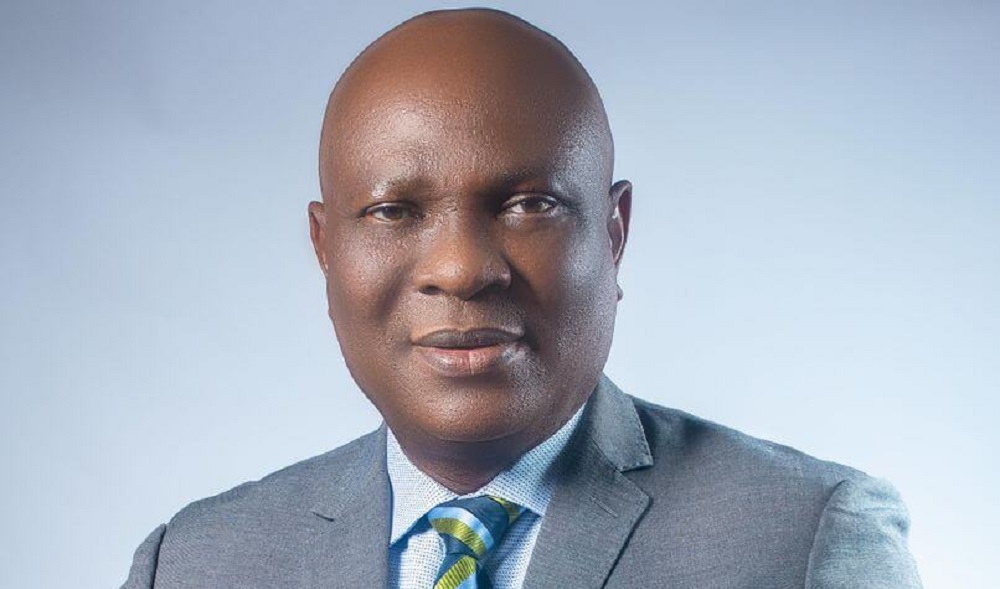
Dr. Steve Ogidan, mni, is the Managing Director of Successory Nigeria Limited, a leading African development consulting firm operating across 18+ countries, and the President of the Turnaround Management Association of Nigeria (TMA-Nigeria). He writes in his personal capacity. Dr. Ogidan, mni, is a distinguished member of the National Institute, Nigeria’s highest policy institute. He is an Independent Non-Executive Director (INED) of Dignity Finance and Investment Ltd. He is the Chairman of the Global Knowledge Consulting Group. He serves as an INED on the Board of Hotels across Africa and the Middle East.