
Utomi Urges Opposition To Rescue Nigeria From ‘Ponzi Economics’
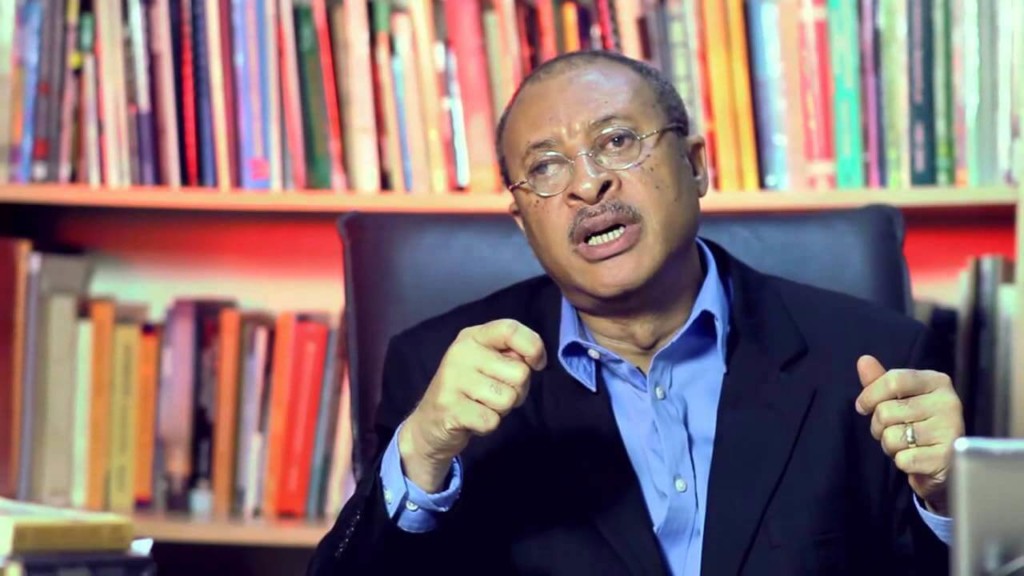
A political economist, Prof Pat Utomi, has charged opposition parties to rescue Nigeria from what he described as “ponzi economics” of the All Progressives Congress (APC) led administration.
Utomi, who spoke during the opposition parties’ summit in Ibadan, Oyo State on Saturday, described Nigeria’s current economic condition as a “moral outrage.”
He urged opposition political actors to chart a new course anchored on production, discipline, and inclusive growth.
Speaking on the theme “Rebuilding a Productive, Dynamic and Efficient Economy for Nigeria,” Utomi painted a stark picture of widening inequality and hardship.
He cites a recent PiggyVest report indicating that 58 percent of Nigerians earn less than ₦100,000 monthly. He contrasted this with what he called the excesses of the political elite.
Recounting a personal experience at a petrol station in Lagos, he said the cost of filling his tank equated to “two and a half times the monthly income of many Nigerians,” adding that a passing seven-car convoy symbolised “the earnings of about 20 citizens.”
Advertisement
“Our current economic reality is a moral outrage,” he said. “While many survive on remittances, some celebrate ‘Tinubunomics’ and ask suffering Nigerians to wait in hope.”
He accused the federal government of “profligate spending, reckless borrowing and treasury looting,” warning that such practices had deepened poverty and inequality.
Citing World Bank data, he noted that nearly 130 million Nigerians live in multidimensional poverty, questioning the absence of widespread civic resistance.
Prof Utomi lamented that the country had drifted into unsustainable economic management.
Reflecting on Nigeria’s past, he said the country once pursued industrialisation with clear vision and discipline.
Advertisement
He recalled that, by independence in 1960, manufacturing had risen to about 20 per cent of GDP, driven by regional competition and investments in industrial estates.
“Today, we are heavily indebted and struggling with insecurity, yet those in charge ask for patience while citizens endure deepening hardship,” he said.
He also linked economic decline to a collapse in values and leadership standards, stressing that “character matters” in governance.
According to him, the absence of integrity and accountability has enabled state capture and weakened institutions.
“Our economy is where it is because character has been lost,” he said. “To recover, we must entrust leadership to people who understand sacrifice and can feel the pain of the people.”
He criticised what he described as misplaced priorities, including luxury spending by government officials amid widespread deprivation, and warned that such actions erode public trust.
Advertisement
On policy direction, he called for a shift from consumption-driven growth to production-led development, with emphasis on job creation, export-oriented manufacturing, and broad-based inclusion.
“We must move from stabilisation to high growth; from elite consumption to mass production; from job losses to job creation; and from exclusion to inclusion,” he said.
He advocated decentralised development driven by states and local governments, focusing on industrial clusters linked to local resources, as well as sustained investment in education, infrastructure, and innovation.
Utomi further urged reforms to strengthen institutions, promote accountability, and eliminate what he described as “state capture by parasitic interests.”
Drawing lessons from countries such as China and Indonesia, he stressed the importance of disciplined leadership, strategic investment, and long-term planning, particularly in education and industrial policy.
The professor of political economy also outlined key “development pitfalls” to avoid, including policies that prioritise elite consumption, weak investment in human capital, and failure to build strong institutions.
He expressed confidence that a people-centred economic framework, anchored on entrepreneurship and value creation, could restore growth and national prosperity.
“With the right ideas and faithful implementation, the people will come with us,” he said. “And Nigeria will rise again.”