
2027: Bad Roads Threaten Political Parties’ Campaign Trails
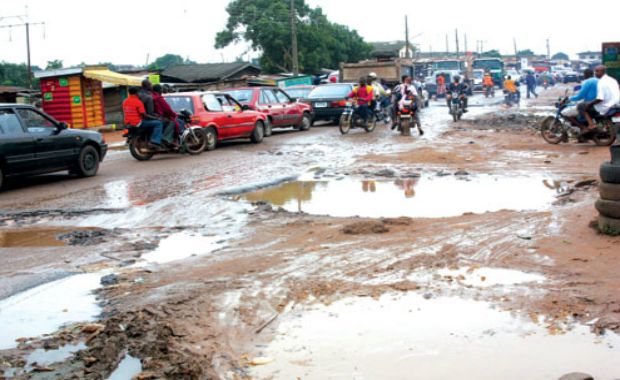
As political parties prepare for nationwide rallies ahead of the 2027 general elections, the deplorable condition of roads across the country may pose major challenges to their campaign activities.
Motorists and commuters daily contend with deteriorating roads on major interstate highways and regional routes linking state capitals with adjoining towns and communities.
While top party chieftains often travel by air to state capitals for campaign engagements, thousands of supporters are usually mobilised by road from different parts of the country to attend rallies.
Among the worst-affected routes is the Abuja-Lokoja highway, a major link between the Federal Capital Territory (FCT) and several states in the South.
The contract for the dualisation of the 196-kilometre highway was awarded in 2006 by the administration of former President Olusegun Obasanjo. Twenty years later, however, the project remains far from completion.
Although the decision by the President Bola Tinubu administration to replace the failed asphalt pavement with concrete slabs appears to have offered a solution, only limited sections of the highway have so far been covered.
Advertisement
The situation has forced motorists to repeatedly switch between carriageways at short intervals, worsening traffic and increasing the risk of accidents.
The Benin-Auchi Road in Edo State has also suffered extensive deterioration, with erosion ravaging the Ehor axis and other sections of the highway.
Similarly, the Itu-Calabar highway linking Cross River and Akwa Ibom states has witnessed increasing deterioration and recorded high accident rates in recent times.
The Abuja-Kaduna-Kano expressway is another major route affected by failed sections, resulting in prolonged travel times as motorists struggle through difficult portions of the road.
The Birnin-Gwari highway linking Kaduna and Niger states is also highly degraded, with dirt and washed-out asphalt posing serious risks to travellers.
Advertisement
In Kogi State, the Lokoja-Okene Road has become a death trap, with the heavy movement of trailers, tankers and other articulated vehicles accelerating the collapse of the already weakened pavement.
In the Southeast, several portions of the Enugu-Onitsha Expressway, which links Enugu and Anambra states, have deteriorated, particularly around the Ugwu Onyeama axis.
The Benin-Warri-Port Harcourt Road is similarly characterised by extensive failed sections, slowing traffic along the South-South corridor and creating serious difficulties for travellers across Edo, Delta and Rivers states.
Recent road performance indices have listed Abia, Edo, Imo, Taraba, Ogun and Kogi among states with high concentrations of failed federal and internal roads.
Apparently concerned about the worsening state of some major highways, the Minister of Works, Dave Umahi, on Wednesday ordered the concessionaire handling the Benin-Asaba Road project off the road.
Umahi, who spoke during a stakeholders’ engagement in Benin City, decried the condition of the highway and directed contractors to remove blockages causing hardship to travellers.
Advertisement
He also directed the concessionaire, Benin-Asaba Expressway Concession Company (BAECC), to formally write to the Federal Government through his ministry for the termination of the concession agreement.
Expressing disappointment with the contractors’ performance, Edo State Governor, Monday Okpebholo, described the work done on the road as “a total waste of resources.”
With the presidential and National Assembly elections scheduled for January 16, 2027, questions remain over whether the federal and state governments can rehabilitate critical road networks before political parties commence full-scale campaigns.
The situation could leave parties facing not only difficult campaign trails but also the added challenge of moving supporters safely across the country amid worsening infrastructure and insecurity.