
Assessing Systemic Risk From Dominant Brokerage Players
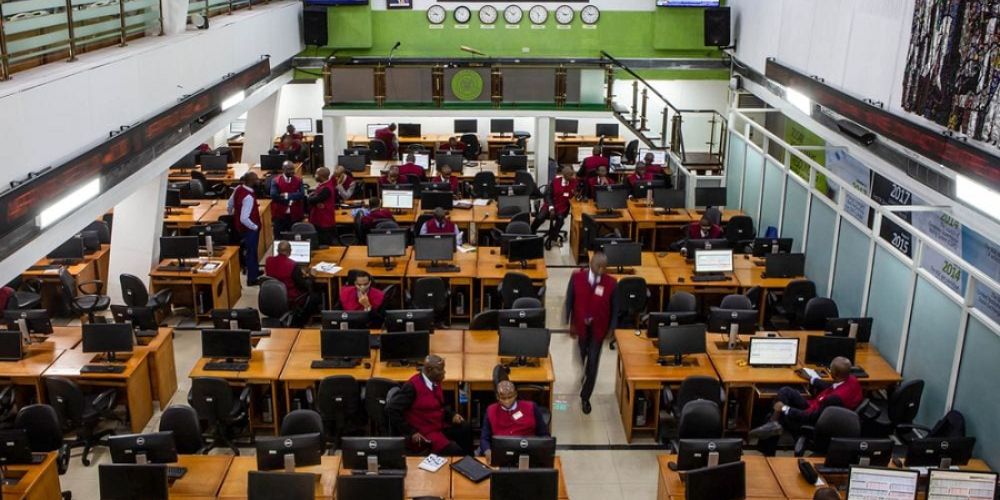
Nigeria’s capital market presents a paradox that is becoming increasingly difficult to ignore. Despite having more than 200 registered dealing member firms, a remarkably small group of just ten brokers continues to dominate trading activity on the Nigerian Exchange Limited (NGX).
This concentration of market power has triggered widespread concern among regulators, analysts, and market participants, particularly against the backdrop of Nigeria’s painful experience during the global financial crisis of 2007 and 2008.
At the heart of the concern is not merely the dominance itself, but what it represents: a market structure that may be vulnerable to shocks, susceptible to manipulation, and potentially exclusionary to smaller operators and retail investors.
With new regulatory reforms now raising capital requirements across the industry, the Nigerian capital market stands at a critical inflection point.
The central question is whether these reforms will dilute or deepen the dominance of top brokers, and what that means for the future of the market.
Recent trading data underscores the extent to which a handful of firms control market activity. In the first quarter ending March 31, 2026, the top ten stockbrokers accounted for transactions valued at N458.7bn, representing 66.05 per cent of the total value of equities traded on the NGX within that period.
Advertisement
APT Securities and Funds emerged as the most dominant player, executing trades worth N142.4bn, equivalent to 20.49 per cent of the total market value. It was followed by Meristem Stockbrokers Limited with N70.35bn, and Cardinalstone Securities Limited with N53.26bn. Other firms in the top tier included Stanbic IBTC Stockbrokers Limited, EFG Hermes Nigeria Limited, Cordros Securities Limited, Rencap Securities (Nigeria) Limited, CSL Stockbrokers Limited, Chapel Hill Denham Securities Limited, and WSTC Securities Limited.
In terms of trading volume, these same firms collectively handled 23.259bn shares, accounting for 52.24 per cent of total shares exchanged during the quarter. Cardinalstone Securities Limited led in volume, followed by APT Securities and Funds and Morgan Capital Securities Limited.
These figures highlight a clear imbalance. While the market is populated by hundreds of licensed operators, the overwhelming majority of trading activity is concentrated in the hands of a select few.
Market Influence: How Big Players Set Tone
The dominance of these top brokers extends beyond mere numbers. Their scale and reach effectively position them as de facto market drivers. Because they manage large portfolios for institutional investors and serve as primary conduits for Foreign Portfolio Investments (FPIs), their trading decisions carry significant weight.
Advertisement
Market observers note a recurring pattern: when these large firms begin to accumulate equities, bullish sentiment tends to return, driving prices upward. Conversely, when they start to offload positions and take profits, bearish sentiment quickly takes hold. This dynamic contributes to the cyclical and often volatile nature of Nigeria’s stock market.
Such influence raises important questions about market efficiency and fairness. In a well-functioning market, price movements should reflect a broad base of participants and diverse information flows. However, when a small group of actors can significantly influence market direction, the risk of distortion increases.
The current situation inevitably draws comparisons with the events of the 2007–2008 global financial crisis, which had a devastating impact on Nigeria’s capital market. During that period, the Nigerian Stock Exchange’s All-Share Index fell dramatically from approximately 66,000 basis points in March 2008 to less than 22,000 points by January 2009.
The market lost over N8trn in value, representing about 70 per cent of total market capitalization. Analysts identified the mass exit of foreign investors as a key trigger for the crash. Given that the same top brokerage firms currently dominate trading activity and serve as major channels for foreign investments, the parallels are difficult to ignore.
The concern is that a similar exodus today could have an equally severe impact, especially if market activity remains heavily concentrated. The dominance of a few firms could amplify the effects of external shocks, making the market more vulnerable to sudden downturns.
While large brokers dominate trading volumes, regulatory data suggests that smaller, under-capitalized firms are more frequently associated with market infractions. These include unauthorized sales of client shares, misappropriation of funds, and various forms of market manipulation.
Advertisement
Over a thirteen-year period from 2011 to 2023, regulators recorded 3,792 enforcement actions against trading license holders. These actions were based on numerous violations, including breaches of market rules and unethical practices. Additionally, dozens of dealing clerks and market operators have been blacklisted, and several cases have been referred to law enforcement agencies for further investigation.
A detailed look at the report shows that in 2011, the NGX Regco carried out 257 enforcement actions against stock broking firms. This number rose to 436 in 2012 and fell slightly to 424 in 2013.
Further details show that Regco recorded 557 enforcement actions in 2014, which rose to 608 in 2015 but fell to 328 in 2016.
Numbers for other years were as follows: 2017 (267), 2018 (171), 2019 (167), 2020 (82), 2021 (148), and 2022 (139). In 2023 the NGX Regco recorded 208 enforcement actions against trading license holders, bringing the total to 3,792 sanctions.
“The reduction in number of enforcement actions carried out in year 2020 was due to the regulatory concessions granted to Trading License Holder Firms in order to cushion the adverse effect of COVID-19 on their business operations,” the NGX said.
Between January 2012 and November 25, 2024, no fewer than 37 stockbroking firms (names withheld) were involved in unauthorised sale of investors’ shares and misappropriation of investors’ funds, the report further shows.
Most of the complaints about unauthorised sale of investors’ shares and misappropriation of investors’ funds have either been resolved, unresolved or restituted through the Investors’ Protection Fund (IPF).
Only recently, NGX RegCo imposed significant financial penalties and corrective measures on five dealing member firms following findings of market misconduct.
The action underscores a firmer regulatory posture aimed at safeguarding market integrity and restoring investor confidence.
The sanctioned firms include CSL Stockbrokers Limited, Cowry Securities Limited, Meristem Stockbrokers Limited, SMADAC Securities Limited, and Associated Asset Managers Limited.
The brokerage firms were found to have engaged in practices including alleged market manipulation, wash trades, self-matching transactions, artificial price formation, and dissemination of misleading market activity signals.
CSL Stockbrokers received the heaviest penalty, fined N91.29m, while the other four firms were each fined N50m pursuant to Section 139(2)(d)(ii) of the Investments and Securities Act (ISA) 2025.
In addition to monetary sanctions, all five entities are required to undergo mandatory compliance and market conduct training, an indication of regulatory emphasis on behavioural correction alongside punitive enforcement.Market data analysis
The Board of NGX RegCo ratified the sanctions on 27 March 2026, following Investigation Panel hearings conducted on 25 February and 17 March 2026.
Former Group Chief Executive Officer of the NGX, Mr. Oscar Onyema, had previously attributed many of these infractions to the limited capacity of smaller brokers. According to him, such firms often lack the financial strength and operational infrastructure required to conduct business in a compliant and sustainable manner.
This perspective highlights a structural imbalance within the market: while large firms dominate trading activity, smaller firms contribute disproportionately to compliance risks.
Strengthening Oversight: A More Assertive Regulatory Approach
In response to these challenges, regulators have intensified efforts to improve transparency and enforce compliance. Initiatives such as BrokerTraX have been introduced to provide investors with access to the compliance history of brokerage firms, enabling more informed decision-making.
Recent enforcement actions further demonstrate a shift toward stricter oversight. Several brokerage firms have been sanctioned for engaging in practices such as wash trades, self-matching transactions, and artificial price formation. These actions are intended to deter misconduct and reinforce the integrity of the market.
At the same time, regulators have emphasized the importance of aligning Nigeria’s capital market with global best practices. This includes enhancing surveillance systems, strengthening internal controls, and promoting a culture of compliance among market participants.
A central pillar of ongoing reforms is the introduction of new capital requirements for market operators. Under the revised framework, brokerage firms are required to maintain significantly higher capital bases, depending on the scope of their operations.
Brokers offering client execution services must now maintain a minimum capital base of N600m, up from N200m. Firms engaged in proprietary trading are required to hold N1bn, while full-service broker-dealers must meet a threshold of N2bn, a substantial increase from the previous requirement of N300m.
These changes reflect a broader regulatory objective: to enhance the financial resilience of market operators, reduce systemic risk, and ensure that firms have the capacity to meet their obligations in a dynamic and increasingly complex financial environment.
From the perspective of industry operators, the current dynamics present both opportunities and challenges. The Managing Director of Crane Securities Limited, Mr. Eze, in an exclusive interview with THE WHISTLER, offered a detailed assessment of the situation, emphasizing the structural implications of broker dominance and regulatory reform.
According to him, the ten dominant firms have built their position largely due to their diversified client base, which includes foreign portfolio investors, local institutional investors, and high-net-worth individuals. This broad reach allows them to command significant market share and influence.
However, he expressed concern that this dominance is gradually transforming the Nigerian capital market into one characterized by imperfect competition. In such an environment, a few large players effectively dictate market conditions, potentially crowding out smaller firms and limiting competition.
Eze acknowledged that the recapitalisation policy aligns with the broader objective of building a stronger and more credible financial system. He noted that the previous capital thresholds were insufficient for the scale of transactions now taking place in the market. As companies grow larger and transactions become more complex, brokers must have the financial capacity to support them.
He argued that while capital market operators do not face the same types of risks as banks or insurance companies, the need for stronger capital bases is nonetheless justified. A well-capitalized brokerage sector enhances confidence among global investors and positions Nigeria more competitively in the international financial system.
At the same time, he cautioned that the transition to a more capital-intensive market structure could have unintended consequences. One of the most immediate impacts is likely to be consolidation, as smaller firms struggle to meet the new requirements. This could lead to mergers, acquisitions, and, in some cases, the exit of firms from the market.
Such consolidation, he noted, may result in job losses and temporary disruptions, particularly as firms restructure their operations. He drew parallels with other sectors where technological and structural changes have led to workforce adjustments.
Perhaps most importantly, Eze highlighted the risk of reduced access for retail investors. He warned that larger firms may prioritize high-value clients, potentially imposing higher minimum investment thresholds that could exclude smaller investors. This could widen the gap between institutional and retail participation in the market.
He emphasized the critical role that smaller brokers play in reaching underserved communities and promoting financial inclusion. These firms often serve as the primary link between the capital market and investors in rural and semi-urban areas. Their potential disappearance could create a significant gap in market access.
In his view, a balanced approach is necessary, one that strengthens the market without sacrificing inclusivity. He expressed optimism that regulators would continue to refine the policy to achieve this balance.
Industry experts, including first Professor of Capital Market, Uche Uwaleke, widely expect that the new capital requirements will accelerate consolidation within the brokerage sector. As weaker firms struggle to raise capital, mergers and strategic partnerships are likely to become more common.
“This is likely to accelerate consolidation, which appears to be the intended policy outcome,” Uwaleke observed.
“If well managed, consolidation could enhance market stability, improve service quality and strengthen investor confidence. Poorly managed, it could trigger disorderly exits, job losses and short-term disruptions.
The success of the new capital order will ultimately hinge on how the SEC implements it. Clear and early guidance on compliance modalities is essential, particularly on what qualifies as eligible capital, how group structures will be treated and the mechanics of capital verification,” he said.
Uwaleke recommends a phased or tiered approach, with interim milestones that allow both regulators and operators to track progress. Experience from other jurisdictions suggests that such milestones help distinguish between firms making genuine good-faith efforts and those simply delaying the inevitable.
Equally important is regulatory agility. Fast-tracked approvals for mergers, acquisitions and strategic investments could make the difference between orderly consolidation and chaotic market exits. Limited regulatory forbearance for firms that demonstrate credible progress toward compliance without diluting standards, could also improve overall outcomes
While consolidation can lead to stronger and more efficient institutions, it also carries risks. If not managed carefully, it could result in excessive concentration, reduced competition, and potential systemic vulnerabilities.
The challenge for regulators will be to guide this transition in a way that preserves market stability while fostering innovation and inclusivity.
Nigeria’s capital market is undergoing a period of significant transformation. The dominance of a small group of brokers, combined with structural weaknesses and regulatory challenges, has created a complex landscape that demands careful navigation.
The introduction of new capital requirements represents a bold attempt to address these issues and build a more resilient and globally competitive market. However, the success of these reforms will depend on their implementation and the ability of stakeholders to adapt to the changing environment.
Ultimately, the goal is to create a market that is not only efficient and robust but also inclusive and accessible. Achieving this balance will be critical to ensuring the long-term sustainability and growth of Nigeria’s capital market.