
Children With Special Needs Deserve Education, Inclusion — Experts
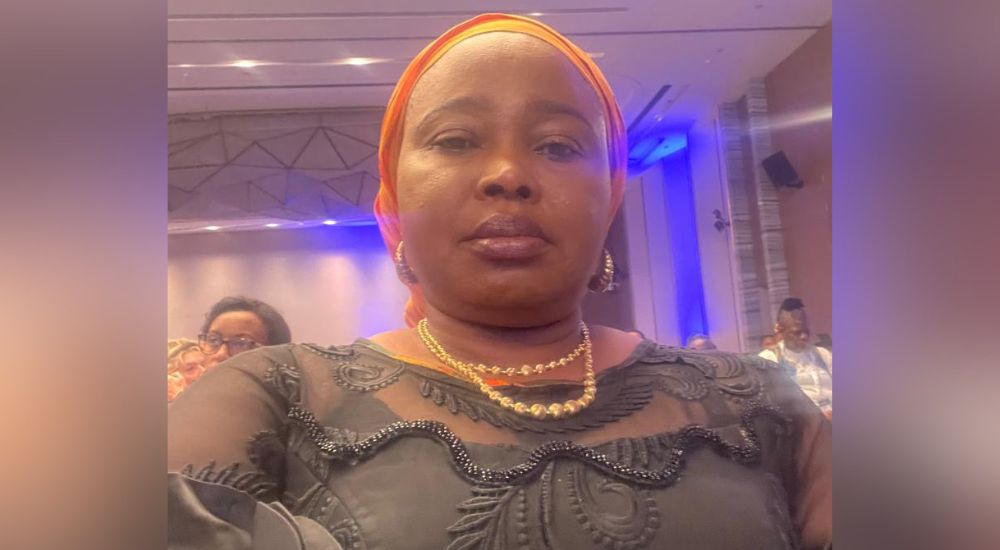
A special education expert, Dr. Chijioke Onwuzuluike, has raised concerns that many children living with autism and other special needs are hidden at home and denied access to education due to stigma and lack of awareness.
Speaking during an ongoing children’s emphasis week at the Presbyterian Church Gwarinpa, Abuja, ahead of 2026 Children’s Day, Onwuzuluike, who holds a PhD in Special Education, said many families, especially wealthy ones, conceal children with conditions such as autism, cerebral palsy and Down syndrome instead of enrolling them in school or seeking proper support for them.
According to her, the situation has made it difficult for authorities and researchers to obtain accurate data on the number of children living with special needs in the country.
“The majority of these children are hidden at home, so they do not even have the opportunity to go to school,” she said.
The education expert explained that many special needs conditions are not physically visible, leading to affected children being wrongly labelled as stubborn, disobedient or troublesome in schools and society.
Advertisement
She noted that some children suffer from conditions such as Attention Deficit Disorder (ADD) and Attention Deficit Hyperactivity Disorder (ADHD), which affect their ability to concentrate or remain calm in classrooms.
According to her, many teachers and parents misunderstand such children because they are unaware that the behaviours are linked to neurological or developmental conditions.
She further stated that special needs education goes beyond children with physical disabilities, stressing that individuals with epilepsy, asthma, learning difficulties and other medical or behavioural conditions also require special attention.
“In the course of my studying, I realized that there is no child that is normal. A child can be regular because that child is not manifesting a special education needs area. But there are physical observant special needs area or disability area, because special needs is not just for disability,” she said.
She also noted that the global campaign for inclusive education has been ongoing since 1994, with advocates pushing for schools, churches and public spaces to become more accommodating to persons with special needs.
Advertisement
The expert explained that her passion for special education was inspired by motherhood and her desire to better understand children with developmental challenges, leading her to pursue advanced studies in the field.
She disclosed that after years of working in the education sector, she decided to focus more on churches and private schools in order to create awareness and advocate for inclusive learning environments.
Onwuzuluike further revealed that she and her team have been conducting research aimed at finding better ways to support children with developmental conditions and help them become more independent.
She cited the case of a woman she encountered in Jos, raising four children with developmental disorders, including three with Down syndrome and one with autism, highlighting the emotional and financial burden faced by many parents.
The expert also called for support to establish resource centres equipped with facilities that can help identify and support children with special needs, noting that government intervention alone may take time.
She urged Nigerians to stop stigmatising children with special needs and instead support efforts aimed at giving them access to education, care and opportunities to live productive lives.
Advertisement
She further spoke on conditions that could lead to birthing a child with special needs.
Onwuzuluike explained that in the first trimester, some medications are not supposed to be taken, especially antibiotics, hard drugs and some malaria tablets.
She added that women find it difficult to take folic acid, which is necessary at that moment for neural and brain development in babies.
She warned that not following the proper instructions of doctors during and after family planning can lead to birthing children with special needs. She also stated that the lifestyle of children of this generation could also lead to children with special needs, urging parents to keep encouraging marriage counselling before marriage.
On caring for autistic children, a renowned Nigerian medical doctor, Dr. Nnennaya Umeh, called for greater inclusion, understanding and acceptance of autism child, stressing the need for society to make them feel loved and supported.

Umeh, while explaining that autism simply means that people’s brains work in different and unique ways, noted that children on the autism spectrum often process information and respond to situations differently from others.
According to her, many autistic children may prefer quiet environments, avoid loud noises and sometimes choose to stay on their own, not because they are antisocial, but because they communicate and process emotions differently.
She said some children with autism may repeat words or actions as a way of seeking comfort and stability, adding that sudden changes or excessive stimulation can overwhelm them. She also noted that loud environments, including crowded gatherings and noisy worship centres, can be distressing for autistic children, leading to fear, anxiety or emotional outbursts.
She urged parents, teachers and caregivers to educate other children about autism to discourage bullying, discrimination and social exclusion.
“We are all the same and should learn to live together in love and understanding, every child is uniquely gifted and deserves acceptance, care and equal opportunities regardless of their condition,” she said.
Umeh further called for increased awareness of autism, saying many people still lack adequate understanding of the condition because conversations around it are often avoided.
Also speaking, Mrs Kelechi Obaji, mother of a child with special needs, shared her personal experience, stressing that accepting her child’s condition became the turning point in her life as a mother.
According to her, many parents go through denial after discovering that their child has special needs, making it difficult for them to provide the care and support the child requires.
“The key to success here is acceptance, once you accept that the child is a gift from God and came for a purpose. When we understand it from that point, the journey becomes easy. We don’t see that child as a burden, and we don’t discriminate against the child,” she said.
She explained that raising a special needs child requires emotional strength, patience and sacrifice, noting that the experience can be physically, psychologically and financially draining for parents.
“After accepting, you also have to walk on yourself emotionally, psychologically, because it will drain you as a parent, because this child needs special attention,” she explained.
Obaji disclosed that she had to work on herself emotionally and mentally to properly care for her child, adding that many parents silently struggle without adequate support. She encouraged parents facing similar situations to seek therapy, counselling and support groups, stressing that caring for children with special needs should not be left to parents alone.
According to her, one of the greatest challenges families face is the high cost of therapy, education and specialised care needed by children with special needs.
She also revealed that she deliberately refused to place her son in a special needs school because she wanted him to grow and interact freely with other children in society. She explained that inclusion helps children with special needs build confidence and communication skills while reducing feelings of isolation.
“My son is not in a special needs school. I try not to put him in a special needs school, just like we were talking about, including them in society, putting him in a special need school will make him understand that being in a special needs school is more like restricting him to the same set of people, Obaji said.
She also emphasised the importance of “shadow teachers” or support aides who assist children with special needs in adapting to school and social environments, while calling on churches and communities to create more supportive environments for parents and children living with special needs.
“It is not an easy task. Parents of special needs children need emotional, financial and spiritual support to continue. When you see these children around, try to help and support them. We are all parents to special needs children,” she added.