
EXCLUSIVE: Reps Amend Electoral Act To Block APC Defection Over Primaries
…Amendment May Stop ADC From 2027 Election
…Bill May Be Transmitted To President Next Week
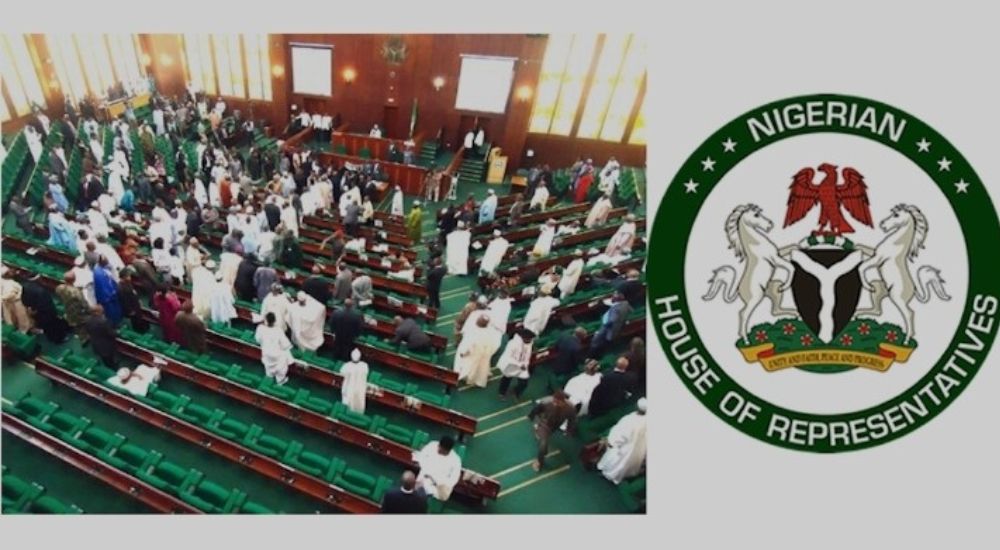
The House of Representatives has introduced a raft of amendments to the Electoral Act 2026, tightening rules on party membership and candidate eligibility amid growing concerns over potential defections within the ruling All Progressives Congress (APC).
The move comes against the backdrop of rising anxiety within the party following a wave of defections that has bolstered APC’s majority in the House as the election approaches.
The party has been on edge, especially as the President directed the 31 governors under the party’s platform to handle primary elections and control party tickets. Majority of the lawmakers are reportedly not being favoured to return to the House.
Advertisement
Already, a rep member, Hon. Sani Aliyu Danlami, who represents Katsina Central Federal Constituency, has lost his bid to return to the green chamber to a business mogul, Dahiru Mangal’s son, Mr Abba Mangal, who got the ticket of the APC via consensus.
With the president’s pronouncement effectively giving the governors the power, the governors are working to choose candidates through consensus arrangements, which will enable their anointed aspirants to emerge.
This development has sent shock waves across the National Assembly especially as the window to defect to contest on the platform of other parties would be shut in the coming days if the president signs the amendments.
Worse affected are the decampees who were promised automatic tickets but now find themselves at the mercy of the governors who have other party members in mind.
The development is causing serious confusion and, in some instances, regret, with plans for mass defections being planned after the party’s primaries. The news of the defections, THE WHISTLER learnt, was responsible for the postponement of the APC party primaries twice.
Advertisement
Recall that the APC had released its timetable and schedule of activities for the 2027 General Elections on April 20 in a statement signed by the Party’s National Organising Secretary, Sulaiman Muhammad Argungu. The timetable outlined, among other activities, timelines for screening, appeals, and primary elections, as well as directives on the sale of nomination and expression of interest forms.
The party, however, released what it called a revised timetable and schedule of activities for the 2027 General Elections on April 27, announcing, among others, Saturday 23rd May as the date for the conduct of its presidential primary. It had fixed Friday 15th as the date for its presidential primary.
It was gathered that the shift was to undertake further amendments and enable the President to sign the amendments into law, effectively ending any hope of defection by aggrieved aspirants.
Amid this backdrop, the House amended Section 77 of the Act by inserting new subsections (8) to (10), aimed at strengthening provisions on party membership.
Under the proposed amendment, Section 77(8) provides that “a person shall not be registered as a member of more than one political party at the same time.”
Section 77(9) states that where dual membership is established, such registration shall be void, and the individual shall cease to be recognised as a valid member of any political party pending regularisation in line with the provisions of this Act and the constitution of the political party concerned.
Advertisement
Also, Section 77(10) prescribes penalties, stipulating that any person who knowingly registers or maintains membership in more than one political party commits an offence and is liable, upon conviction, to a fine of N10 million or imprisonment for a term of two years, or both.
The intent of the amendments according to insider sources is to prevent politicians from maintaining parallel loyalties across parties, even if they fail to clinch tickets during primaries.
Also, some rep members were not present during plenary when the two separate amendments were undertaken. A rep member said those who were present during the last amendment did not have the copy of the bill to study and make input.
Further amendments also introduced stricter requirements for party membership registration and participation in primaries.
The revised provisions mandate that a membership card must be issued upon registration, while political parties are required to submit their membership registers to the Independent National Electoral Commission (INEC) no later than 21 days before primaries, congresses, or conventions.
Only individuals whose names appear in the submitted register will be eligible to vote or be voted for in party primaries, congresses, and conventions, as stipulated in subsection (5).
In subsection (6), parties are barred from using any register other than the one submitted to INEC for their primaries, while subsection (7) warns that failure to submit the register within the stipulated timeframe will disqualify a party from fielding candidates in an election.
The stricter provisions could have wider implications for opposition parties, particularly those currently grappling with internal disputes. The African Democratic Congress (ADC), for instance, is currently embroiled in a leadership crisis with Court cases following the emergence of the David Mark-led group.
One of the cases which was referred back to the Federal High Court by the Supreme was instituted by the Nafiu Bala Gombe camp against the Mark-led National Working Committee (NWC). The Independent National Electoral Commission (INEC), relying on what it said was a court decision, delisted the Mark-led group, citing a court decision from the Bala Gombe camp. But following the apex Court judgement has, in the main, relisted the leadership.
Another case filed by the party’s former presidential candidate, Dumebi Kachikwu forced the Court to bar INEC from recognising congresses and conventions organised by the Mark-led leadership.
However, if the President signs the amendments into law, the ADC may not meet up with the 21 days that parties are required to submit their register to INEC as a result of ongoing court cases. The window for submission of the register ends May 10.
Also, INEC’s schedule of activities provides that party primaries must be conducted between April 23 and May 30.
The new amendments have not yet been transmitted to the President for assent, as lawmakers are still harmonising them with additional changes introduced on Wednesday.
One of such amendments is contained in a separate bill titled “A Bill for an Act to Amend the Electoral Act 2026 to Provide for Jurisdiction for Pre-Election Matters and for Related Matters (HB.2760)”, co-sponsored by Deputy Speaker Benjamin Kalu and four committee chairmen — Adebayo Balogun (Electoral Matters), Babajimi Benson (Defence), Nnolim Nnaji (Ports and Harbour), and Makki Yalleman (Police).
The bill seeks to streamline the handling of pre-election disputes. Section 29A(1) provides that “notwithstanding the provisions of any other law, all pre-election matters arising from the nomination of candidates and other pre-election activities… shall be commenced, heard and determined” in line with the new provisions.
Additionally, the House amended Section 29(5) to allow aspirants to challenge false information submitted by candidates.
The provision states that an aspirant who participated in party primaries and has reasonable grounds to believe that any information submitted by a candidate is false may file a suit in a court within the Federal Capital Territory or the jurisdiction where the cause of action arose, seeking a declaration to that effect.
The harmonisation process is expected to be concluded next week, after which the amended bill may be transmitted to the President for assent.