
FG Targets $500m Savings In Palm Oil Sector Revival Plan
The Federal Ministry of Agriculture and Food Security has unveiled a new drive to revitalise Nigeria’s palm oil industry, aiming to reduce imports and save about $500m annually through expanded local production and private sector investment.
The initiative was announced at a National Stakeholders’ Meeting on the Joint Development of Nigeria’s Palm Oil Production Capacity held in Abuja on Thursday, where the Ministry partnered with Mass Industrial Development and Logistics Limited and other stakeholders to design a large-scale public-private partnership (PPP) model for the sector.
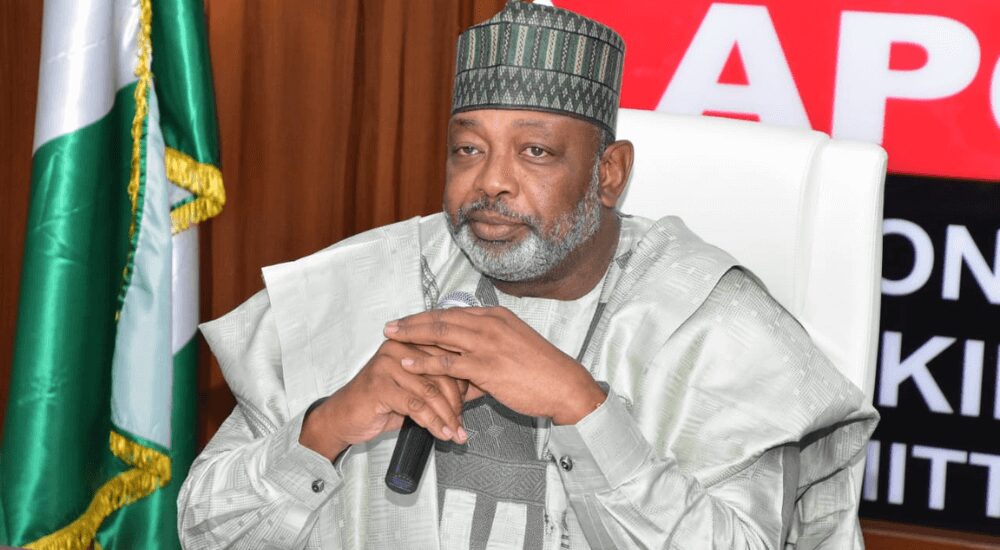
Speaking at the event, Minister of Agriculture and Food Security, Senator Abubakar Kyari, said the programme is designed to reposition palm oil as a key driver of industrial growth, job creation, and food sovereignty, without relying on public sector borrowing. He was represented by his Senior Technical Assistant, Engr. Ibrahim Alkali.
Kyari noted that Nigeria, once a global leader in palm oil production with over 40 percent market share in the 1960s, now produces about 1.4m metric tonnes annually, far below the domestic demand of over 2.5m metric tonnes.
He said the shortfall forces the country to spend between $500m and $600m yearly on imports.
Advertisement
According to him, the structural deficit presents both a challenge and an opportunity, adding that Nigeria has over three million hectares of suitable land for oil palm cultivation but remains underutilised due to ageing plantations and low productivity.
The Minister said the initiative aligns with the Federal Government’s Renewed Hope Agenda and the National Oil Palm Development Strategy, which seeks to expand production, improve yields, and strengthen value chain integration from smallholder farmers to industrial processors.
Under the proposed model presented by Mass Industrial Development and Logistics Limited, phase one will establish seven integrated oil palm estates of 10,000 hectares each across participating states. Each estate will combine plantations, milling and refining facilities, storage systems, and residential communities with housing, schools, and healthcare infrastructure.
Phase two will focus on downstream processing and manufacturing of palm-based products to increase value addition and enhance Nigeria’s competitiveness in both domestic and export markets.
The Ministry projected that the model could deliver internal rates of return of 18–25 percent, with payback periods of five to seven years, citing strong market demand due to Nigeria’s supply gap of over one million metric tonnes annually.
Advertisement
Permanent Secretary of the Ministry, Dr. Marcus Olaniyi Ogunbiyi, said the project was approved following extensive consultations and validation of the National Oil Palm Development Strategy.
He described the initiative as timely, noting its potential to boost productivity, value addition, and job creation.
Stakeholders at the meeting, including state governments, agriculture commissioners, research institutions, development partners, and private investors were urged to support the programme to unlock the sector’s full economic potential and restore Nigeria’s position in the global palm oil market.