
Four Killed As Kenya Fuel Price Protests Turn Violent
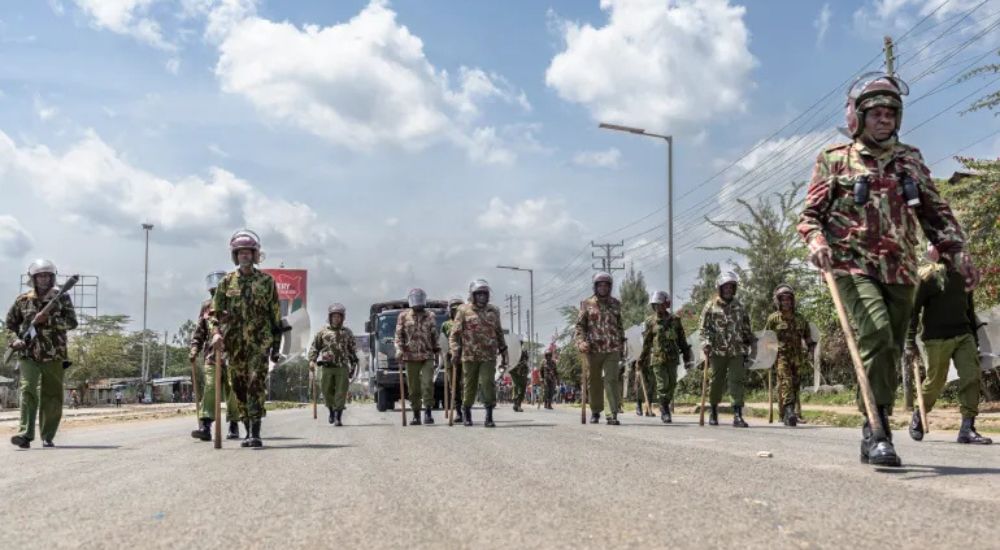
Four people have been killed and more than 30 injured across Kenya after protests against fuel price hikes turned violent on Monday, with transport workers launching a nationwide strike that brought major cities to a standstill and left thousands of commuters stranded.
Interior Minister Kipchumba Murkomen confirmed the deaths at a televised press conference, describing the violence as “unfortunate,” and said 348 people had been arrested in connection with the unrest.
One death was reported in Nakuru Town and another in Gachie, Kiambu County, where witnesses alleged that a protester was shot during clashes with police, although authorities had not formally confirmed the circumstances.
Three additional deaths were reported in Kimbo, Ruiru, after motorcycle taxi riders collided at high speed while attempting to evade a roadblock set up by protesters.
The Transport Sector Alliance, which represents matatu operators, truckers and other transport workers, called a nationwide strike from midnight Sunday, demanding a reversal of the latest fuel price increases.
Roads leading into Nairobi were blocked by striking transport operators and groups of protesters on Monday morning, with bonfires lit along major routes and vehicles prevented from entering the city. Police responded with tear gas to disperse crowds.
Advertisement
Nairobi Regional Police Commander Issa Mohamud said 225 people were arrested in the capital alone, while six police officers, including himself, sustained injuries. Police said no deaths were recorded within Nairobi.
The unrest followed fuel price increases announced last week by Kenya’s Energy and Petroleum Regulatory Authority, which raised diesel prices by as much as 23.5 percent to a record Sh242 per litre after a 24.2 percent increase the previous month. Petrol prices in Nairobi now stand at Sh214 per litre.
The latest increases have been linked to disruptions in global oil supply chains caused by the US-Israel conflict with Iran. The Strait of Hormuz, through which about a fifth of global oil trade passes, has remained effectively closed since February. Kenya relies heavily on fuel imports from the Gulf region.
The Transport Sector Alliance has demanded a 35 percent reduction in fuel prices, accusing the government of failing to shield citizens from rising living costs driven by global energy market pressures.
Murkomen blamed “rogue politicians” for inciting violence and warned that leaders accused of inflaming political tensions would be held responsible for lives lost during the unrest.
Advertisement
He said the National Treasury and the Ministries of Energy and Transport were engaged in talks with transport stakeholders aimed at resolving the crisis.