
2027: Obi Won’t Step Down For Jonathan, Says Lawmaker
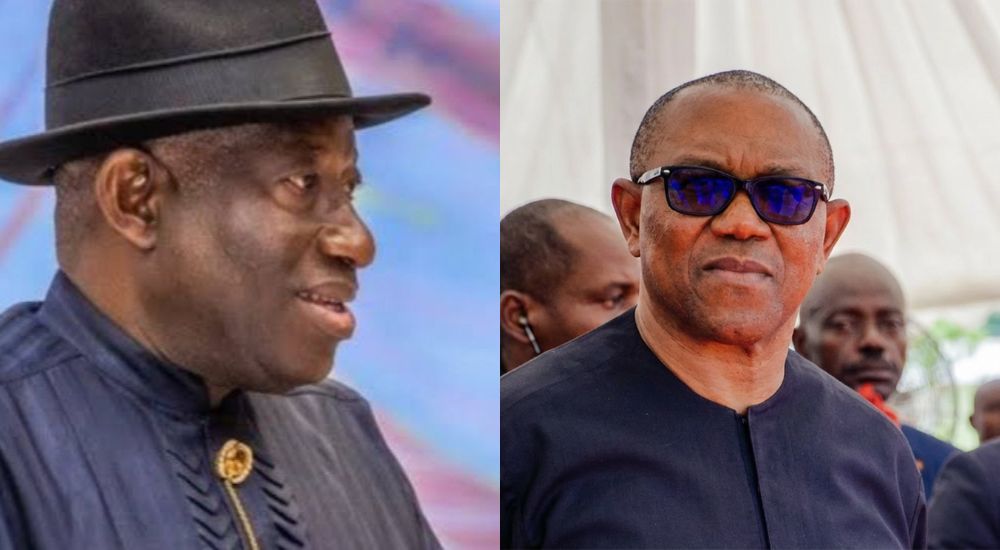
Leader of the opposition caucus in the House of Representatives, Afam Ogene, has dismissed speculations that Peter Obi could abandon his 2027 presidential ambition for former President Goodluck Jonathan.
Ogene said the former Anambra governor remains the political symbol of Nigerian youths and women ahead of the next general election.
In an interview with THE WHISTLER, Ogene defended Obi’s decision to dump the ADC for the Nigeria Democratic Congress (NDC), saying the former Labour Party presidential candidate left the party after it became entangled in legal disputes and internal crises.
The federal lawmaker said while Obi maintains a close relationship with Jonathan and consulted him alongside other political stakeholders before taking major decisions, there was no indication the former president would stand in Obi’s way politically.
“But friendship does not obliterate the bond of being a flag bearer for the Nigerian youths and women, which Mr. Peter Obi represents today. Mr. Peter Obi consulted widely, and I know that former President Jonathan was one of those he consulted, along with several others. I do not think that former President Jonathan will ever stand in Peter Obi’s way. He would always support his political quest, just as Mr. Peter Obi supported him,” he told THE WHISTLER.
The comments come amid speculation over Jonathan’s political future following reports that a faction of the Peoples Democratic Party had cleared the former president to join the 2027 race.
Advertisement
Reports claimed Jonathan had completed PDP’s digital registration process and emerged as the sole aspirant expected to face the party’s screening committee.
The development also followed recent consultations between Jonathan and key opposition figures, including Obi, amid growing coalition talks within the opposition camp.
Ogene, however, maintained that Obi’s movement into the NDC was strategic and aimed at avoiding another round of litigations and internal crises similar to those that rocked both the Labour Party and the ADC.
He argued that Obi could not afford to remain in a party already weighed down by legal battles similar to the Labour Party leadership crisis involving its former national chairman, Julius Abure.
Ogene alleged that despite a Supreme Court ruling delivered on 4 April 2025 which ended Abure’s tenure, the Independent National Electoral Commission (INEC) failed to act until Obi left the party.
Advertisement
According to him, INEC waited for about eight months before recognising the court decision.
He further accused the government of encouraging instability within opposition parties, insisting that certain actions and public comments by government officials suggested deliberate interference in opposition politics.
“I do not know why you are putting conjectures. When they themselves have said openly that they are the seen hands, not unseen, that festered this crisis,” he said.
The opposition lawmaker also dismissed claims that Obi exited the ADC because he feared losing a presidential ticket contest to former Vice President Atiku Abubakar.
According to him, Obi could not support another arrangement that would deny the South the presidency after only one term.
He argued that the combination of former Senate President David Mark as national chairman and Atiku as a possible presidential candidate could not inspire confidence among southern politicians and many northern voters.
Advertisement
“How can that combination excite anybody from the South, or even fair-minded people from the North?” he asked.
On concerns that the NDC could eventually face the same internal crisis that affected the Labour Party and ADC, Ogene alleged that attempts had already begun to discredit the party’s registration status.
He, however, insisted that the NDC was not a newly created platform, explaining that the party originally applied for registration in 2017 and only became operational after a court ruling compelled INEC to recognise it.
Ogene also downplayed concerns over the absence of governors within the NDC structure. He said governors no longer possess the influence many Nigerians attributed to them.
According to him, Obi’s performance during the 2023 presidential election proved electoral victories could be achieved without entrenched political structures.
“Mr. Peter Obi’s outing in 2023, he did not even have a councillor, yet he achieved what he achieved,” he stated.
He also rejected arguments that Obi’s 2023 campaign suffered because of inadequate funding, insisting instead that what happened was “state-sponsored stealing of election results.”
The lawmaker further claimed that the next general election would be determined less by political structures and more by worsening economic realities confronting Nigerians.
“The next election is not about Peter Obi. It is about Nigerians. It is inflation that will decide. It is the cost of living that will decide. It is high petrol prices that will decide. It is insecurity that will decide,” he said.
Ogene revisited allegations of voter suppression in several parts of the country in 2023,noting that supporters of Obi had become more politically aware ahead of future elections.
Ogene also criticised aspects of the amended Electoral Act, particularly the rejection of full real-time electronic transmission of election results.
According to him, several lawmakers across party lines privately supported electronic transmission but could not openly oppose the ruling APC because of fears surrounding party loyalty and future nominations.
He nevertheless insisted that no law, no matter how imperfect, could override the collective will of Nigerians if voters remained determined to protect their mandates.
The opposition leader further disclosed that discussions were already ongoing with politicians across party lines, including members of the PDP and APC, over possible defections into the NDC ahead of the next election cycle.
“It started last week,” he said, adding that some politicians from Katsina and other states had already begun moving into alternative political platforms.
Speaking on politics in Anambra State, Ogene dismissed suggestions that Governor Charles Soludo could diminish Obi’s political influence in the state.
He argued that Soludo won re-election largely because there was no formidable opposition against him and insisted the governor could not match Obi politically in Anambra.
“Can he stand on the same podium and run an election against Mr. Peter Obi?” Ogene asked.