
Gawuna’s Resignation Sparks Fresh Political Realignment In Kano
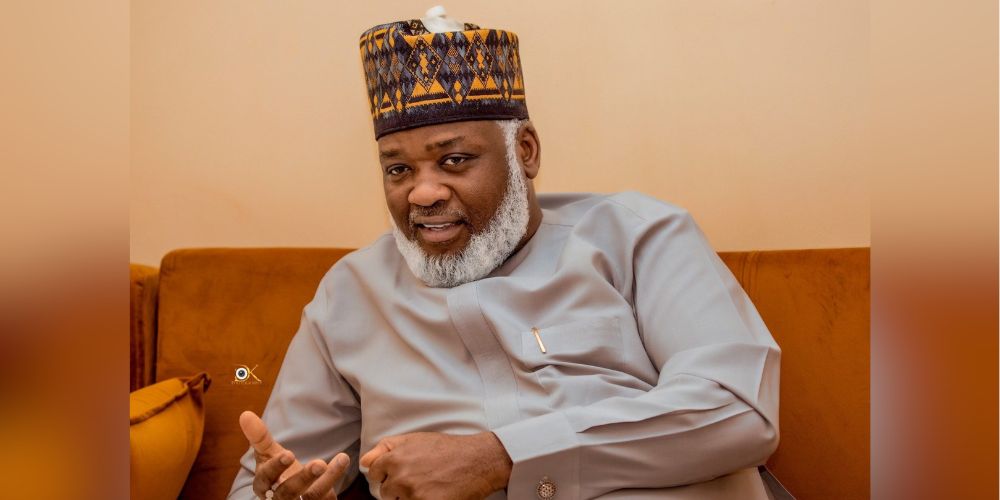
The political atmosphere in Kano State has taken a dramatic turn following the resignation of Nasiru Yusuf Gawuna, Chairman of the Governing Board of the Federal Mortgage Bank of Nigeria (FMBN).
His decision to step down, contained in a letter dated March 27, 2026, comes at a time when political tensions in the state are rising ahead of the 2027 elections.
Gawuna, a former deputy governor and the All Progressives Congress (APC)’s governorship candidate in the fiercely contested 2023 race, said his resignation was in strict compliance with President Bola Tinubu’s directive that all political appointees with future political ambitions must vacate their positions in line with the Electoral Act.
Although he described his tenure at the mortgage bank as an honour and thanked the president for the opportunity to contribute to national development, the resignation is widely seen as the first step in a much bigger political move.
Multiple sources reveal that Gawuna has finalized plans to defect from the APC to the African Democratic Congress (ADC).
Advertisement
His formal defection is expected to take place on Tuesday, in what political watchers describe as a move that could reshape Kano’s power map.
The development is believed to have been influenced by ongoing discussions with former Kano governor, Senator Rabiu Musa Kwankwaso, who remains one of the most influential political figures in northern Nigeria.
While neither Gawuna nor Kwankwaso has publicly commented on these discussions, the signals are clear: Kano politics is entering yet another phase of realignment.
In Kano, where political identities shift with the fluidity of alliances and personalities carry more weight than party banners, Gawuna’s move could significantly alter the balance of power ahead of 2027.
In a phone interview, Political analyst Dr. Ibrahim Danbare told THE WHISTLER that the resignation represents more than a personal decision; it marks the beginning of what he calls “the most consequential split within the Kano APC since 2018.”
Advertisement
According to him, “Gawuna is not just another politician. He represents a large coalition of loyal supporters within the APC who felt sidelined after the 2023 elections.
“His exit is a signal to many that the internal cracks in the party have widened beyond repair.”
Danbare notes that the APC in Kano has struggled to maintain unity after its defeat in the last governorship election.
Following the Supreme Court judgment that restored Abba Kabir Yusuf’s mandate, the party’s internal tensions deepened, especially between supporters of former governor Abdullahi Ganduje and those who believed Gawuna’s 2023 ticket was mishandled.
“His departure creates a leadership vacuum that the APC may find difficult to fill,” Danbare adds.
“The timing is dangerous for the party. With primaries approaching, losing a figure with Gawuna’s grassroots structure will weaken their negotiation power and internal cohesion.”
Advertisement
The ADC, on the other hand, appears to be positioning itself as a refuge for aggrieved political actors seeking a fresh start.
Its quiet but strategic expansion has attracted interest across several states, particularly in the north, where discontent against major parties is rising.
For Kwankwaso, Gawuna’s possible move to the ADC could serve long-term political calculations.
Analysts believe the former governor is building a network that transcends party lines, preparing himself and his protégés for a broader coalition ahead of the 2027 elections.
Aligning with a respected rival like Gawuna—whether directly or indirectly—signals a new style of political pragmatism.
Beyond the internal dynamics, President Tinubu’s directive requiring political appointees with electoral ambitions to resign has accelerated realignments nationwide.
Across federal agencies, several officials have stepped down to position themselves for primaries. Gawuna’s resignation fits into this pattern while also serving as a strategic exit from the APC without visible confrontation.
Although he has kept his next political step close to his chest, Gawuna’s statement that he is placing his future “in the hands of Allah” hints at a man carefully calculating his options in a state where political missteps are costly.
For the APC, the path ahead may be steep. Losing a figure with Gawuna’s grassroots appeal and political network could further destabilize a party still struggling to regain its footing since losing Kano in 2023.
As Dr. Danbare warns, “Unless the APC urgently reconciles its factions and rebuilds trust at the ward and local government levels, Gawuna’s exit may trigger a wave of silent defections.”
For now, Kano awaits the next chapter in a political story that continues to unfold with characteristic unpredictability.
What is evident, however, is that Gawuna’s resignation has set the stage for a realignment that could define the state’s political direction for years to come.