
Iran Threatens To ‘Completely Close’ Strait Of Hormuz If U.S. Attacks
Advertisement
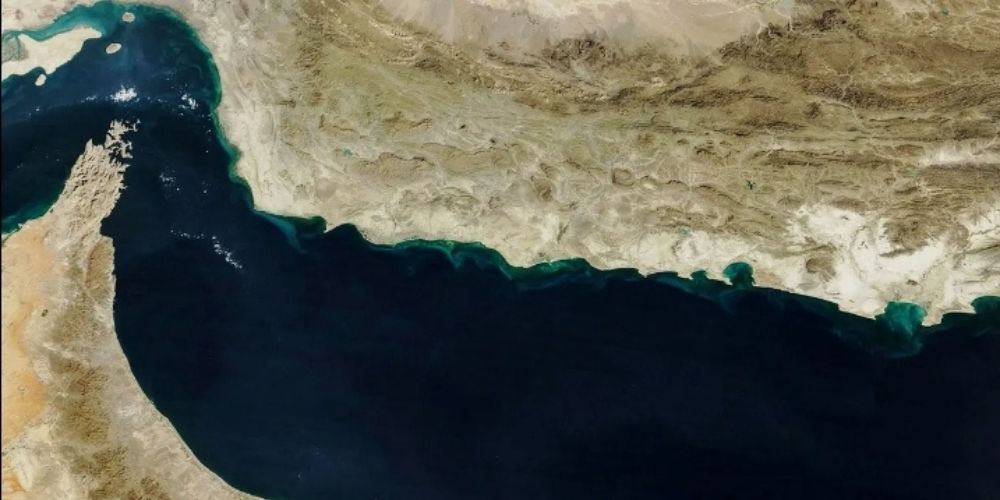
Iran’s military has threatened to completely shut down the strategic Strait of Hormuz if the United States follows through on threats to target the country’s power plants, marking a sharp escalation in the ongoing conflict.
“If the United States’ threats regarding Iran’s power plants are carried out… the Strait of Hormuz will be completely closed, and it will not be reopened until our destroyed power plants are rebuilt,” Iran’s Khatam Al-Anbiya central military command said in a statement carried by state television on Sunday.
The warning comes after United States President Donald Trump issued a 48-hour ultimatum for Iran to reopen the vital waterway, which has been effectively restricted since the outbreak of war on February 28 following US-Israeli strikes on Iranian territory.
The Strait of Hormuz, a narrow but critical global shipping route, carries roughly a fifth of the world’s oil and liquefied natural gas supplies, making any threat to close it a major risk to global energy markets.
Beyond the strait, Iran also warned it would expand its targets across the region if its infrastructure is attacked.
Advertisement
Iran’s Parliament Speaker Mohammad Bagher Ghalibaf said energy and critical infrastructure throughout the Middle East could face devastating consequences if Iranian power plants are hit.
“Immediately after power plants and infrastructure in our country are targeted, vital infrastructure as well as energy and oil infrastructure across the entire region will be considered legitimate targets and will be irreversibly destroyed,” Ghalibaf said in comments posted on X.
Iran’s elite Islamic Revolutionary Guard Corps (IRGC) reinforced the warning, stating that energy facilities in countries hosting US bases, as well as companies with American stakes, would become “lawful” targets in the event of an attack.
The military also said it would strike Israel’s “power plants, energy, and information and communications technology infrastructure,” alongside facilities in regional states aligned with Washington.
Tehran maintains that the Strait of Hormuz remains open to global shipping except for vessels linked to what it describes as its adversaries, despite the ongoing tensions.
Advertisement
The disruption to the waterway has already contributed to a severe global oil shock, widely described as the worst since the 1970s.
The conflict, now in its fourth week, has spread across the Middle East, with Iran launching drone and missile strikes targeting Israel as well as locations in Jordan, Iraq and several Gulf countries. Tehran says the attacks are aimed at “US military assets,” though they have caused casualties, infrastructure damage and significant disruption to global markets and aviation.
Despite earlier remarks by Trump suggesting a possible de-escalation, the latest developments point to a widening conflict.
Israeli Prime Minister Benjamin Netanyahu on Sunday called for broader international involvement in the war, urging world leaders to join the US-Israel campaign against Iran.
Speaking from the southern Israeli city of Arad, which was recently struck by Iranian attacks, Netanyahu accused Iran of targeting civilians and warned of its capability to strike long-range targets, including parts of Europe.
Meanwhile, diplomatic efforts are ongoing to contain the crisis. Turkish Foreign Minister Hakan Fidan held separate talks with Iranian Foreign Minister Abbas Araqchi, Egyptian Foreign Minister Badr Abdelatty, European Union foreign policy chief Kaja Kallas, and US officials to discuss possible steps toward ending the war.
Advertisement
The latest threats have heightened fears that the conflict could further escalate, particularly if key energy infrastructure and one of the world’s most important oil routes are directly targeted.