
Lawyer Demands Answers Over ‘Continuation’ Of Quashed Charges Against Kanu
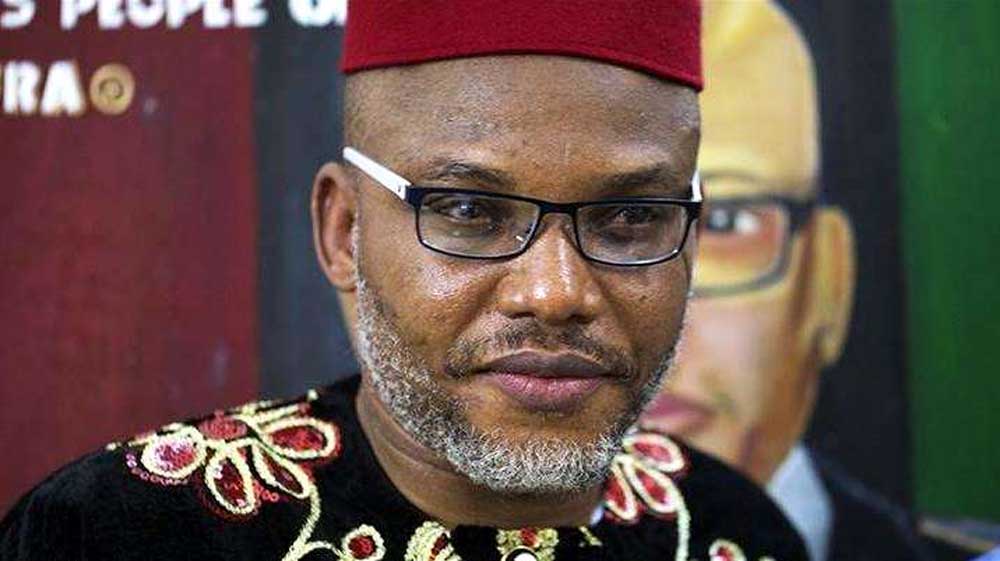
A member of the Global Legal Consortium for Nnamdi Kanu, Christopher Chidera, has asked the Nigerian Bar Association (NBA) and the International Bar Association (IBA) to explain the legal basis for the continuation of charges previously quashed against the convicted IPOB leader.
Chidera made the demand in Part an open letter to the NBA, copied to the IBA and dated August 26, 2026, a copy which was shared with THE WHISTLER on Thursday.
Kanu was convicted by the Federal High Court in Abuja on November 20, 2025, and sentenced to life imprisonment on some of the counts.
The lawyer submitted that the Supreme Court on December 15, 2023 judgment in SC/CR/1361/2022, set aside the Court of Appeal’s October 13, 2022 judgment and ordered the continuation of Kanu’s trial.
Chidera acknowledged that the Supreme Court had jurisdiction to hear the appeal and set aside the Court of Appeal’s decision, but questioned how the order for continuation affected the specific charges that had been quashed.
“The Supreme Court had appellate jurisdiction. It could set aside the Court of Appeal. Those points are not in dispute,” he wrote.
Advertisement
“After that setting aside, what exactly did it restore?”
According to him, the Court of Appeal had discharged Kanu and quashed the charges, rather than merely adjourning the case.
“The Supreme Court did not order a retrial. It ordered continuation,” he said.
“Continuation of what?”
Chidera also raised questions about the legislation under which the charges were originally filed.
Advertisement
He noted that the Terrorism Prevention Act 2011, as amended in 2013, was repealed by the Terrorism (Prevention and Prohibition) Act 2022, while the Customs and Excise Management Act, Cap C45, was also repealed in 2023.
He referred to Section 97 of the 2022 terrorism legislation, which contains transitional provisions concerning matters arising under the repealed law.
Chidera argued that the provision should be examined in determining how proceedings commenced under the repealed legislation continued under the 2022 Act.
“The issue is what they saved. That is section 97 of the TPPA 2022,” he wrote.
The lawyer also questioned the legal effect of the Supreme Court’s use of the word “continuation” rather than “retrial”.
He referred to Section 36(9) of the 1999 Constitution, which provides protection against a person being tried again for an offence for which the person has previously been convicted or acquitted, subject to the constitutional exception involving an order of a superior court.
Advertisement
Chidera cited Aminu Mohammed v State (2007) SC.147/2005 in discussing the effect of a discharge following a successful no-case submission.
He said the central question was not simply whether Kanu’s discharge should be described as an acquittal, but what legal mechanism connected the Court of Appeal’s quashing of the charges with the subsequent proceedings.
“If the Court of Appeal judgment was a nullity, say so and explain why it had to be set aside,” he wrote.
“If it was valid but wrong, explain the legal effect of setting it aside on the quashed counts.”
Chidera also questioned the circumstances surrounding the fresh plea taken by Kanu before Justice James Omotosho of the Federal High Court on March 21, 2025.
He said the fresh plea raised questions about the status of the charges following the Supreme Court’s remittal.
“What was he pleading to?” he asked.
“If the counts had been quashed, where were they revived?”
He further asked whether Section 97 of the TPPA 2022 preserved the proceeding and, if so, which corresponding provisions of the 2022 Act applied.
“If section 97 preserved the proceeding, under which corresponding TPPA provisions?” he asked.
“If another trial was authorised, why was the order not a retrial?”
Chidera also mentioned the January 2026 decision involving former Jigawa State governor Sule Lamido, while cautioning that the ratio of that decision should be verified against the certified judgment before being applied to Kanu’s case.
“Similarity of outcome is not identity of ratio,” he said.
The lawyer acknowledged that the Federal Government had the right to appeal the Court of Appeal judgment and that the Supreme Court had the power to determine the appeal and set aside the lower court’s decision.
He also acknowledged the existence of the superior-court proviso in Section 36(9) of the Constitution and the transitional provisions in Section 97 of the TPPA 2022.
However, he maintained that those provisions did not, without further legal explanation, establish how the specific charges quashed by the Court of Appeal were restored.
He therefore urged the NBA and IBA to address what he described as the central legal question.
“What law restored the charges quashed on 13 October 2022 so that a fresh plea could be taken on 21 March 2025?” he asked.
He listed possible legal bases that, in his view, required clarification: whether the proceeding remained alive, whether Section 97 preserved it, whether the Supreme Court’s appellate power restored the charges, whether Section 36(9) authorised another trial, or whether inherent jurisdiction was relied upon.
Chidera said each basis should be reconciled with the applicable constitutional and statutory provisions and the Supreme Court’s own pronouncements on jurisdiction.
“A court order is not a substitute for jurisdiction,” he wrote.
“A label is not a jurisdictional rule.
“A quashed charge is not self-reviving.”
He called on the NBA and IBA to examine the legal meaning of the Court of Appeal’s discharge and quashing of the charges and the subsequent Supreme Court order for continuation.
“You do not have to support Nnamdi Kanu. You have to support one law,” he said.
“What did ‘quashed’ mean? What did ‘discharged’ mean? What did section 97 save?”
He also asked where the Federal High Court’s subject-matter jurisdiction over the charges came from following the Supreme Court’s remittal.
Chidera restated his demand that the legal provision connecting the October 2022 quashing of the charges with the March 2025 fresh plea be identified.
“What legal mechanism connected the final appellate disposition to the new proceeding?” he asked.