Middle-East Crisis Pushes Nigeria’s Crude To 20-Month High Of $83
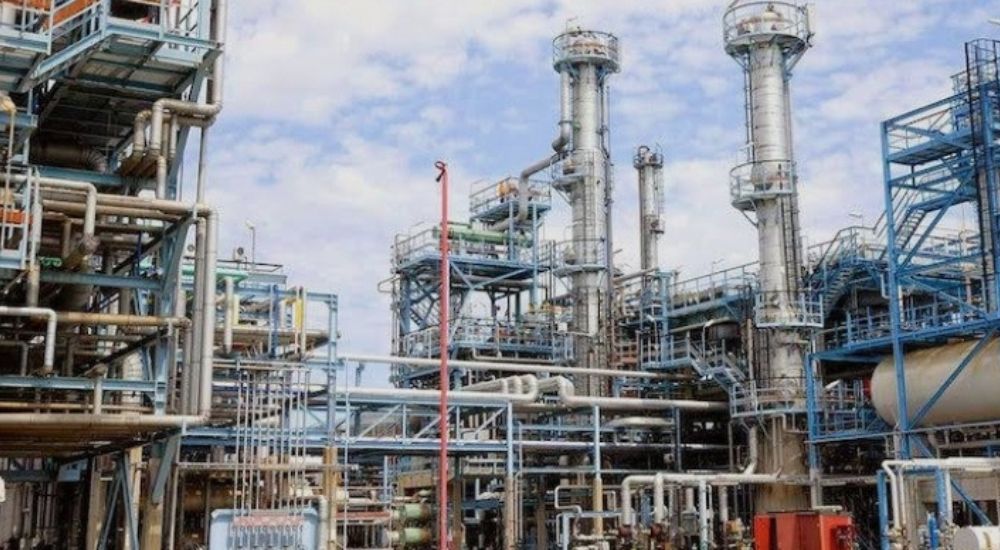
Nigerian crude oil prices surged past $80 per barrel on Wednesday, reaching $83, the highest since mid-2024, following American and Israeli airstrikes on Iran.
The spike reflects growing concerns over global supply disruptions amid escalating tensions in the Middle East. Prices now far exceed the Federal Government’s 2026 budget benchmark of $64.85 per barrel, offering a potential revenue boost for Nigeria.
The rise in crude prices comes as Nigeria continues to produce below its OPEC quota, yet higher prices provide a significant fiscal advantage.
Crude oil remains Nigeria’s main source of foreign exchange, accounting for most government revenue, even though it contributes only three to five per cent of Gross Domestic Product.
Analysts had said that the price surge could help Nigeria shore up reserves, fund infrastructure projects, and strengthen the 2026 budget outlook.
Advertisement
However, Nigerian producers face ongoing challenges, including limited refinery capacity and dependence on global oil market stability.
Any prolonged disruption in the Persian Gulf could amplify volatility, affecting export contracts and shipping costs.
The surge followed Iran’s missile and drone retaliation after airstrikes by the US and Israel.
The Strait of Hormuz, a crucial passage for roughly 20 per cent of the world’s oil supply remains a flashpoint. Analysts warn that attacks on key energy infrastructure could halt maritime traffic and send global oil prices even higher, impacting both exporters and importers.
US President Donald Trump pledged to protect the ‘free flow of energy’ in the Persian Gulf, providing naval protection and insurance guarantees for commercial vessels.
Advertisement
Still, insurers and shipping operators remain cautious, citing ongoing risks of blockages, tanker shortages, and halted oil flows.
Rising oil prices have broader implications for the global economy, potentially fueling inflation, constraining growth, and impacting transport and manufacturing costs.
For Nigeria, the windfall from higher crude prices is tempered by the need for fiscal prudence, efficient revenue management, and continued reforms to ensure the gains translate into tangible economic benefits.
The Petroleum Products Retail Outlets Owners Association of Nigeria (PETROAN) had on Tuesday called for an urgent expansion of Nigeria’s domestic refining capacity, warning that rising global geopolitical tensions could trigger fuel supply disruptions, higher pump prices and renewed pressure on the foreign exchange market.
PETROAN’s National President, Billy Gillis-Harry, said the intensifying military standoff involving the United States, Iran, Israel and their allies has once again exposed Nigeria’s heavy dependence on imported refined petroleum products, despite being Africa’s largest crude oil producer.
According to him, the unfolding Middle East crisis carries far-reaching implications for the global energy market, with consequences that could quickly cascade into Nigeria’s downstream sector if proactive measures are not taken.
Advertisement
He noted that escalating hostilities in the Middle East — particularly around the strategic Strait of Hormuz, through which a significant share of global oil supply passes have heightened geopolitical risks, disrupted energy supply chains and injected fresh volatility into international oil markets.
“The situation has already created significant instability in global oil prices and raised serious concerns about the reliability of energy supplies worldwide,” Gillis-Harry said.
Citing recent developments, he explained that maritime traffic operations at Saudi Arabia’s Ras Tanura refinery, with a processing capacity of about 550,000 barrels per day, were halted following the strikes.
He added that liquefied natural gas (LNG) production in Qatar had also been suspended at Ras Laffan and Mesaieed, triggering sharp reactions in global gas markets.
“These disruptions pushed European gas benchmarks up by as much as 50 per cent, while Brent crude climbed toward $80 per barrel. Analysts have warned that a prolonged closure of the Strait of Hormuz could send oil prices well above the $100 per barrel mark,” he said.
For Nigeria, Gillis-Harry stressed, the developments underscore the fragility of a domestic fuel market still largely reliant on imported refined products, making the country vulnerable to external shocks beyond its control.
Reaffirming PETROAN’s long-held position, he warned that sustained global supply disruptions pose direct risks to fuel pump prices, foreign exchange stability and overall macroeconomic balance.
“Any prolonged rise in global crude prices will inevitably reflect at filling stations across the country. Beyond pump prices, the impact will extend to foreign exchange demand, domestic pricing structures and inflationary pressures,” he said.
Against this backdrop, PETROAN called for urgent and strategic actions to safeguard Nigeria’s energy security. Chief among these, Gillis-Harry said, is the full activation of domestic refining capacity through guaranteed crude oil supply and supportive operational policies.
He urged the federal government to prioritise local refineries — both public and private — by ensuring steady access to crude oil and creating an enabling environment that allows them to operate at optimal capacity.
The PETROAN president also appealed for the sustenance and strengthening of the naira-for-crude policy, describing it as a critical tool for reducing pressure on foreign exchange, lowering import dependence and stabilising domestic fuel prices.
In addition, he emphasised the need to urgently rehabilitate Nigeria’s four state-owned refineries, noting that restoring them to full functionality would significantly cut down fuel imports, improve energy self-sufficiency and shield consumers from global market shocks.
“As global tensions rise, Nigeria must look inward. Strengthening local refining is no longer optional; it is essential for economic stability, energy security and consumer protection,” Gillis-Harry said.