
NEPC Positions Women Entrepreneurs For Export Boom
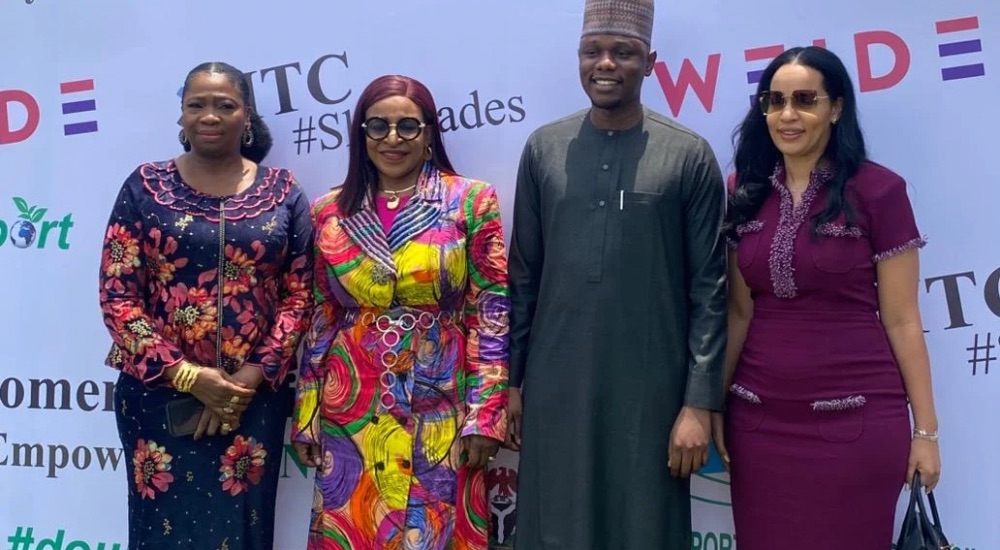
Nigeria’s women entrepreneurs are being strategically positioned to benefit from expanding global trade opportunities as the Nigerian Export Promotion Council (NEPC) intensifies efforts to deepen their participation in non-oil exports and strengthen their competitiveness in international markets.
This was the central theme at the Women Exporters Conference held in Abuja on Monday, where policymakers, development partners, financial institutions, and private sector stakeholders gathered to explore pathways for inclusive export-led growth anchored on women-led enterprises.
The conference, themed “Strengthening Women-Led Businesses for Resilience, Recovery and Inclusive Economic Growth,” highlighted the growing recognition that women entrepreneurs are not only vital to small business development but also central to Nigeria’s broader economic diversification agenda.
Speaking at the event, Executive Director and Chief Executive Officer of NEPC, Mrs. Nonye Ayeni, said women remain a critical pillar of Nigeria’s non-oil export drive, particularly as the country pushes to expand its global trade footprint.
She noted that women account for about 40 per cent of SMEs in Nigeria and are active across agriculture, manufacturing, services, and trade, making them deeply embedded in the export value chain.
According to her, Nigeria recorded its strongest-ever non-oil export performance in 2025, with exports valued at $6.1bn and total volumes reaching 8.02 million metric tonnes. She said the achievement reflects both policy direction and the resilience of exporters across the country.
Advertisement
“These gains are a reflection of the Renewed Hope Agenda of President Bola Tinubu and the deliberate efforts to diversify the economy, but also the hard work of Nigerian exporters, especially SMEs,” she said.
Ayeni stressed that no meaningful export growth can be achieved without the full participation of women, describing them as indispensable to inclusive economic expansion.
She also outlined NEPC’s ongoing interventions, including dedicated women export desks across all 36 states, capacity-building programmes, and certification support designed to improve access to global markets.
However, the conference gave significant attention to broader policy direction and institutional support, with strong contributions from other key stakeholders.
The Minister of Women Affairs and Social Development, Hajiya Imaan Sulaiman-Ibrahim, said strengthening women-led businesses is a national economic priority rather than a social welfare consideration.
Advertisement
She said global evidence consistently shows that economies grow faster and become more resilient when women are fully integrated into productive activities.
According to her, the Federal Government is focused on creating an enabling environment where women entrepreneurs can thrive through improved access to finance, expanded digital and financial literacy, and stronger policy frameworks.
“We are called not only to acknowledge the challenges facing women entrepreneurs but to dismantle them decisively,” she said. “Strengthening women-led businesses is not simply a gender issue, it is an economic imperative.”
She added that the Ministry is working closely with relevant agencies and development partners to ensure women gain better access to funding opportunities, capacity-building programmes, and market linkages.
Sulaiman-Ibrahim also emphasised the importance of partnerships, noting that government alone cannot drive inclusive economic transformation.
“We must strengthen collaboration with the private sector, financial institutions, civil society, and international partners. Together, we can build inclusive value chains that allow women entrepreneurs to scale,” she said.
Advertisement
Also speaking, the Special Adviser to the President on Export Expansion, Aliyu Sheriff, described women-led businesses as a cornerstone of Nigeria’s export future, stressing that empowering them is a strategic economic decision.
He said women entrepreneurs play a vital role in employment generation, wealth creation, and community development, particularly in rural and semi-urban areas.
“Empowering women-led businesses is not charity, it is smart economics,” he said. “When women succeed in business, families are strengthened, communities prosper, and the nation earns more.”
Sheriff noted that Nigeria’s participation in global trade must be deliberately inclusive if the country is to maximise its economic potential. He called for sustained investment in training, infrastructure, and market access to help women compete globally.
He also urged stakeholders to focus on removing structural barriers that limit women’s participation in export markets, including access to finance, logistics constraints, and compliance with international trade standards.
Across the conference, participants identified several key challenges still facing women exporters, including limited financing options, inadequate export readiness, and difficulties meeting global certification requirements.
Despite these challenges, speakers expressed optimism that ongoing reforms, capacity-building initiatives, and targeted interventions by institutions like NEPC will significantly improve outcomes.
Ayeni encouraged participants to take advantage of the opportunities provided at the conference, including technical sessions, business advisory services, and networking platforms.
She reaffirmed NEPC’s commitment to supporting women exporters at every stage of their journey from production to global market entry.
“The future of trade belongs to those who are prepared and innovative,” she said. “Nigerian women have the capacity, and with the right support, they will not just participate in global trade—they will compete and lead in it.”