
NGX Turnover Hits N374bn As Berger Paints Leads Gainers’ Chart
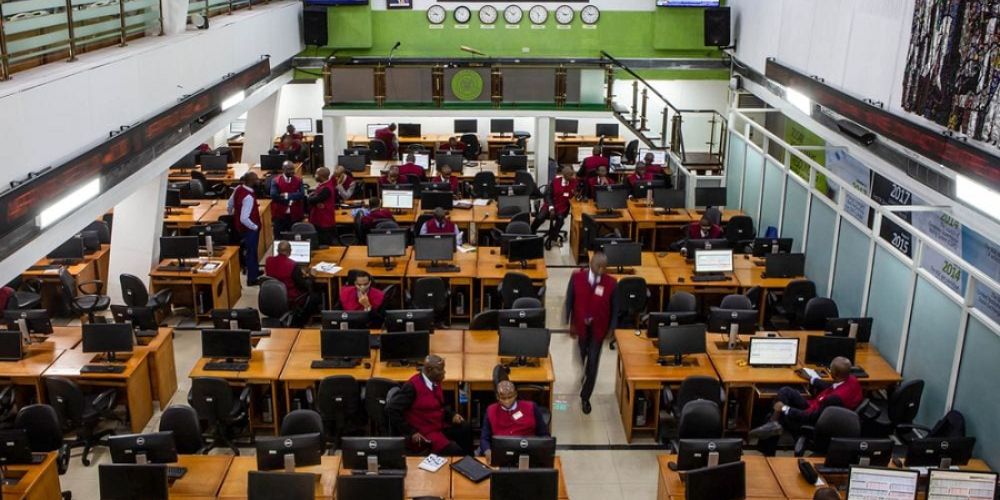
Trading activities on the Nigerian Exchange Limited (NGX) closed the week on a bullish note as total market turnover rose to N374.04bn, while Berger Paints Nigeria Plc emerged as the best-performing stock after posting a 55.57 per cent share price.
Market statistics released by the Exchange showed that investors traded a total of 7.772 billion shares valued at N374.04bn in 402,945 deals during the week, compared with 7.075 billion shares worth N324.35bn exchanged in 474,436 deals in the preceding week.
The improved market activity reflected sustained investor confidence across major sectors of the equities market despite prevailing macroeconomic uncertainties.
The benchmark NGX All-Share Index (ASI) advanced by 2.27 per cent to close at 250,330.92 basis points, while market capitalisation appreciated by 2.13 per cent to N160.44 trillion, translating to a gain of approximately N3.35trn for investors within the week.
Analysts attributed the market rally to renewed bargain hunting, increased institutional participation and continued positioning in fundamentally strong stocks, particularly within the banking, industrial and technology sectors.
Advertisement
The positive momentum extended across most sectoral indices, although the NGX Oil & Gas Index, NGX Sovereign Bond Index and NGX Commodity Index declined by 1.19 per cent, 0.08 per cent and 0.80 per cent respectively.
Sectoral analysis indicated that the Financial Services Industry remained the dominant driver of market activity during the week. The sector recorded a turnover of 4.774 billion shares valued at N196.35bn in 153,515 deals, contributing 61.43 per cent and 52.49 per cent to total equity turnover volume and value respectively.
The ICT sector followed with 1.118 billion shares worth N57.83bn traded in 44,622 deals, highlighting sustained investor appetite for technology-related counters.
The Services Industry came third with 601.745 million shares valued at N6.98bn in 27,653 deals.
Further breakdown of market activity showed that FirstHoldCo Plc, United Bank for Africa Plc and Chams Holding Company Plc emerged as the most traded equities by volume during the week, jointly accounting for 2.195 billion shares worth N99.82bn in 30,056 deals.
Advertisement
The three companies contributed 28.24 per cent and 26.69 per cent to the total equity turnover volume and value respectively, underscoring strong investor concentration in banking and technology stocks.
Market breadth also improved significantly as 74 equities appreciated in price, higher than the 69 gainers recorded in the previous week. In contrast, 24 equities recorded losses compared with 36 decliners previously, while 48 equities closed flat.
Meanwhile, Berger Paints Nigeria Plc topped the gainers’ chart after its share price surged from N108.60 to N168.95, representing a 55.57 per cent increase during the week.
Investor sentiment around the stock strengthened ahead of the company’s Annual General Meeting, where shareholders are expected to approve a final dividend payout of N1.25 per share for the 2025 financial year.
Combined with the interim dividend of 40 kobo already paid, total dividend distribution for the year stands at N1.65 per share.
The company grew revenue by approximately 20 per cent from N10.83bn in 2024 to N12.99bn in 2025, while gross profit increased from N3.84bn to N5.72bn. Profit after tax also rose to N1.57bn from N610.9m recorded in the previous year.
Advertisement
Other notable gainers during the week included SCOA Nigeria Plc, which appreciated by 45.92 per cent to close at N33.05, and DAAR Communications Plc, which rose by 42.41 per cent to N2.25 per share.
Additional strong performers included Fidson Healthcare Plc, Learn Africa Plc, Mecure Industries Plc, Chams Holding Company Plc and Red Star Express Plc.
Analysts noted that the resilience of the Nigerian equities market amid inflationary pressures and currency volatility reflects growing investor preference for equities as a hedge against macroeconomic risks, particularly as market participants position ahead of anticipated corporate actions and economic policy developments.