
NNPC Board Reset: A Stitch In Time For Governance, Performance
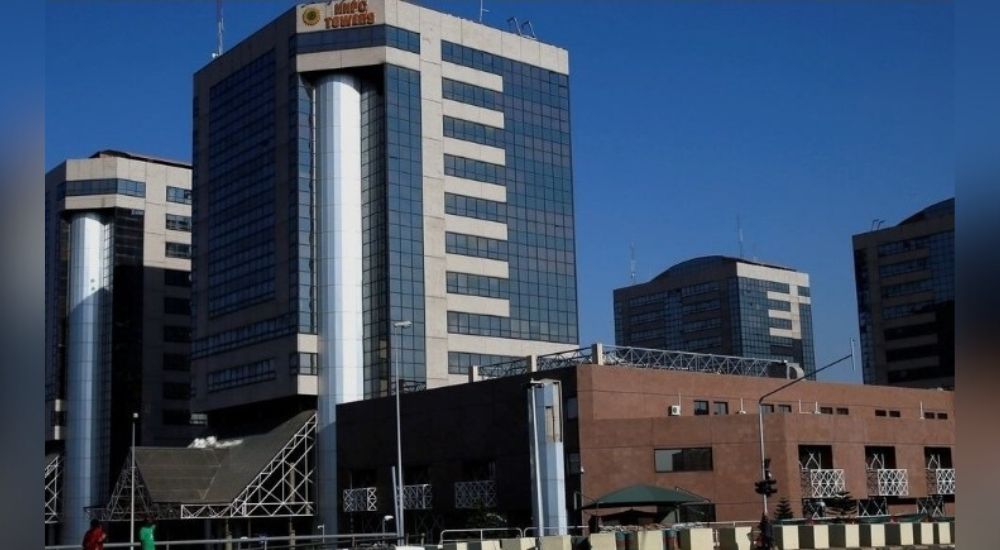
There is a saying in engineering that you cannot fix what you will not first measure. For decades, the Nigerian National Petroleum Company (NNPC) operated in a fog of opaque numbers, political interference, and a governance culture that seemed almost allergic to scrutiny. That era, by all available evidence, is finally coming to an end.
On April 2, 2025, President Bola Ahmed Tinubu made what many initially dismissed as just another political reshuffle. He dissolved the entire NNPC board and executive management, and appointed an entirely new leadership team headed by Engr. Bashir Bayo Ojulari as Group Chief Executive Officer and Ahmadu Musa Kida as non-executive Chairman. The surprise was not just in the timing, but in the composition.
The board was populated almost entirely by technocrats with deep private-sector experience, former directors of Shell, Total, NLNG, and even NNPC, alongside other seasoned financiers and engineers.
One year on, the early returns suggest that this was not a cosmetic change but a structural reset. Let us start with first principles. What does “governance” actually mean for a national oil company? Under the Petroleum Industry Act (PIA) 2021, NNPC Limited was incorporated as a limited liability company under the Companies and Allied Matters Act (CAMA), obligated to its shareholders, ostensibly all 200 million Nigerians, and required to declare profits. But the PIA alone could not change culture. That required leadership.
Ojulari’s first move upon assuming office was to reinstate monthly financial and operational performance reports, a transparency measure that had been allowed to lapse. According to Dr Ogbonnaya Orji, immediate past Executive Secretary of the Nigeria Extractive Industries Transparency Initiative (NEITI), “This level of disclosure sends a powerful signal to the market. Transparency is critical to restoring confidence”. NEITI has since publicly backed Ojulari’s reform agenda, urging NNPC to stand as a model of transparency, accountability, efficiency, and civic engagement.
Beyond disclosure, the new leadership created two new offices: a Chief Compliance Officer and a Chief Sustainability Officer, aligning NNPC with international accountability and environmental responsibility standards. These are not ceremonial titles. They represent a deliberate institutionalisation of oversight that was previously absent.
Advertisement
Even the board’s composition reflects a departure from the past. The new 11-member board includes former NLNG Managing Director Babs Omotowa, respected industry veteran Austin Avuru, and David Ige, alongside representatives from the finance and petroleum ministries. Kida, the chairman, brings over three decades of experience from Elf and Total, where he rose to Deputy Managing Director of Deep Water Services. This is not a board of political appointees; it is a board of seasoned operators.
Perhaps the most visible test of governance has been the handling of Nigeria’s refineries. Ojulari’s approach has been fundamentally different. Speaking at the Nigeria International Energy Summit (NIES) 2026 in Abuja, he laid out a starkly realistic assessment: “Getting refineries up and running requires three critical elements: financing, a competent engineering, procurement and construction (EPC) contractor, and world-class operational capacity”. He also made it clear that NNPC would resist pressure to continue running the refineries at a loss. “NNPC Ltd has embarked on a comprehensive review to recalibrate its refinery strategy, while engaging partners to fulfil its role as supplier of last resort,” he told delegates.
Instead of signing yet another operations and maintenance contract, the new leadership is actively pursuing technical equity partners with proven global expertise. According to Ojulari, NNPC is not selling its refineries outright, but is open to ceding equity to strategic investors who will lead operations, share financial risk, and rebuild internal technical capacity.
A major Chinese petrochemical firm is already in advanced discussions. This is a marked shift from the contractor-led model that left NNPC holding operational responsibility without the capacity to perform.
When President Tinubu issued Executive Order No. 9 of 2026, which stripped NNPC of its automatic 30 per cent management fee on profit oil and gas and directed direct remittance of oil revenues to the Federation Account, many predicted chaos. The conventional wisdom was that NNPC, starved of its customary cash flows, would push back publicly and grind to a halt.
Advertisement
Instead, the new leadership chose engagement over confrontation. The company complied, reframed its financial model, and used the moment to demonstrate fiscal discipline rather than entitlement. This is the kind of institutional maturity that only a board with depth and private-sector instinct can produce.
Nowhere has the change in tone been more evident than in NNPC’s relationship with the Dangote Refinery. Under the previous leadership. In February 2026, Ojulari led a high-level management delegation on a facility tour of the 650,000-barrel-per-day Dangote Refinery and Petrochemical Complex in Ibeju-Lekki.
The visit was not ceremonial. High-level discussions culminated in a renewed commitment to strategic collaboration across multiple fronts. According to Ojulari, the partnership will “unlock synergies across assets, infrastructure, capital, and markets” and provide “visibility of all NNPC-Dangote business relations.”
He further noted opportunities for expansion into upstream operations, trading, shipping, and gas supplies. For his part, Alhaji Aliko Dangote was equally effusive, stating that “Nigerians will be the beneficiaries of the synergy between Dangote Group and NNPC Limited, because our collaboration will achieve economies of scale and unlock value on a large scale”.
This is not the language of reluctant partners. It is the language of aligned commercial interests.
To be fair, not everything has been smooth. Some industry observers have noted that NNPC’s crude production targets remain ambitious, with 2025 federal budget benchmarks of 2.06 million barrels per day still out of reach. Ojulari himself acknowledged at NIES 2026 that achieving 1.8 million barrels per day in 2026 would be a more realistic goal. Critics also point to lingering questions about legacy financial discrepancies, with the Senate Committee on Public Accounts still seeking further clarifications on historical entries.
Advertisement
These are legitimate concerns, and the new leadership would do well to accelerate the reconciliation process.
Perhaps the most significant signal of all is the one least discussed in public. The current leadership is not building a company for today; it is building a company for public listing. More importantly it is working hard towards bequeathing a legacy that will be the pride of all Nigerians.
Every governance reform, from monthly financial disclosures to the creation of compliance offices, from equity partnerships in refineries to transparent engagement with Dangote, is a step towards the day when NNPC Limited becomes a publicly traded company that is accountable to global investors.
That is the ultimate test of governance. And by that measure, Ojulari’s board and leadership may well prove to be a stitch in time that saves actually saves nine.
-Adekayode is an energy analyst with over fifteen years of experience covering African oil, gas, and power sectors.