
OPINION: Russia, Traoré And Death Knell For Democracy In Africa
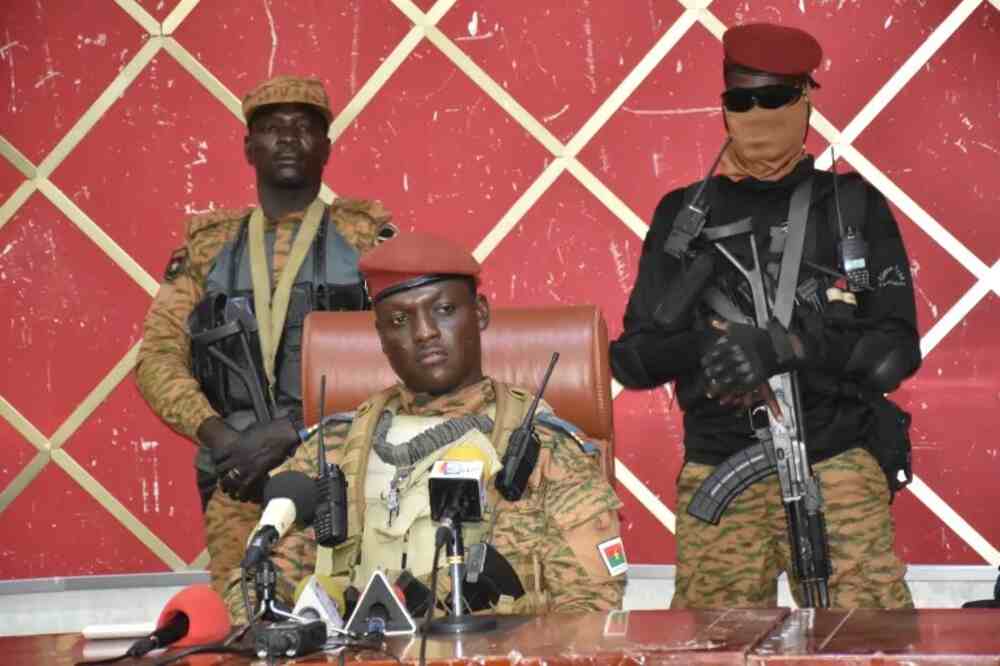
The poster child of Russia’s authoritarianism in Africa, Capt Ibrahim Traoré, on April 2, 2026, stated “Democracy “kills” and the people of Burkina Faso must “forget” it” in an interview aired on state television.
This was not entirely surprising for a geopolitics watcher. Having seized power in a coup in 2023, the junta leader pledged to restore democratic rule by July 2024, but two months before the deadline, Traoré announced it would extend its rule for another five years. He will go on to place a ban on all political parties as part of a plan to “rebuild the state.”
In his April 2 rambling interview, he suggested that most Africans do not want a democratic system and that Burkina Faso had its own alternative approach. What alternatives, he did not say.
This wasn’t happenstance. It was forged as a long-term strategy by the Kremlin. Burkina Faso, Mali and Niger, the so-called Alliance of Sahel States, AES, became the staging grounds for Moscow’s grand plan of democratic scuttling in Africa.
A report by the Africa Centre for Strategic Studies indicates that there has been a steady effort to recede democracy on the continent in recent years. According to Freedom House, 31 African countries have seen their democracy scores decline over the past 5 years.
It makes the argument that external authoritarian actors have played a less well-appreciated role in facilitating this deterioration. “Russia stands out in this regard. Among other aims, undermining democracy has been a strategic objective of Russia’s Africa policy for the past two decades.
Authoritarian governments lacking domestic checks and balances provide permissive environments for enabling Russian influence on the continent. Normalising authoritarianism abroad, meanwhile, validates Russia’s nondemocratic governance practices at home,” the report states.
Advertisement
Various studies conclude that Russia’s disruption of democratic processes occurs through both official channels (such as blocking UN resolutions condemning African regimes’ human rights abuses or fraudulent electoral claims) and irregular means (such as disinformation campaigns targeting democratic proponents, election interference, the deployment of Wagner paramilitary forces, or illicit arms for resources deals).
Traoré, just like his contemporaries who see only the shortcomings of politicians and mistake them for democratic failings, was in his element when he noted that the dissolution of political parties was due to their being divisive, dangerous, and incompatible with the revolutionary project.
“The truth is, politics in Africa – or at least what we’ve experienced in Burkina – is that a real politician is someone who embodies every vice: a liar, a sycophant, a smooth-talker,” he said. He, too, has shown that he is that and much more. He promised elections within a timeframe but failed to keep to it.
He assured Burkinabes of security, but has completely failed to rein in Islamists and other threats, not just to the country, but the entire sub-region. He leads today on all fronts in smooth talking and exploiting AI vulnerabilities with doctored videos and reels to deceive the gullible.
The basis of democracy is the ability of people to say “enough is enough” and choose who to lead them. And this Traoré and his ilk in AES and their handlers in Moscow fail to acknowledge. Nothing best exemplifies the beauty of democracy than Hungary’s ousting of authoritarian President Viktor Orbán. After 16 years of misrule, corruption and human rights abuses, democracy pushed back, and the will of Hungarians came to bear. This is what Traoré cannot bear.
Advertisement
The strongman in Ouagadougou must realise that Africa cannot be recolonised under any guise; therefore, there is an urgent need for him to come to terms with reality. The continent has had enough of opportunistic illiberal regimes that exploit anti-colonial rhetoric to advance their own geopolitical agendas.
While there are divergent views on democracy’s impact on economic growth and social cohesion, there is barely any substitute for it, at least, not the Kremlin’s brand. Except that he wants to end up in the dustbin of history like those who embraced authoritarian leaders, such as Zimbabwe’s anti-colonial freedom fighter-turned-despot, the late Robert Mugabe, and Cameroon’s Paul Biya, then he must look towards stable, prospering democracies like Ghana, Sierra Leone, Nigeria and South Africa.
History indicates that the most prosperous countries are democratic, as they offer their citizens the freedom to think and contribute their own ideas to nation-building.
As it is, Captain Traoré needs to come to terms with the fact that Russia’s anti-colonial crusade belies its efforts to advance its own political and economic interests. Moscow’s efforts in Africa are borne from a desire to undercut Western influence in the region; shore up diplomatic support for itself in multilateral forums, such as the United Nations; and reinstate Russia’s reputation as a global superpower, secure access to Africa’s vast natural resources, including criterial minerals, and take advantage of illicit networks, such as illegal gold mining, to circumvent international sanctions and fund its war in Ukraine. He and his friends in the AES ought to have a rethink and not plunge their people into Moscow’s dragnet of self-perpetuation.
-Amajama, a social commentator, writes from Abuja and can be reached via [email protected]