
Why El-Rufai Cannot Go Home Despite Bail
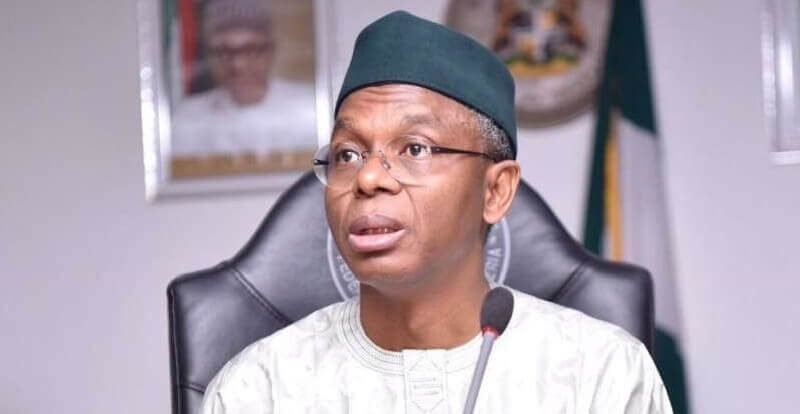
On the morning of Tuesday, April 14, 2026, a Federal High Court in Kaduna delivered a ruling that should, in ordinary circumstances, have set Nasir Ahmad El-Rufai free.
Justice Rilwanu Aikawa granted the former Kaduna State governor bail in the sum of N200 million, ending weeks of anticipation since his arraignment by the Independent Corrupt Practices and Other Related Offences Commission on a sweeping nine-count charge of fraud and abuse of office.
But El-Rufai did not walk out of custody. He could not. And the reasons why illuminate, with uncomfortable clarity, the labyrinthine nature of Nigeria’s criminal justice architecture — and the extraordinary legal jeopardy facing a man who, not long ago, was among the most powerful governors in the country.
Two Courts, One Man, No Exit
The arithmetic of El-Rufai’s predicament is straightforward even if its legal mechanics are not. The former governor faces two separate criminal cases in two separate courts. The Federal High Court has granted him bail. The Kaduna State High Court, before which another criminal matter is pending, has not. Justice Darius Khobo of the state court adjourned ruling on a bail application in that case to April 21.
Until both courts grant bail and El-Rufai satisfies the conditions attached to each, he stays in custody.
Advertisement
“There are two cases against the former governor in two different courts,” explained Kaduna-based legal practitioner Barrister El Zubair Abubakar, who followed the proceedings closely.
“The Federal High Court has granted him bail, and he can only be released after meeting those conditions, but that is limited to that court. In reality, he will not be released yet because he is facing another trial in a different court that has not granted bail.”
Abubakar expressed cautious optimism that the state court would likely grant bail when it rules on April 21, noting that the offences charged are generally bailable under Nigerian law. But optimism is not certainty, and El-Rufai’s freedom remains suspended between two judicial calendars.
The Federal High Court’s bail, when he does qualify for it, comes with approximately ten conditions, according to Hayatudeen Lawal Makarfi, an associate who spoke to journalists after Tuesday’s ruling.
Among them: El-Rufai must provide a surety with landed property and a traditional title, is barred from making any public comments on the case, and must attend every court sitting. The conditions are stringent — befitting, the court apparently determined, the gravity of the allegations before it.
Advertisement
The Long Road to the Dock
El-Rufai’s current legal ordeal did not begin in Kaduna in 2026. Its roots stretch back to the final months of his governorship and the turbulent transition that followed the 2023 elections, when he left office amid controversy and growing calls for accountability over his administration’s financial conduct.
The former governor — once celebrated in technocratic circles for his earlier stint as Minister of the Federal Capital Territory under President Olusegun Obasanjo, and later feared for his iron-fisted style in Kaduna — spent years after leaving office navigating a rapidly shifting political landscape. His public break with the ruling All Progressives Congress, and his alignment with opposition voices, preceded his eventual arrest.
He was first taken into custody by the Economic and Financial Crimes Commission on February 19, 2026.
After a period in EFCC detention, he was transferred to the ICPC. He was briefly released on March 27 on compassionate grounds to attend the burial of his mother — a moment of humanising pause in an otherwise relentless legal onslaught — before returning to custody.
The ICPC formally arraigned him on an amended nine-count charge on Monday, April 13, the day before the bail ruling.
Advertisement
The Weight of the Charges
The charges the ICPC has laid at El-Rufai’s feet are, by any measure, serious. They paint a picture of alleged systematic abuse of executive power across multiple domains — public finance, procurement, land administration, and personal enrichment.
The most financially significant allegation concerns a light rail project. The ICPC alleges that El-Rufai induced the Kaduna State Government to release approximately N11 billion to an unregistered entity for the project — a project that was never executed. If proven, it would represent one of the most brazen instances of public fund diversion in recent Nigerian state governance.
A second count targets what the commission describes as a grossly inflated severance allowance. The ICPC alleges that El-Rufai approved and received about N289.8 million as severance — nearly fifteen times the legally entitled sum of approximately N20 million — thereby, in the commission’s words, conferring a corrupt advantage on himself.
A third allegation strikes at Nigeria’s relationship with international development finance.
The commission accuses the former governor of mismanaging over $1.08 million drawn from a World Bank loan to Kaduna State, in violation of the terms of the loan agreement. Such an allegation, if established, carries implications beyond domestic law, touching on Nigeria’s credibility with multilateral lenders.
Other counts are equally pointed. El-Rufai allegedly conspired with an associate — said to be at large — to offer monetary inducements to federal investigators seeking to compromise an ongoing probe involving a private firm.
He is also accused of unlawfully awarding a N4.6 billion CCTV contract in the Kaduna metropolis in breach of procurement laws, and of using the same contract to confer undue advantage on a connected associate.
The land-related charges round out the indictment. The ICPC accuses the former governor of abusing his office in the revocation and reallocation of a parcel of land along the Kaduna–Zaria bypass, allegedly to benefit an associate and related companies — and of criminal breach of trust in relation to the same property.
El-Rufai has denied all the allegations.
A co-defendant, Amadu Sule, was dropped from the amended charge, narrowing the dock to El-Rufai alone.
Son Speaks, Lawyers Stay Silent
The courtroom gallery on Tuesday included the former governor’s son, Bello El-Rufai, who represents Kaduna North in the House of Representatives. When the ruling came, it was Bello who stepped forward to address waiting journalists — his father’s lead counsel, Ubong Akpan, declining to comment.
Bello El-Rufai’s remarks struck a careful balance between relief, restraint, and a pointed message to the media.
“We are, of course, happy that he has been granted bail today,” he said, before adding a caution that echoed inside the court itself.
“Let me make it clear once again that there is media opinion and there is legal opinion. It is wrong to speculate on what happens in a court of law.”
He was emphatic that he spoke as a son, not as a legal voice. “The lawyers are best placed to address those questions,” he said, while expressing pride in his father and confidence in Nigeria’s institutions.
“We are proud of Malam, we are proud of this country, and we are proud of the rule of law.”
He urged the press to cover the unfolding trial objectively — a request that, given the national profile of the accused and the scale of the allegations, will be tested at every sitting.
The Bigger Picture
El-Rufai’s case is not unfolding in isolation. It is one of several high-profile prosecutions of former Nigerian governors and federal officials that have accelerated under the current administration — a pattern that critics describe as selective justice and supporters frame as long-overdue accountability.
The charges against him also arrive at a moment of intense scrutiny of Nigeria’s fiscal management, as fresh data from the World Bank and the Debt Management Office lay bare the structural problems that accumulated across years of governance at both federal and state levels.
The N11 billion light rail allegation, in particular, resonates against a backdrop of infrastructure projects nationwide that gulped public funds and delivered little.
For now, the trial is scheduled to commence in earnest, with dates fixed for May 26 and June 15. The Kaduna State High Court will deliver its bail ruling on April 21.
Between those dates, El-Rufai — once the man who demolished structures and moved markets as FCT minister, who governed Kaduna with a combination of policy boldness and executive force — remains in custody, his freedom contingent on the simultaneous satisfaction of two courts.
It is, as Barrister Abubakar put it with clinical precision, “technically” not yet time to go home.