
Why Kaduna’s 2026 Budget Excites Agribusiness Investors
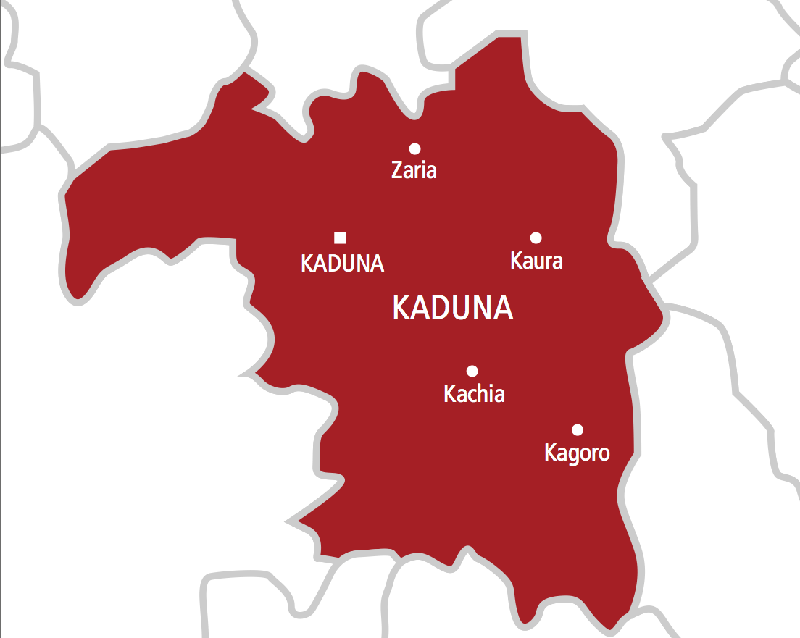
The allocation — the largest ever committed to the sector by the state — channels 98% of its funds into capital projects, including ₦23.9 billion for rural road construction to open up farming communities.
Kaduna State Government has approved ₦108.38 billion for the Ministry of Agriculture in its 2026 budget — a record allocation that dwarfs previous years and sends the clearest signal yet that the state intends to position itself as the agricultural powerhouse of northern Nigeria.
A review of the state’s 2026 Approved Budget by THE WHISTLER discovered the expenditure represents over 10% of Kaduna’s total ₦985.92 billion budget for the year.
Of the ₦108.38 billion allocated to agriculture, an overwhelming ₦106.57 billion — about 98.3 percent — has been designated as capital expenditure, meaning it is earmarked for building infrastructure and expanding productive capacity rather than day-to-day administrative costs.
That capital weighting is extraordinary by any measure and suggests a government making a long-term bet on transforming the state’s agricultural base, rather than simply sustaining the status quo.
Advertisement
The largest chunk — ₦82.21 billion — flows directly to the Ministry of Agriculture headquarters for core capital projects. Analysts expect this to cover large-scale irrigation schemes, mechanisation programmes, grain storage facilities, and agricultural value-chain infrastructure intended to draw in private sector investment and cut post-harvest losses that currently bleed billions from the state’s farm economy each year.
But one of the most strategically significant allocations sits under a sister agency: the Kaduna State Rural Roads Agency, KADRARA, which has been handed ₦23.87 billion to construct and rehabilitate rural access roads. Development experts have long identified poor rural road networks as the single biggest constraint on agricultural output in northern Nigeria — even when crops are planted and harvested, they frequently cannot reach markets in time, leaving farmers to absorb losses that eventually push them off their land.
The largest chunk — ₦82.21 billion — flows directly to the Ministry of Agriculture headquarters for core capital projects. Analysts expect this to cover large-scale irrigation schemes, mechanisation programmes, grain storage facilities, and agricultural value-chain infrastructure intended to draw in private sector investment and cut post-harvest losses that currently bleed billions from the state’s farm economy each year.
But one of the most strategically significant allocations sits under a sister agency: the Kaduna State Rural Roads Agency, KADRARA, which has been handed ₦23.87 billion to construct and rehabilitate rural access roads. Development experts have long identified poor rural road networks as the single biggest constraint on agricultural output in northern Nigeria — even when crops are planted and harvested, they frequently cannot reach markets in time, leaving farmers to absorb losses that eventually push them off their land.
The Kaduna State Agriculture Development Agency, KADA, which delivers extension services, inputs distribution, and farmer training across the state’s 23 local government areas, receives ₦1.10 billion in total funding. While modest compared to the headline capital figures, KADA’s allocation ensures the human infrastructure of farming — trained agents advising smallholders on seeds, fertilisers, and crop management — continues to function.
Advertisement
The Kaduna State Livestock Regulatory Authority, KADLRA, receives ₦144.21 million. The modest sum belies the agency’s critical role in a state where pastoralism and crop farming have for years existed in an uneasy, often violent tension. Formalising livestock routes, regulating grazing, and certifying livestock traders are tasks that, if done well, could significantly reduce farmer-herder conflicts that have cost the state billions in destroyed crops and displaced communities.
For businesses operating in or around Kaduna’s agricultural economy, the budget cycle that opens this year creates substantial opportunities. Civil engineering firms capable of executing rural road contracts, suppliers of construction materials, agro-processing investors, cold-chain logistics operators, and agricultural input companies should all expect heightened procurement activity from state agencies in the months ahead.
The investment also carries risks that the business community cannot afford to ignore. Nigeria’s track record with large agricultural budget lines is patchy — disbursement delays, procurement irregularities, and poor last-mile execution have repeatedly blunted the impact of well-intentioned public spending. The question for Kaduna in 2026 is whether this record commitment will be matched by record delivery.
Placed against the state’s wider budget, agriculture’s ₦108.4 billion ranks fourth behind education (₦243.98 billion), health (₦144.55 billion), and public works and infrastructure (₦179.22 billion) — a ranking that reflects both the breadth of social needs facing the state and the government’s recognition that no long-term economic stability is possible without feeding its people first.
Official implementation reports and procurement notices from the Ministry of Agriculture are expected to begin circulating in the second quarter of 2026.