How Ojulari Is Leading NNPC With Clarity, Discipline
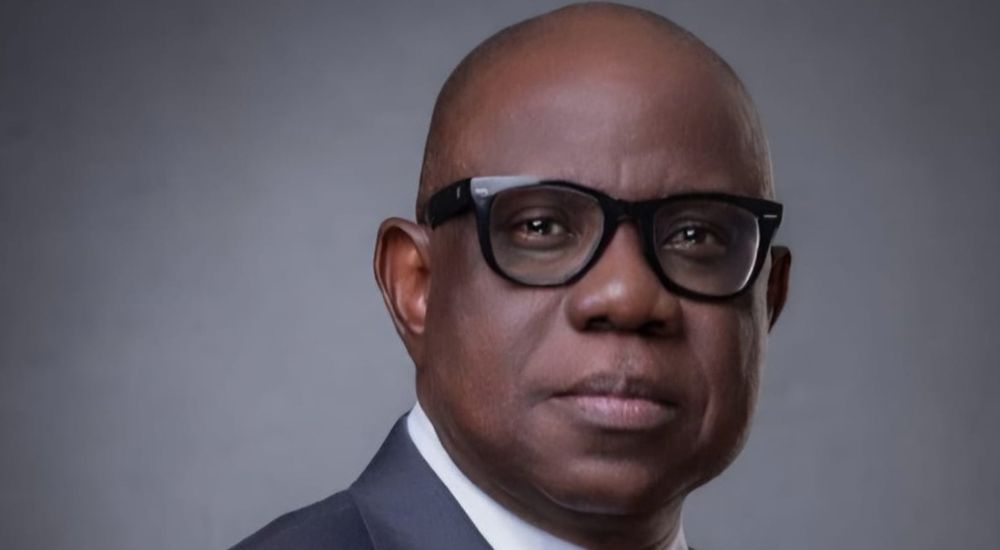
In the arena of Nigeria’s energy sector, discussions are often dominated by barrels, budgets, and billion-dollar projections. But a different kind of moment unfolded on the sidelines of the Nigeria International Energy Summit (NIES) 2026, where Engr. Bashir Bayo Ojulari, the Group Chief Executive Officer of NNPC Limited, in a conversation with Vimbai Ekpenyong of Arise TV, paused not just to analyse, but to acknowledge.
He called for a round of applause for his mentor, Alhaji Abdullah Bukar. Alhaji Bukar has over 46 years of experience in the oil and gas industry. His career started with the Shell Group as a Trainee Facilities Engineer and spans a broad range of Engineering and Field Operations management roles which include a variety of onshore and offshore engineering projects in Nigeria, Holland and Australia over a 35-year period (1972-2007). Given that Engr. Ojulari spent over three decades at Shell companies too, we can deduce that Engr. Bukar’s is one of the shoulders Ojulari leaned on to grow his career leading to his present position.
Ojulari also warmly recognised the presence of Nigeria’s OPEC representative, Maryamu Idris, who also doubles as the MD of NNPC Trading Ltd. In these gestures, small in airtime but vast in implication, the nation glimpsed something profound: a leader who carries his humanity as visibly as his professional dossier.
Since assuming the helm of NNPC in April 2025, Ojulari’s narrative in the public sphere has been quietly but insistently curated around a blend of intellectual rigour and relational grace. His leadership style resists the archetype of the distant, technocratic czar. Instead, he projects the image of a principled engineer, one who understands that complex systems, whether mechanical or corporate, are ultimately managed by and for people. While visiting the kilometre –zero of the Ajaokuta-Kaduna- Kano pipeline system, he was empahatic in letting stakeholders know that the size or importance of the AKK project notwithstanding, his priorities were first and foremost for everyone to work safely and securely.
His analysis of the nation’s refinery conundrum during the summit also exemplified this. While many expected a defensive posture or grand, politically-wrapped promises, Ojulari offered clarity and pragmatism. He framed the halted rehabilitation not as a defeat, but as a necessary recalibration, shifting the focus from sentimental national ownership to hard-nosed value creation.
Advertisement
“The issue is not emotional, political, or symbolic,” he stated, “it is economic.” This statement, simple in syntax, is revolutionary in context. It signifies a departure from the old NNPC that bore the debilitating burden of being “everything to everyone.” Here is a CEO publicly prioritising the health of the corporation for the long-term benefit of its sole shareholder, the Nigerian people.
But this pragmatism is not cold. It is rooted in a philosophy of respect for capital, for process, and for people. His public acknowledgement of a mentor is a masterclass in institutional memory and humility. It signals that his leadership is built upon a legacy of wisdom, not a desire to obliterate the past. By highlighting Maryamu Idris, he practised inclusive leadership, affirming the critical roles played by colleagues on the international stage. These actions subtly rebuild NNPC’s culture from the inside out, fostering a sense of shared mission and respect that has often been missing.
Ojulari’s earlier speeches and actions since his appointment reinforce this portrait of a decent professional. He speaks of “commerciality and profitability” not as abstract concepts, but as prerequisites for national service. He emphasises “best practices and partnerships,” understanding that NNPC’s renaissance cannot be an insular project.
He has consistently advocated for a culture of accountability and transparency, recognising that public trust is the ultimate currency for a national oil company transitioning under the PIA.
What makes this approach so potent, and so fresh, is its intertwining of the humane and the strategic. In a climate where public discourse is often fractured by cynicism, a leader who demonstrates basic decency, who thanks his mentors, credits his team, and speaks to citizens with sober honesty, does more than manage an entity; he begins to restore faith in the system itself.
Advertisement
His demeanour suggests that one can be fiercely committed to profitability without being ruthless; that one can make tough, commercially sound decisions without being detached from the human ecosystem those decisions affect.
Therefore, far from a corporate endorsement, this is a call to endorse a leadership style that Nigeria desperately needs: one that is intellectually honest, strategically sound, and fundamentally respectful. It is a recognition that the complex journey of reforming NNPC requires not just technical blueprints, but also moral compass.
“A decent human” is not a faint compliment in the context of Nigeria’s corporate governance; it is a vital qualification. Decency here implies integrity, respect for legacy and team, and a commitment to truthful communication. Combined with Ojulari’s proven technical expertise and pragmatic vision, it forms the bedrock of a transformative leadership.
As NNPC Ltd continues to navigates its critical commercial voyage, having a captain who remembers to honour those who taught him to sail, who values his crew, and who charts the course with a clear, honest eye on the horizon, is a strong asset. Bashir Bayo Ojulari is demonstrating that leading with decency is not a weakness, but the very source of enduring strength.
For the sake of a thriving national oil company and a revitalised energy sector, Nigeria should not only listen to him but also stand firmly with him.
Jeremiah, a public affairs analyst wrote from Lagos
Advertisement