How UNICEF, Sokoto Govt’s Initiative Is Breaking Learning Myth In Underserved Communities

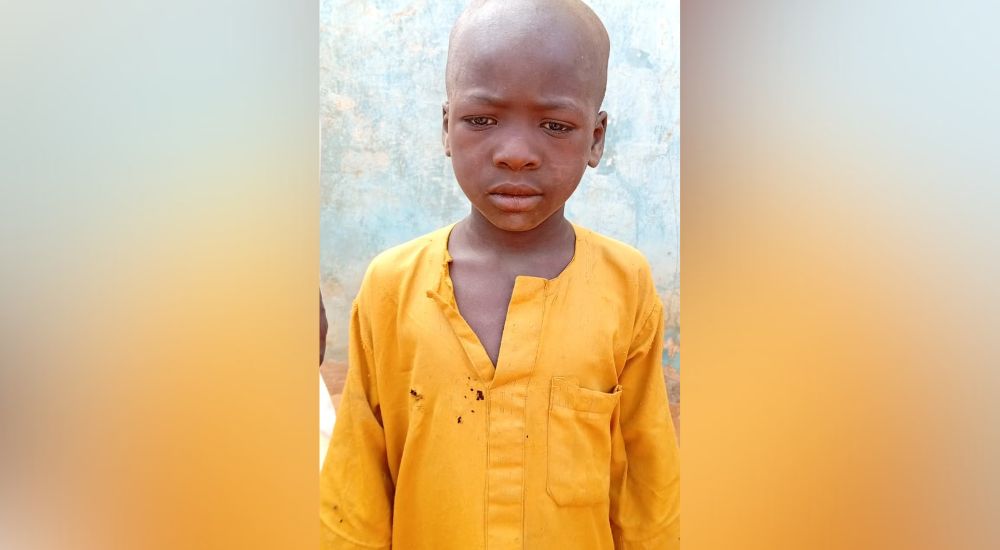
Nine-year-old Abdul Tasi’u stands quietly behind a classroom block, clapping along to the rhymes he has memorised from a distance.
His home is only a few kilometres from Sultan Abdurrahman Model School in Gwadabawa of Sokoto, a state in the Northwest Nigeria, a distance so close enough to benefit from access that many children in rural communities lack. Yet he has never sat inside a classroom.
His parents insist he must complete a Quranic learning system popularly called ‘makarantar allo’ in northern Nigeria, before beginning Western education, a long-held belief across Sokoto communities that children are not ready for school until age five or older.
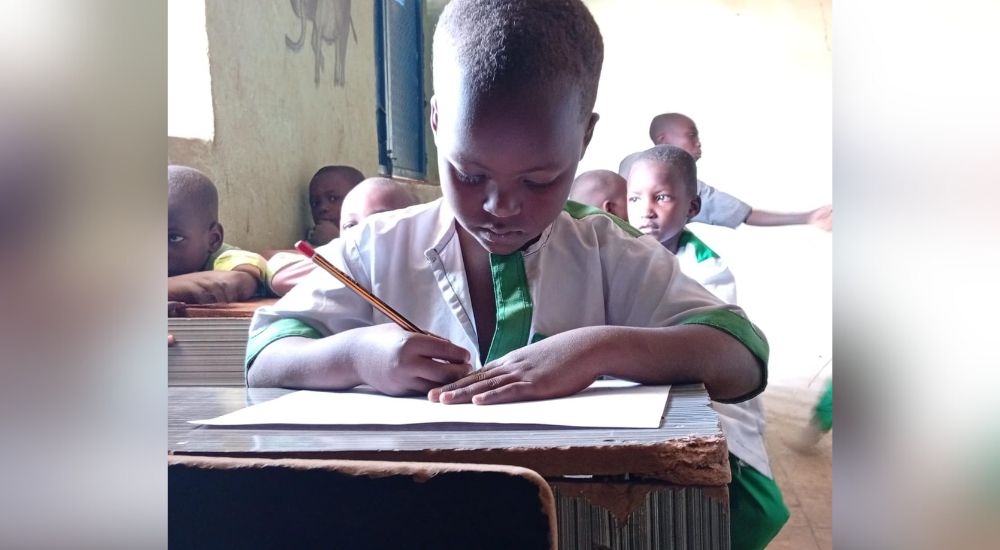
But just a few steps away, tree-year-old Abdul Hassan carefully traces letters on a sheet of paper, confidently identifying colours and counting objects.
He was among the children that the little Tasiu stood apart to admire, and were preparing into the early childhood education system in the state.
Advertisement
The contrast between the two children reflects a quiet transformation underway, one driven by Early Childhood Care Education (ECCE), implemented through School-Based Management Committees in partnership with UNICEF and supported by the European Union.
WHEN THE TRADITIONS DELAY THE EARLY LEARNING SYSTEM
Jamilu Hassan, a parent in the School said for generations, families believed formal schooling should begin only when a child is “old enough.” But education experts warn that waiting may close a critical window for the child’s development.
Advertisement
In an interview with THE WHISTLER, the father of six said he regretted once holding the same belief, especially when the school is near and the opportunity exists. But misconception kept the vulnerable children outside the classroom gate.
“My older child started late and struggled to adjust. But Yusuf is different; he recognises numbers, speaks clearly, and asks questions every day. We now understand learning should begin early,” he said.
Research widely cited by global education bodies shows that more than 80 per cent of brain development occurs before age five.
Children exposed to structured early learning are significantly more likely to enrol on time, remain in school, and achieve foundational literacy, said Ibrahim Bello, the School-Based Management Committee Chairman
He said In a region already grappling with high numbers of out-of-school children, delayed entry compounds educational disadvantage.
For UNICEF, stories like Yusuf’s represent the preventive power of early learning, stopping educational exclusion before it begins.
Advertisement
The UNICEF Chief of Field Office in Sokoto, Michael Juma, said the programme prioritises system strengthening and sustainability.
He said it is not just about expanding classrooms but building strong education systems that can track children, support teachers, and ensure seamless transition from early childhood education to primary school.
THE SHIFTING MINDSET
Inside the early learning classroom, play-based instruction blends with structured guidance. Songs teach language. Games build coordination. Interaction develops confidence.
Saratu Abdullahi, a teacher in the School, said that the difference between early learners and late starters is visible.
“Children who attend early classes adapt faster in primary school. They communicate better, pay attention longer, and interact confidently with teachers and peers,” she told THE WHISTLER.
Bello said that the programme is gradually reshaping perception, describing it as a steady cultural shift.
“People used to think early schooling was unnecessary. Now they see children speaking clearly, counting, and expressing themselves. Parents are beginning to see education as a shared responsibility,” he said.
Across participating communities, mothers volunteer in classrooms, fathers attend sensitisation meetings, and local leaders encourage early enrolment during public gatherings.
What was once seen as government work is increasingly viewed as a collective responsibility.
School-Based Management Committees now mobilise enrolment campaigns, monitor attendance, and support learning environments. Parents organise awareness visits, encouraging neighbours to enrol younger children.
Education stakeholders say this grassroots ownership is key to sustainability.
“When families witness visible improvement in their children, they invest trust and participation. Early learning is no longer viewed as optional; it is becoming foundational,” Muhammad Aminu, education official, said.
He said many rural communities still lack dedicated early learning centres, trained caregivers, and adequate materials. Stakeholders estimate that only a portion of eligible children currently benefit from structured early education opportunities.
Children like Tasi’u represent those still left behind not by distance, but by perception.
Aminu called on the government and community leaders to scale up early childhood education programmes, invest in trained personnel and learning materials, and confront lingering perceptions that continue to keep many children out of school.
THE ECONOMIC CASE FOR EARLY LEARNING
Education advocates say investment in early childhood education yields long-term social and economic returns, from improved literacy rates to reduced dropout levels.
Abdullahi Jabo, an education advocate, argues that expanding early learning infrastructure is essential for sustainable education reform.
“Expanded funding will support teacher training, infrastructure, and wider coverage. Early childhood education must be institutionalised within the state’s education framework,” he said.
He warned that without sustained government investment, early gains could stall and misconceptions about school readiness may persist.
However, he acknowledged several barriers limiting effective parental engagement, including lack of awareness of parents’ roles in early education, limited financial and material resources, time constraints, language barriers, and socio-cultural factors that discourage some parents from participating actively in school activities.
Dr Adamu Ganya, UNICEF Early Childhood Education consultant however emphasised that understanding these challenges is essential to designing effective interventions that improve access to quality early childhood education across the states.
To address the gaps, Dr Ganya outlined practical strategies to promote parental engagement, such as flexible and regular communication channels between schools and parents, parent education programmes through workshops and training sessions, community partnerships with local organisations, and the creation of welcoming school environments that value parents’ contributions.
He also encouraged schools to provide volunteer opportunities that allow parents to participate in classroom activities and school events, fostering a sense of ownership and collaboration in the education process.
He however, described parental engagement as a vital pillar of quality early childhood education with far-reaching impacts on children’s cognitive, social, and emotional development, Dr Ganya urged stakeholders including government, educators, communities, and the media to work together to break down barriers and empower parents
Research institutions, including scholars from Usmanu Danfodiyo University, Sokoto, have similarly emphasised that delayed school entry contributes to long-term learning gaps that are difficult and costly to reverse.
Education experts say proximity alone does not guarantee access; awareness and policy support are equally critical.
Despite community engagement, many programmes still rely heavily on donor support. Advocates are calling on the state government to allocate dedicated funding for early childhood education, integrate it into mainstream planning, and expand coverage across underserved communities.
Without stronger institutional backing, they warn, early childhood education risks remaining an intervention rather than a system.
For families who have embraced early learning, transformation is already visible in confident speech, curiosity, and readiness for formal education.
For Abdul Tasi’u, whose home sits minutes away from opportunity, the hope remains simple: to learn from inside the classroom rather than from behind its walls.