
Nigeria Records Highest Journalist Death Toll In West Africa — CJID
The Centre for Journalism Innovation and Development (CJID), alongside media stakeholders, human rights advocates, and civil society organisations, has raised alarm over worsening attacks on journalists and shrinking press freedom across West Africa.
It disclosed this during the 2026 World Press Freedom Day organised by CJID in partnership with the National Human Rights Commission (NHRC), Konrad Adenauer Stiftung, and other partners in Abuja.
CJID said 1,877 attacks against journalists and media practitioners were recorded across five West African countries between 1986 and 2026.
The event, themed “Shaping a Future at Peace: Promoting Press Freedom for Human Rights, Development, and Security,” brought together journalists, media executives, civil society groups, legal experts, development partners, and government representatives.
CJID data shows 59 journalists were killed within the period across five West African countries, with Nigeria accounting for 28 deaths, the highest figure.
Advertisement
The data further revealed that the Federal Capital Territory recorded 175 attacks against journalists and media practitioners, while 13 attacks have already been documented across West Africa in 2026 alone, including two incidents from Nigeria.
Participants described the figures as alarming and warned that persistent attacks on journalists pose serious threats to democracy, accountability, human rights protection, and national development.
Delivering the address of the Minister of Information and National Orientation, Mohammed Idris, who was represented at the event, said the government remains committed to democratic governance, media development, and protection of citizens’ rights.
He noted that journalism and information dissemination are rapidly evolving due to artificial intelligence, digital platforms, and emerging technologies, stressing the need for responsible adaptation to the changing media environment.
According to him, the government remains open to constructive engagement with the media to strengthen democratic space and ensure journalism continues to serve as a force for peace, inclusion, accountability, and national development.
Advertisement
“Together, through responsible journalism and collective commitment to democratic values, we can build a more peaceful, united, informed, and prosperous Nigeria,” he stated.
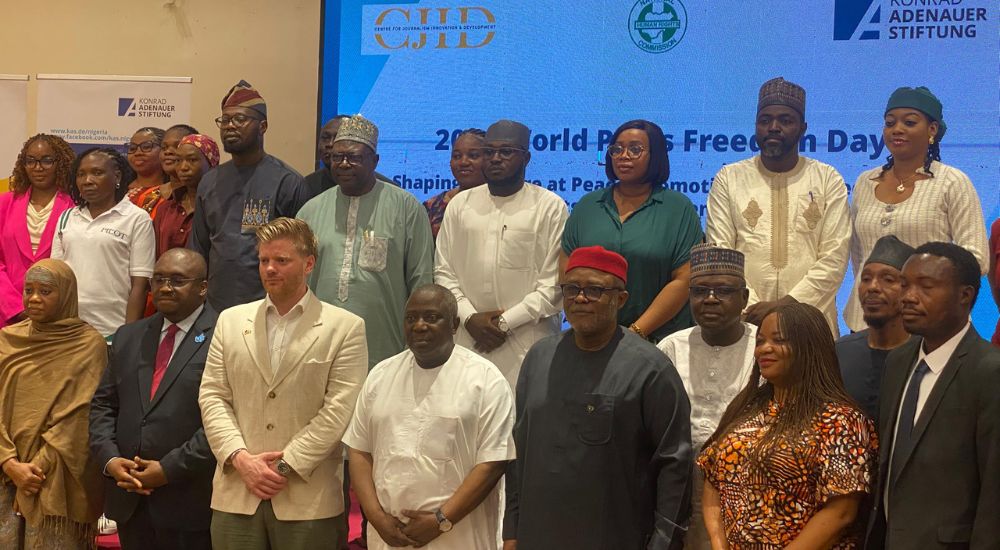
Earlier in his welcome remarks, Executive Secretary of the National Human Rights Commission, Tony Ojukwu, represented at the programme, described press freedom and freedom of expression as essential pillars of democracy and sustainable peace.
He said the 2026 World Press Freedom Day commemoration comes at a period when journalists and media professionals across the world are increasingly confronted with arbitrary arrests, digital surveillance, cyber attacks, intimidation, censorship, and institutional repression.
Advertisement
According to him, while Nigeria has constitutional guarantees protecting freedom of expression and press freedom, attacks on journalists by security agencies, state actors, and individuals continue to occur.
“We continue to receive reports relating to attacks on journalists, restriction of civic space, intimidation of media professionals, and misuse of force to suppress critical reporting,” he said.
Ojukwu also expressed concern over the misuse of laws such as the Cybercrimes Act to intimidate journalists and suppress dissenting voices, warning that such actions undermine constitutional democracy and weaken public trust in institutions.
He stressed that Section 39 of the Constitution of the Federal Republic of Nigeria guarantees freedom of expression and access to information, while Nigeria is equally bound by international human rights instruments, including the African Charter on Human and Peoples’ Rights and the International Covenant on Civil and Political Rights.
According to him, protecting journalists and safeguarding media freedom remain constitutional and democratic obligations for both state and non-state actors.
He further emphasised the importance of ethical and responsible journalism in an era of misinformation and rapid spread of unverified information across digital platforms.
“Press freedom is not an abstract idea; it is a practical necessity for national development and sustaining peace,” he added.
During the programme, CJID officially launched the Press Attack Tracker (PAT West Africa) by Executive Director of CJID, Akintunde Babatunde.
The platform is designed to document, monitor, and respond to attacks against journalists and media organisations across West Africa.
Babatunde explained that the initiative would strengthen accountability mechanisms, improve regional data collection, and support advocacy efforts aimed at protecting journalists operating in increasingly hostile environments.
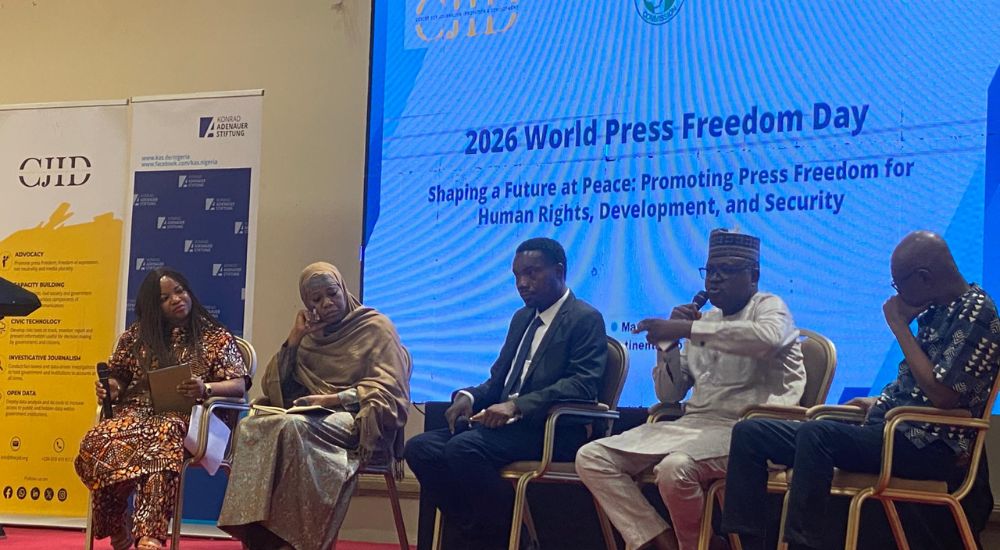
The event also featured a panel session titled “Assessing the Impact of Critical Investigative Journalism in Human Rights Movement Protection and Nation Building.”
During the session, Country Director of Amnesty International Nigeria, Isa Sanusi, urged journalists to remain committed to investigative reporting and public accountability.
He encouraged journalists to continue scrutinising governance failures, exposing societal abnormalities, and holding leaders accountable through fact-based reporting.
Sanusi further stressed that attacks against journalists and media organisations should become both national and international issues to ensure violators face sanctions and accountability.
Also speaking during the panel discussion, Director of Corporate Affairs and External Linkages at the NHRC, Fatimah Mohammed, encouraged journalists whose rights are violated to approach the commission for redress.
She noted that the commission is legally mandated to investigate all forms of human rights violations, including attacks targeting journalists and media professionals.
Senior Programme Officer at the Africa Centre for Media and Information Literacy (AFRICMIL), Godwin Onyeacholem, lamented weak legal frameworks at state levels, which he said contribute to silence among victims of attacks and human rights violations.
The panel session also featured personal testimonies from journalists who had experienced persecution while carrying out their professional duties.
Journalist Matthew Ojoduma recounted his arrest and detention in the Benin Republic, where he spent about nine months in prison while working on documentary projects across West Africa.
Ojoduma narrated how he was accused of espionage after security officials discovered a mini drone and camera equipment in his possession during a cross-border trip for documentary production.
He described the prison conditions as overcrowded and inhumane, and allegef that detainees frequently collapsed due to poor living conditions.
According to him, after several failed attempts to secure intervention, he eventually used artificial intelligence tools to draft letters that later attracted responses contributing to his release.
The World Press Freedom Day commemoration also featured specialised training sessions aimed at strengthening journalists’ professional and safety capacities.
One of the sessions titled “Strategic Approaches and Dignity-Centered Conduct in Human Rights Reporting for Journalists” was facilitated by Managing Editor at HumAngle, Hauwa Shaggi Nuhu.
The session focused on trauma-informed reporting, ethical storytelling, and the importance of protecting the dignity and safety of vulnerable persons while covering conflict, violence, and human rights-related stories.
Another session on “Legal First Aid for Journalists” was facilitated by Christiana Longe CJID project Manager, Media Freedom.
The training examined legal rights, digital safety, and practical measures journalists can adopt when confronted with arrest, detention, intimidation, or censorship.