
Nigeria Will No Longer Rely On Broken Revenue System — Tinubu
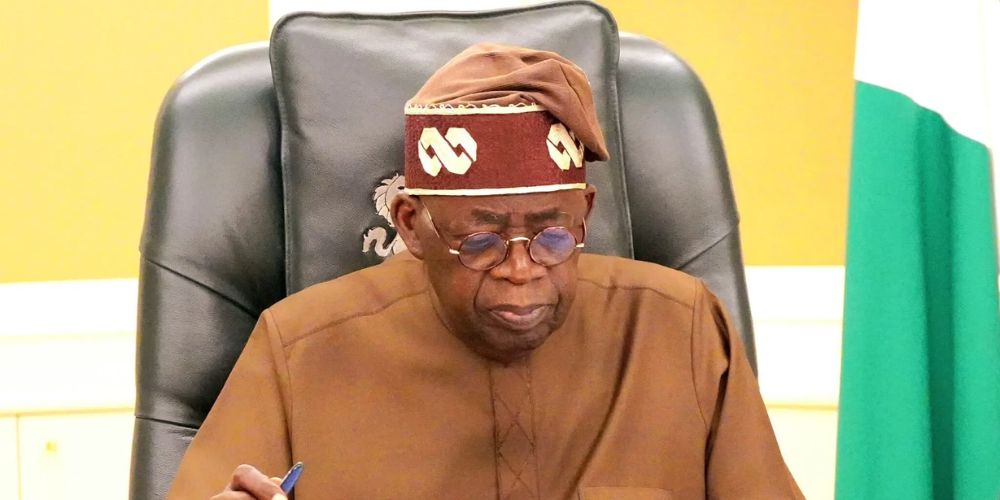
President Bola Ahmed Tinubu has declared that Nigeria has entered a decisive phase of economic transformation, insisting that the country will no longer depend on what he described as a “broken, inefficient and unfair revenue system.”
Speaking at the commissioning of the headquarters of the Nigerian Revenue Service (NRS), the President said his administration’s ongoing tax and fiscal reforms are designed to reposition the economy for long-term stability, investment growth, and public trust.
Tinubu said the reforms were not political slogans but a deliberate “covenant with the Nigerian people” aimed at rebuilding the foundations of governance and restoring confidence in public institutions.
According to him, Nigeria is gradually moving “from the dimness of uncertainty into the clear light of renewed hope,” driven by structural reforms that target efficiency, fairness, and transparency in revenue collection.
He explained that no serious nation can achieve prosperity on a weak tax system, stressing that the administration took the “bold decision” to overhaul the country’s fiscal architecture to eliminate distortions, close loopholes, and ensure that every contribution to national revenue translates into visible development.
Advertisement
“No nation achieves lasting prosperity on a weak and fragmented revenue system,” the President said.
“Government cannot demand trust when taxation is complex, inefficient or unjust. That is why we embarked on far-reaching tax and fiscal reforms designed to simplify our system, eliminate distortions, and create a fair, transparent and investment-friendly environment.”
Tinubu noted that early indicators of the reforms are already encouraging, pointing to improvements in fiscal stability, stronger external reserves, a more efficient trade ecosystem, and growing investor confidence in Nigeria’s economy.
He attributed these gains not to chance, but to “deliberate policy choices and sustained national discipline,” adding that the government remains committed to long-term structural change rather than short-term fixes.
The President said the newly commissioned headquarters of the Nigerian Revenue Service symbolises a new phase in institutional reform and national accountability.
Advertisement
He described the building as more than a physical structure, calling it a representation of a new standard of professionalism, efficiency, and public service delivery.
“This building is more than concrete and steel,” he said. “It is a symbol of a new standard of professionalism, transparency, efficiency and service. It reflects our resolve that institutions must rise to meet the demands of reform and the expectations of the Nigerian people.”
Tinubu emphasised that the Nigerian Revenue Service must evolve beyond its traditional role of tax collection to become a trust-building institution that embodies fairness and accountability.
He said the agency must demonstrate that government can be responsive, efficient, and transparent, while also ensuring that taxpayers see tangible value for their contributions.
“The Nigerian Revenue Service must not only collect revenue, it must build trust,” he said. “It must ensure fairness, demonstrate accountability, and show that government can be efficient and responsive. It must become a model institution respected at home and abroad.”
The President also used the occasion to reflect on Nigeria’s broader reform journey, noting that the current administration inherited a complex economic structure requiring deep and sometimes difficult adjustments.
Advertisement
He acknowledged that reforms often come with short-term challenges but insisted that the long-term benefits would outweigh immediate discomforts.
“History will not judge us by what we say, but by what we do,” Tinubu said. “It will judge us by the institutions we strengthen and the discipline we sustain. National renewal demands consistency, courage and collective resolve.”
He called on Nigerians to remain patient and supportive of ongoing reforms, stressing that sustainable development can only be achieved through shared sacrifice and collective commitment.
Tinubu further stated that Nigeria’s future would not be determined by chance but by deliberate choices made by leaders and citizens alike. He said the government has chosen the path of reform, discipline, and inclusive development.
“We have chosen reform, we have chosen discipline, we have chosen progress,” he said. “We will stay this course steadfastly until the promise of Nigeria is matched by the performance of its institutions and the prosperity of its people.”
The President concluded by declaring the headquarters of the Nigerian Revenue Service officially commissioned, describing it as a milestone in the country’s journey toward fiscal stability and institutional renewal.
He expressed optimism that the reforms currently being implemented would lay the foundation for a more resilient economy capable of competing globally and delivering shared prosperity for Nigerians.