
Parties’ Nomination Forms Turning Nigeria’s Democracy Into Auction For Billionaires
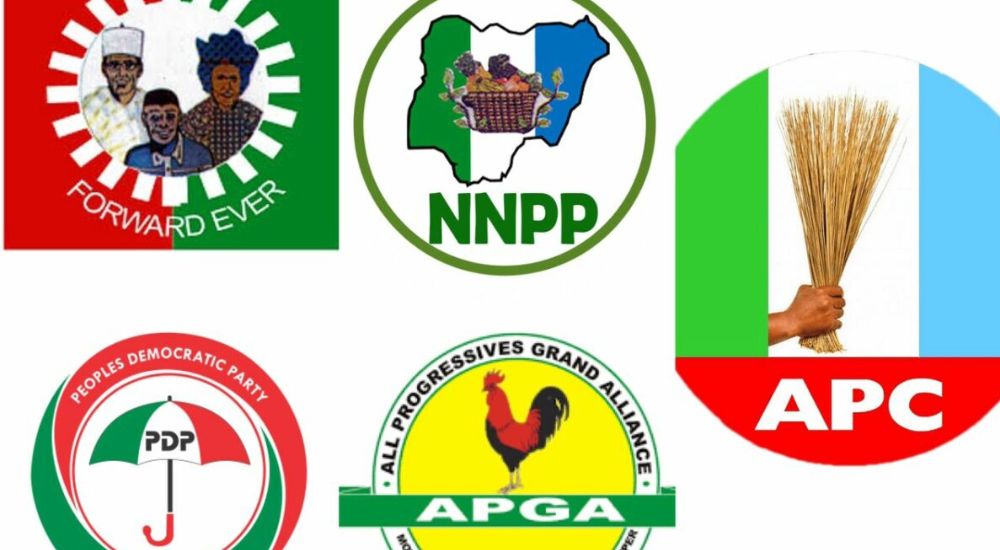
As political parties price their 2027 nomination forms beyond the reach of ordinary citizens, a generation of young, qualified Nigerians is being systematically locked out of the very system they are told to trust.
THE WHISTLER‘s Lukman ABDULMALIK examines the numbers, the voices, and the democratic crisis hiding in plain sight.
Musa Garba is 29 years old, holds a first-class degree in political science from Bayero University Kano, has spent four years as a community development volunteer in his Gwale neighbourhood, and knows the streets of his ward better than most politicians who have represented it.
He has a vision for constituency development, a network of trust among the youth in his area, and, by any reasonable democratic standard, the makings of a credible candidate for the Kano State House of Assembly in 2027.
There is just one problem. The nomination form for his party (APC) costs N6 million, and that is the cheapest among the major parties.
“I earn about N80,000 a month working for an NGO,” Garba told THE WHISTLER.
Advertisement
“To get that form, I would need to save every single kobo of my salary for more than six years without spending anything on rent, food, or transport. How is that democracy?”
Garba’s arithmetic is not an exaggeration. It is a precise description of the wall that Nigeria’s two dominant political parties — the All Progressives Congress (APC) and the Peoples Democratic Party (PDP) — have erected between ordinary citizens and the political process ahead of the 2027 general elections. And the numbers, when laid bare, are staggering.
The Price Tag on Democracy
The APC has fixed the cost of its 2027 presidential nomination form at N100 million, a figure that is nearly twice the total legitimate salary a president earns over four years, and more than 1,000 times Nigeria’s monthly minimum wage.
The breakdown is equally sobering: presidential aspirants pay N30 million for the Expression of Interest form and N70 million for the nomination itself.
Advertisement
Governorship aspirants pay a combined N50 million, Senate N20 million, House of Representatives N10 million, and State House of Assembly N6 million.
The PDP faction aligned with FCT Minister Nyesom Wike is not far behind. It fixed the total cost for its presidential expression of interest and nomination forms at N51 million, governorship at N31 million, Senate and House of Representatives at N7 million and N4 million respectively.
The All Progressives Grand Alliance went further still. APGA’s presidential aspirants face a combined fee of N75 million — N25 million for the expression of interest and N50 million for the nomination form.
Governorship aspirants pay a combined N35 million, Senate N21 million, House of Representatives N16 million, and State Assembly N8 million.
Only the African Action Congress charted a meaningfully different course. The AAC fixed the combined cost of its presidential expression of interest and nomination forms at N2.1 million — N100,000 for the expression of interest and N2 million for the nomination.
Governorship and Senate aspirants pay a combined N1.1 million each, House of Representatives aspirants pay N600,000, and State House of Assembly aspirants pay N250,000.
Advertisement
But the AAC is not a party with a realistic path to federal power. And therein lies the trap.
The Poor, Governed by the Wealthy
To fully grasp the absurdity of these figures, they must be placed against the economic reality of the country whose leadership these forms supposedly unlock.
The Nigerian president earns a total salary package of N1.17 million monthly — including a basic salary of N292,892, a hardship allowance of N146,446, and a consistency allowance of N732,230, according to the Revenue Mobilisation Allocation and Fiscal Commission.
A Nigerian governor earns approximately N7.8 million annually. In other words, a governor would need to save his entire official salary — untouched — for more than six years to afford the APC’s governorship nomination form.
Nigeria’s national minimum wage stands at N70,000 per month, roughly N840,000 annually.
According to the Nigerian Consumer Outlook Report 2025, less than 1% of Nigerians earn above N1 million monthly, while the majority earns below N100,000 or has no stable income.
The World Bank estimates that more than 60 percent of Nigerians live below the national poverty line. For young Nigerians, savings are rare and access to capital is minimal.
Dr. Aysha Abdullahi, a political economist at B.U.K, told THE WHISTLER that the nomination form regime has effectively formalised the commodification of political candidacy.
“What these prices do is replace political merit with financial gatekeeping,” she said.
“You no longer ask: is this person qualified, do they have community support, do they have ideas? You ask: do they have N100 million? That is not a democratic process. That is an auction.”
The Youth Locked Out
Nigeria has one of the youngest populations in the world, and the numbers make the exclusion of youth from political office both a demographic paradox and a democratic tragedy. Youths make up over 67% of registered voters, which means that whoever they decide to vote for is sure of winning any election. Yet they wield almost no power within the structures that determine who is placed before them on the ballot.
Despite the passage of the “Not Too Young to Run” bill in 2018 — which lowered age requirements for elective office — the number of youths aged 18 to 29 voted into elective positions remains less than 1%.
The data on voter engagement tells a related story of disillusionment. Nigeria’s voter turnout has witnessed a steady decline since its peak in 2003, when turnout reached 69%. In the 2023 elections, turnout was just 27% — the lowest level in Nigeria’s democratic history.
Young people surveyed on political participation were not indifferent. They followed elections. They argued about candidates on WhatsApp. They cared. But when it came to showing up, registering for a party, attending a rally, or running for office, the barriers were concrete and material.
Transport costs money. Taking time off work costs money. Campaign registration costs money. In a country where youth unemployment sits above 50 percent in some states, these are not small obstacles.
Fatima Usman, a 27-year-old businesswoman in Katsina who sells fabrics, said she had given up on the idea of ever running for office despite being approached by members of her community to contest her ward councillorship seat.
“They told me to go and buy the form,” she said. “I said: buy the form with what? I am the one feeding my family. The form costs more than my entire shop is worth. These parties do not want people like us. They want their friends.”
Isah Abdullahi, 32-year-old lawyer in Kano with a focus on constitutional law, was more pointed. “The ‘Not Too Young to Run’ bill reduced age limits.
“But it didn’t reduce the cost of running. Age was never really the problem. The problem was always money. And that problem is worse in 2027 than it has ever been.”
Aspirants And Godfathers
For those young people determined enough to try despite the financial barriers, the nomination fee structure drives them directly into a patronage system that further erodes their independence once in office.
The entrenched system of godfatherism creates a gatekeeping mechanism where political opportunities are controlled by influential elites, thereby marginalising youth who lack such connections. In exchange for the financial backing needed to purchase a form and fund a campaign, the aspirant surrenders future decision-making autonomy to the patron — creating a class of officeholders who are legally elected but practically beholden.
In exchange for funding, loyalty is secured, and future decision-making is shaped long before office is attained. This dynamic is not limited to national offices. At the local level — where youth participation should be most accessible — a different form of exclusion takes hold.
A former two-term councillor in Kano State who seeks Anonymity told THE WHISTLER he entered politics through a godfather arrangement at 26, said the debt never went away.
“I spent my entire first term doing what my sponsor wanted, not what my constituents needed,” he said. “He paid for my form, he funded my campaign, and so I belonged to him. That is the system. Young people who enter through that door do not come out as independent voices.”
The Parties’ Defence
Political parties have consistently defended the high cost of nomination forms on two grounds: inflation and seriousness of purpose. The argument is that only candidates with demonstrated financial capacity — whether personal or from supporters — are viable contestants worth processing.
Party leaders have argued that the high cost of nomination forms is a due diligence measure to distinguish pretenders from contenders — a parameter for measuring interest, seriousness, and commitment to contest for office. In the absence of state funding, parties argue they must generate revenue from the sale of forms to fund party activities.
But this reasoning collapses under scrutiny. If inflation were the driving force, the cost of APC presidential forms in 2022 should have been around N100 million based on inflationary calculations from 2015 to 2022.
Yet the actual jump in prices far exceeded what inflation alone could explain. Evidently, inflation is not necessarily the driving force behind the sharply increased prices of nomination forms.
Professor Adamu Suleiman, a professor of public administration at the University of Jos, told The Whistler that the inflation defence was “arithmetically dishonest.”
“If you use Nigeria’s own NBS inflation data to calculate the expected rise in form prices from 2015 to today, you do not arrive at N100 million,” he said. “You arrive at a fraction of that. The parties have used inflation as a rhetorical shield for what is, at its core, a cartel arrangement to preserve access to power among a fixed class of wealthy individuals.”
The insensitivity to the prevailing socio-economic situation makes the candidate selection process susceptible to capture by money bags. As the chairman of Nigeria’s ruling party once noted, “if you don’t have N100 million, you have no business with becoming president.”
The implication is the evolution of a state governed by and for wealthy elites, at the detriment of popular participation.
A Partial Concession That Reveals More Than It Solves
The APC has introduced a limited concession for the 2027 cycle. Female aspirants, youth, and physically challenged aspirants are to pay the expression of interest fee in full but receive a 50 per cent discount on the nomination component for each position.
For a young person seeking a House of Assembly seat, this reduces the total from N6 million to approximately N3.5 million — the Expression of Interest of N1 million plus half of the N5 million nomination fee. That figure still represents more than three and a half years of unspent minimum wage income. The discount, critics say, is cosmetic.
“A 50 percent discount on a price that was already prohibitive does not solve the problem,” Dr. Abdullahi of ABU told The Whistler. “It is optics. It signals awareness without action. What they are saying is: we know young people and women cannot afford this, so we will charge them half of what we know they cannot afford.”
Zainab Mohammed, a 30-year-old community health worker from Kaduna who had considered running for a House of Representatives seat, said she initially felt hopeful when she heard about the discount. “Then I did the maths,” she said. “Half of ten million is still five million. I have never seen five million naira in one place in my life. So the discount means nothing.”
The Global Contrast
Globally, youth leadership is not theoretical. Sanna Marin became prime minister of Finland at 34, while Sebastian Kurz rose to office at 31 as Chancellor of Austria. These outcomes were not driven by age alone, but by political systems that allow internal party mobility, regulate campaign financing, and reduce the dominance of money in electoral competition.
In the United Kingdom, a prospective parliamentary candidate typically pays a £500 deposit to stand in a general election — refundable if they secure at least 5 percent of the vote.
In South Africa, parties field candidates at no direct fee to the individual; parties absorb electoral costs institutionally. In Ghana, the governing party’s parliamentary primaries cost aspirants a registration fee of approximately GH₵10,000 — a fraction of what Nigeria demands.
“What these systems recognise,” Taiwo Adeyemi, the Lagos lawyer, told The Whistler, “is that the purpose of an election is to give citizens a choice of qualified candidates — not to raise revenue for parties. When parties treat nomination as a product and aspirants as customers, they corrupt the entire logic of representative democracy.”
What the Data Says About Where This Leads
As long as money — not competence, character, or popular appeal — operates as a fundamental variable in political leadership recruitment, voters will refrain from voting because commercialised political processes are more likely to produce unpopular, unaccountable, and incompetent candidates. Inertia towards electoral participation is a knock-on effect of a commercialised political process that most politicians tend to ignore.
Even as Nigeria’s voter turnout fell to a historic low of 27% in 2023, surveys suggest that many young Nigerians say they still intend to vote in 2027. So interest has not completely disappeared. But the structural barriers that price out candidacy also erode the quality of electoral choices available to voters — feeding a cycle of disengagement that each election cycle deepens.
Prof. Suleiman Kabir, political scientist, Northwest University, noted that the 2027 cycle represents a fork in the road.
“If we continue on this trajectory — forms at N100 million, minimum wage at N77,000, poverty above 60 percent — what we will produce is a legislature and executive that is structurally incapable of understanding or addressing the lives of the people it governs,” he said. “Because the people who can afford these forms have never lived those lives.”
The Path Forward
Civil society organisations, legal scholars and electoral reform advocates have for years called for a statutory cap on nomination form fees — a proposal that has thus far found no traction in a National Assembly populated largely by the very beneficiaries of the current system.
Others advocate for state funding of political parties, conditioned on adherence to transparent, inclusive primaries, as a means of reducing parties’ dependence on form sales as revenue. INEC, for its part, has limited regulatory authority over the internal pricing decisions of political parties.
What is clear, in the meantime, is that Musa Garba — the political science graduate in Gwale who knows his ward like the back of his hand — will not be on a ballot in 2027.
Neither will Fatima Usman, the fabric seller in Katsina who her community trusts. Nor the health worker in Kaduna, nor the lawyer in Kano who knows the constitution by heart but cannot afford the party’s price of entry.
They will vote, perhaps. Or perhaps they won’t, joining the swelling majority who have concluded that a democracy which cannot accommodate them as candidates has little reason to expect their participation as voters.
“The parties will say: find the money, or find a sponsor,” Garba told THE WHISTLER , his voice carrying the particular exhaustion of someone who has thought through every option and found them all closed.
“But I did not study political science to become somebody’s errand boy. I studied it because I believed in this country. The question now is whether this country believes in people like me.”