Scenarios That Could Shape Nigeria’s 2027 Presidential Race
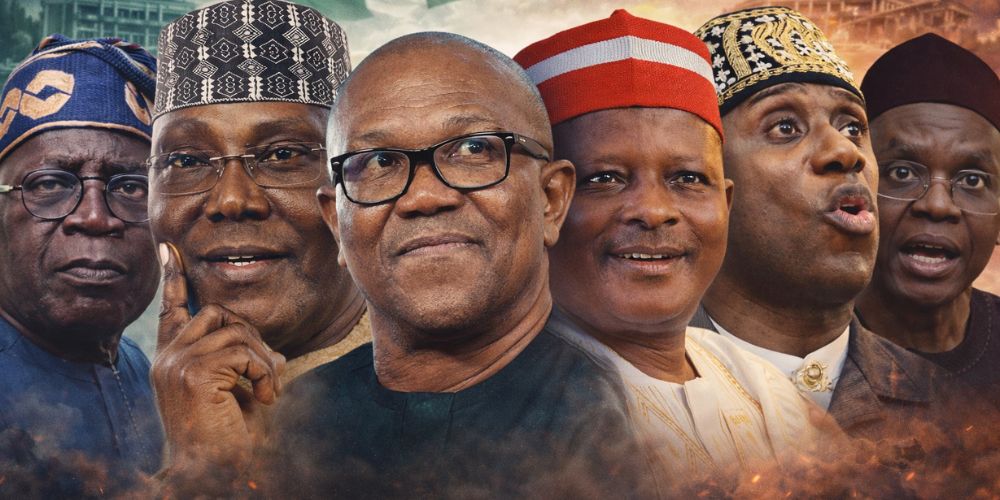
Nigeria may still be months away from formal campaign season, yet the political atmosphere has already shifted from speculation to calculation. Alignments are forming, interests are consolidating and early signals suggest that the 2027 presidential election could be one of the most structurally competitive contests since 2015.
At the center of emerging political realignments is the African Democratic Congress (ADC), which has increasingly positioned itself as a platform for coalition-building among prominent political actors. However, the broader landscape remains fluid, with multiple actors, including the incumbent administration, shaping the direction of the race.
In Nigeria’s political environment, electoral outcomes are rarely determined by popularity alone. They tend to reflect a combination of geography, political structure, elite coordination, INEC readiness, law enforcement neutrality and voter mobilization. The question, therefore, is less about individual ambition and more about whether any political configuration can assemble a coalition that is competitive across regions.
Understanding the Electoral Terrain
Nigeria’s presidential elections are not decided by uniform national swings. Rather, they are the cumulative result of outcomes across six geopolitical zones, each with distinct political dynamics.
Advertisement
- The North-West remains the largest voting bloc and often plays a decisive role in national outcomes.
- The South-West continues to function as a strategic base for the incumbent.
- The North-East and North-Central regions are typically more competitive, with outcomes shaped by shifting alliances.
- The South-East and South-South tend to exhibit more consolidated voting patterns, though turnout levels vary.
For any candidate or coalition, success depends on achieving a balance between dominance in core areas and competitiveness in swing regions. Weak performance in a major bloc can significantly affect the overall result.
2027: The Electoral Map As a Mathematical Problem

Key Political Figures and Their Electoral Profiles
Advertisement
BOLA AHMED TINUBU

As the incumbent, Bola Tinubu enters the 2027 electoral cycle with structural advantages that are difficult to overlook. His political influence, built over decades, is anchored in extensive party networks, particularly within the South-West, and reinforced by the governing reach of the All Progressives Congress across a majority of states.
Incumbency also provides national visibility and access to institutional platforms like INEC, the courts and law enforcement agencies, factors that have historically shaped electoral outcomes in Nigeria.
At the same time, incumbency carries exposure. Public perceptions of economic conditions, cost of living pressures, and security concerns may influence voter sentiment across regions. While such factors do not automatically translate into electoral outcomes, they can affect the competitiveness of the race if alternative coalitions are able to consolidate support.
ATIKU ABUBAKAR
Advertisement

Atiku Abubakar remains one of the most experienced political actors in the field, with longstanding networks across Northern Nigeria and established relationships within political and business circles. His capacity for coalition-building and resource mobilization is widely acknowledged.
However, repeated presidential bids have introduced questions around voter fatigue, particularly among younger demographics. His electoral prospects may therefore depend on how effectively he can expand beyond his traditional base.
PETER OBI

His 2023 performance remains the most significant disruption in Nigeria’s democratic history. Despite running on the platform of a previously minor party with no elected governors or officials at the time, he secured over 6.1 million votes, winning in 12 states that included Rivers, Lagos and the FCT. His influence was so potent that it didn’t just place him third; it pulled a wave of new leaders into power.
Under his “Obidient” mantle, the movement won one governorship seat (Abia State), 8 Senate seats, and 35 House of Representatives seats, a total of 43 National Assembly members; alongside numerous seats in state houses of assembly across the federation. His message of frugality resonates in an economy where inflation and hunger are the primary topics, but his hurdle remains the “sectional” tag in the far North.
Rabiu Kwankwaso

He is the master of Kano, but the recent realignment in the state has made his role even more critical. With the ADC securing Nasiru Yusuf Gawuna, the 2023 APC governorship candidate, Kwankwaso has effectively reunited the two most potent grassroots structures in Kano under one roof. This makes the “Kano-Kaduna-Katsina” corridor a nightmare for the APC to defend.
ROTIMI AMAECHI

Rotimi Amaechi brings extensive experience in governance and federal administration, with political roots in the South-South. His profile reflects institutional familiarity and policy exposure.
However, his current national electoral appeal appears more limited compared to other figures, suggesting that his role may be more complementary within a broader ticket. He also carries heavy APC baggage from his time in government and he does not have the same national excitement or Northern pull as the others.
NASIR EL-RUFAI

He is sharp with an unmatched intellect, a good organizer and respected in Northern elite circles for his work in Kaduna. He brings strategy and can help run a campaign. But his time as governor left some controversies, especially around religion and security, so he is better as a kingmaker or campaign director than as the man on the ballot.
Possible Ticket Configurations
Several potential combinations could emerge, each with distinct implications for electoral competitiveness.
One frequently discussed scenario involves a pairing of Peter Obi and Rabiu Kwankwaso. This configuration could combine urban voter mobilization with established grassroots structures in the North-West, potentially improving competitiveness across multiple regions if support bases are effectively consolidated.
Another possibility is a ticket involving Atiku Abubakar and a Southern running mate, which would reflect a more traditional coalition model anchored in Northern political networks, while seeking broader regional balance.
Other combinations, including those involving Rotimi Amaechi or Nasir El-Rufai, present alternative strategic pathways, though each carries trade-offs in terms of regional reach and voter perception.
Ultimately, the viability of any ticket will depend less on individual profiles and more on the ability to integrate complementary strengths into a cohesive national strategy.
Structural Factors Beyond Candidate Selection
While candidate selection is important, several broader dynamics are likely to influence the outcome of the 2027 election.
Coalition Cohesion
Sustained collaboration among political actors is very critical. Divergent ambitions and historical rivalries have, in previous election cycles, limited the effectiveness of opposition alignments.
Regional Vote Distribution
Electoral success will depend on achieving competitive margins in key regions, particularly the North-West and North-Central, while maintaining strong performance in supportive areas.
Voter Turnout
Turnout continues to play a decisive role. Many Nigerians are tired and will stay at home unless the opposition gives them real hope and organizes properly. Whereas, the ongoing grassroot mobilization by the ruling party using schemes like the “City Boys Movement” can also energies their base with lures of “stomach infrastructure”
Electoral Process and Administration
The management of results from polling units to collation centers is still a sensitive component of the electoral process. Public confidence in transparency and institutional integrity is likely to influence both participation and post-election acceptance.
The electoral body hasn’t really covered itself in glory in the previous general elections. There is already a raging debate on the discovery of past digital footprints of the INEC Chairman, Prof. Joash Amupitan clearly showing his preference and support for Asiwaju and APC in the past, though denies it.
The Incumbency Factor in Context
Despite emerging alignments, the incumbent retains several advantages, including established party networks, governance visibility, and institutional familiarity.
At the same time, evolving economic and social conditions may shape voter sentiment, creating a more competitive environment than incumbency alone might suggest.
Conclusion
The 2027 presidential election is shaping up to be a contest defined as much by structure as by sentiment.
The opposition has, for the first time in several cycles, the potential to assemble a coalition with meaningful geographic spread. However, this potential remains contingent on effective coordination, strategic compromise, and disciplined execution.
For the incumbent, the path to re-election is supported by existing structures, but not insulated from emerging political and economic pressures.
In the end, the outcome is unlikely to hinge on a single factor. It will reflect the interaction of coalition dynamics, regional performance, voter turnout and institutional processes.
At this stage, the race remains open, but increasingly shaped by decisions made well before the first vote is cast.
Editor’s Note
The projections in the article are not presented as fixed empirical data, but as a scenario-based analytical model. They are derived from publicly available electoral patterns, particularly the 2023 presidential results, combined with known structural factors such as regional voting behaviour, turnout trends, and the political strength of key actors across zones.