Stalls Open, Streets Still Empty: Life After Sit-At-Home In Onitsha Market
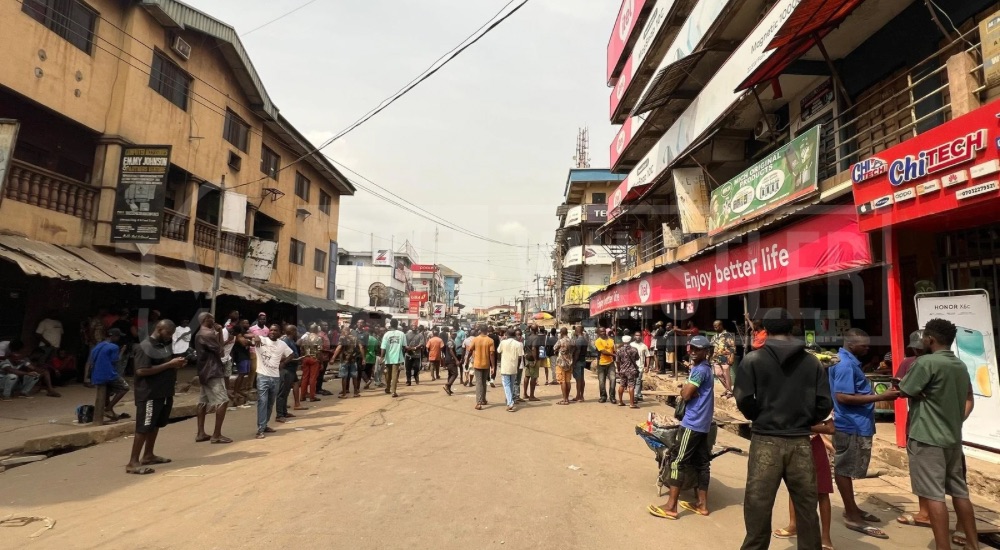
By mid-morning on Monday, the metal doors of many shops in Onitsha Main Market were rolled up once again. Traders sat behind their counters, some chatting idly, others scrolling through their phones, waiting.
The markets were open – but the crowds that once defined Mondays in Onitsha were still missing.
A day after the Indigenous People of Biafra (IPOB) announced the end of its weekly Monday sit-at-home across the South-East, commercial activities in Onitsha showed only a cautious recovery.
Though trading improved slightly compared to the previous Monday, customer turnout remained thin, especially among buyers who usually travel in from outside Anambra State.
Observations by THE WHISTLER showed that more than half of traders returned to their shops, reopening businesses that had remained shut for weeks. But for many, opening their doors did not translate into sales.
“Compared to last Monday when our governor asked us to come out, today only three people entered my shop, and two of them bought small items,” said Ikechukwu Okafor, a wholesale gadget dealer at Emeka Offor Plaza.
Advertisement
By 3:30 p.m. on a regular trading day, Okafor said he would normally record over N1 million in sales, driven largely by customers from neighbouring states. “But today is just small,” he added, shaking his head.
The scene was an improvement from February 2 – the first Monday in nearly five years when traders attempted to resume activities after the prolonged shutdown. That day, the vast market complex was eerily quiet. A week later, the atmosphere was livelier, but far from normal.
For many traders, lingering fear continues to shape behaviour. Memories of attacks and intimidation by hoodlums who once enforced the sit-at-home order remain fresh. While some shop owners returned in person, others sent apprentices to keep watch over their goods.
Onitsha’s commercial ecosystem stretches far beyond the Main Market. Ochanja Central Market, Bridge Head Market, Ogwu Medicine Market, Building Materials Market in Ogidi, New Motor Spare Parts Market, and the Ngbuka Obosi Motor Spare Parts Market were all open.
Yet across these locations, the same pattern emerged: open stalls, few buyers.
Advertisement
The directive that prompted the reopening came from IPOB leader, Nnamdi Kanu, who on Sunday called for the resumption of normal activities. The announcement appeared to reassure traders, but customers have been slower to return.
Markets surrounding the Main Market—Sokoto Road Market, Biafra Market, Marine Market, Ose Okwodu Market, and Bida Road—also resumed operations, though patronage remained scant.
For traders like Chima Ejiofor, a shoe vendor, the end of the sit-at-home is only the first step. Rebuilding customer confidence, he said, will require deliberate effort from both government and market leadership.
“When the government asked us to come out before, not everyone came, but I did. That day, sales were difficult,” Ejiofor recalled. “Today again, since morning, it is still the same. Even if IPOB has ended what they started, we must now find a way to encourage customers to return.”
He noted that years of disruption have reshaped habits. “For five years, people have gotten used to a certain life. We cannot be spending transport money every Monday if customers are not coming,” he said, calling on the Anambra State Government and market authorities to work together to restore confidence.
Across Onitsha’s vast trading hubs, that sentiment echoed loudly. While the official end of the sit-at-home order has brought traders back behind their counters, life after the shutdown remains uncertain. For now, Onitsha’s markets are open – but the return to full economic life is still a work in progress.