
The Russian Decoy In Africa: Why Nations Must Remain Vigilant
Africa today finds itself at the crossroads of a subtle yet dangerous geopolitical confrontation. While Pope Leo XIV prepares for his historic pilgrimage across Algeria, Cameroon, Angola, and Equatorial Guinea to promote peace and spiritual unity, Russia is advancing a very different agenda.
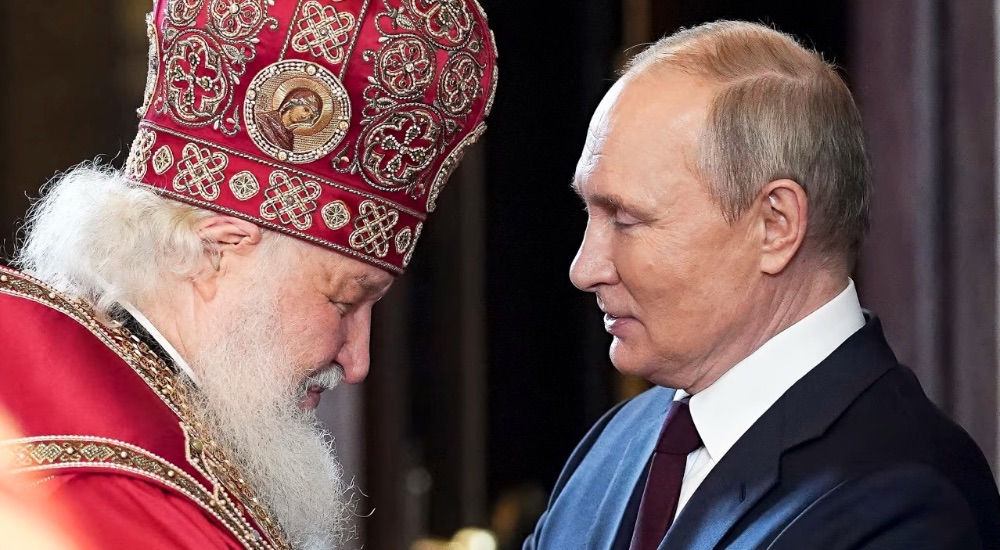
Through the expansion of the Russian Orthodox Church and deceptive recruitment programs, Moscow is turning faith and hope into instruments of war. African nations must recognise this strategy for what it is: a calculated decoy designed to exploit vulnerabilities and entrench influence under the guise of religion.
Since the establishment of the Patriarchal Exarchate of Africa in 2021, Russia has aggressively expanded its Orthodox presence. By 2025, the Church boasted 350 parishes across 32 African countries, a scale unprecedented in such a short time. Unlike traditional missionary work, this expansion is not purely spiritual. It is deeply geopolitical, aligning with Moscow’s broader strategy of cultivating alliances with regimes estranged from the West. Churches are built, priests dispatched, and local clergy trained — all financed by Russia. The aim is clear: to create a direct cultural and spiritual link between African populations and Moscow.
This is not benign religious outreach. It is soft power at its most calculated. Where the Vatican preaches universalism and peace, Russia’s Orthodox expansion is tethered to political interests. In countries like Mali, Burkina Faso, and the Central African Republic, the arrival of Orthodox clergy coincides with deepening political ties to Russia. Religion becomes a vector of influence, a Trojan horse for geopolitical penetration.
The religious front is only one side of Russia’s strategy. Parallel to the Church’s expansion, Moscow has deployed coercive recruitment tactics targeting African youth. Between 2023 and 2025, over 1,417 Africans joined the Russian army, with Cameroon alone contributing 335 recruits and suffering 94 deaths. These figures reveal the human toll of a war thousands of kilometres away, fought by young men lured into service under promises of opportunity.
Even more insidious is the Alabuga Start program, which targets young African women aged 18–22. Marketed as a professional training initiative, it funnels recruits into Tatarstan’s Alabuga special economic zone, where they are exploited in drone production lines. These drones — Shahed/Geran-2 models — are destined for the Ukrainian front. What begins as a promise of employment ends in precarious labour conditions, threats of penalties, and complicity in Moscow’s war effort. Faith and aspiration for social mobility are weaponised, transformed into cheap human resources for Russia’s military-industrial machine.
Advertisement
The convergence of religious expansion and deceptive recruitment reveals a two-pronged strategy: Soft influence through the Orthodox Church, cultivating loyalty and reshaping cultural identity; and hard exploitation through recruitment, channelling human capital into Russia’s war machinery.
Together, these tactics turn Africa into a reservoir of both spiritual legitimacy and strategic manpower. The Kremlin’s approach is not accidental; it is deliberately calibrated to exploit Africa’s vulnerabilities — poverty, instability, and the yearning for hope. In this context, the Vatican’s moral voice faces unprecedented competition. Pope Leo XIV’s pilgrimage is not only a spiritual mission but also a counterweight to Russia’s encroachment.
The danger lies in the subtlety of Russia’s decoy. Unlike overt military intervention, this strategy cloaks itself in the language of faith and opportunity. It appeals to the deepest human desires — belonging, dignity, and hope — while concealing its true purpose. For African nations, the risks are manifold:
Loss of sovereignty: Religious institutions aligned with foreign powers can undermine national cohesion and redirect loyalty away from local governance.
Exploitation of youth: Recruitment schemes rob Africa of its future, siphoning young talent into distant wars or exploitative labour.
Entrenchment of dependency: By financing churches and offering employment, Russia cultivates reliance that weakens Africa’s autonomy.
Ethical erosion: Faith, meant to uplift, is perverted into a recruitment chain for war, corroding the moral fabric of communities.
Advertisement
The international community must confront this perversion of religion and opportunity. But African nations themselves bear the primary responsibility. Vigilance is essential. Governments must scrutinise foreign religious expansion, regulate recruitment programs, and protect their youth from exploitation. Civil society and local religious leaders must expose deceptive practices and reaffirm the true purpose of faith: peace, dignity, and solidarity.
The Vatican’s presence offers a counter-narrative, but it cannot succeed alone. Africa must assert its agency, refusing to be reduced to a pawn in distant conflicts. The ethical question is stark: will Africa allow faith and hope to be weaponised, or will it reclaim them as tools of resilience and unity?
Russia’s decoy in Africa is a sophisticated blend of soft power and coercion, cloaked in the robes of religion and the promises of opportunity. It is a strategy that exploits vulnerability, manipulates faith, and siphons human capital into war. Africa must not allow its faith to be hijacked, nor its youth to be sacrificed. The continent’s future depends on seeing through the illusion and standing firm against the manipulation of hope.
-Amajama, a social affairs analyst, writes from Abuja amajamaip@gmail.com