
Telecom Infrastructure Theft Deepens Losses For Operators
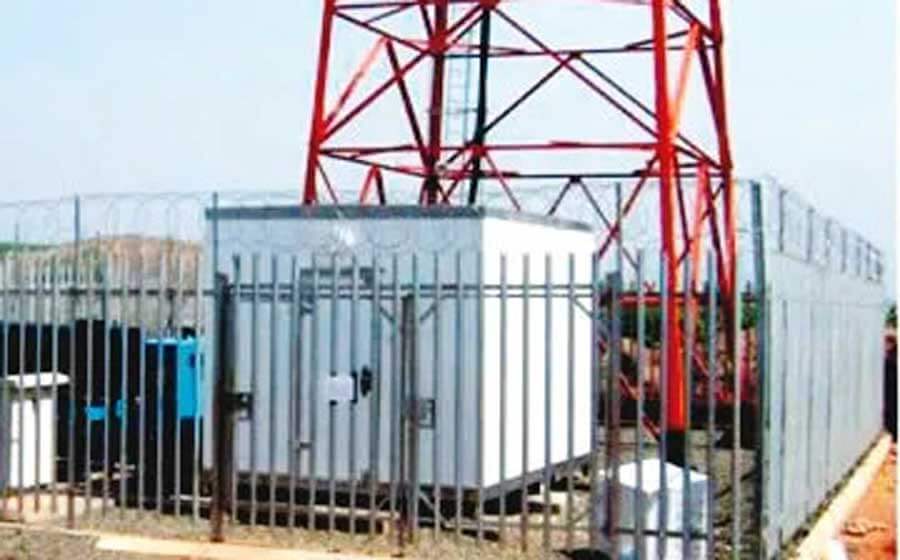
Nigeria’s mobile network operators are grappling with mounting financial losses following a surge in the theft of critical telecom infrastructure, raising fresh concerns over the resilience of the country’s digital backbone.
Data from the Nigerian Communications Commission (NCC) showed that more than 650 power-related assets were stolen in 2025 alone.
The stolen items include generators, batteries, and other essential equipment required to power base stations nationwide.
With Nigeria’s unreliable electricity supply, telecom operators rely heavily on off-grid power systems such as diesel generators and battery backups to maintain network uptime. The loss of these assets has significantly disrupted operations across the sector.
The Association of Telecommunications Companies of Nigeria (ATCON) warned that the scale of the theft has escalated beyond routine operational challenges, describing it as an existential threat to the industry.
ATCON President Tony Emoekpere said operators are increasingly adopting defensive strategies to mitigate the impact of the theft.
Advertisement
“Operators are responding, but largely in a defensive mode,” he said. “What you’re seeing now is a combination of increased physical security, technology deployment, and changes to how sites are designed and powered.”
According to him, measures being implemented include the deployment of security guards, collaboration with local vigilante groups, reinforcement of base station enclosures, and the use of remote monitoring systems capable of detecting tampering in real time.
Operators are also redesigning infrastructure by moving away from easily removable components such as standalone batteries toward integrated and hybrid power systems.
However, ATCON noted that even solar-powered and hybrid installations are increasingly being targeted by vandals.
Industry stakeholders, including ATCON, the Association of Licensed Telecom Operators of Nigeria, the NCC, and the Nigeria Security and Civil Defence Corps, have intensified collaboration to improve intelligence sharing and response mechanisms.
Advertisement
Despite these efforts, ATCON expressed concern that operators are diverting substantial resources toward protecting infrastructure rather than expanding network capacity, raising questions about long-term sustainability.
“We are spending more to protect infrastructure than we should, and that is not sustainable,” Tony said.
The operational impact is already evident, with operators reporting frequent site shutdowns leading to deteriorating service quality nationwide.
“When you lose generators and batteries at that scale, what it means in practical terms is that sites go down,” Tony said. “And when sites go down, you immediately see increased call drops, poorer voice quality, and slower or completely unavailable data services.”
While operators sometimes reroute traffic in urban centres, this often results in network congestion and reduced service quality. In rural areas, the loss of equipment can lead to complete outages.
ATCON noted that subscribers are already experiencing the consequences, even if the root cause is not always apparent. It added that the financial burden of the theft runs into billions of naira annually.
Advertisement
“These losses run into billions of naira annually. While operators are absorbing a lot of it for now, it inevitably feeds into the overall cost structure of the industry,” Tony said.
The association warned that consumers may ultimately bear the cost through declining service quality, increased pricing pressures, and reduced investment in network expansion.
Although telecom infrastructure has been officially designated as Critical National Infrastructure, ATCON stressed that enforcement remains weak.
The group called for stricter measures, including treating telecom asset theft as economic sabotage, alongside stronger collaboration with security agencies.
It also urged authorities to ensure visible deterrence through arrests, prosecutions, and convictions, as well as clamp down on informal markets where stolen telecom equipment is allegedly resold.
ATCON warned that without decisive enforcement, the ongoing cycle of theft, service disruption, and rising costs will continue to undermine Nigeria’s telecommunications sector at a time of growing demand for digital connectivity.