
Uganda President Sworn In For Seventh Term, Extending 40 Years Rule
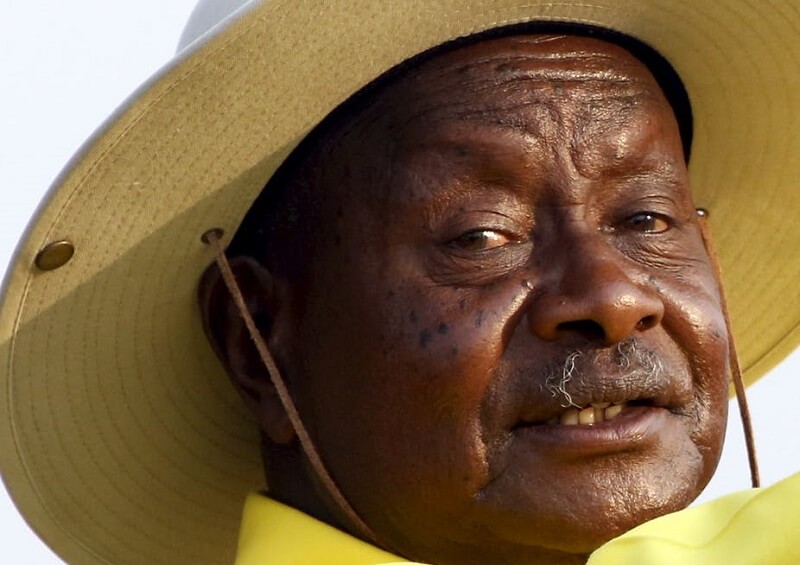
Ugandan President Yoweri Museveni has been sworn in for a seventh term, extending his rule into a fifth decade at a ceremony held on Tuesday, May 12, 2026, at the Kololo Ceremonial Grounds in Kampala.
The 81 year old leader took the oath of office before thousands of supporters at an event marked by a military parade and an aerial display of Russian made Sukhoi fighter jets. The parade was overseen by his son and army chief, Muhoozi Kainerugaba.
Museveni, who first came to power in 1986 after a guerrilla war, now remains one of Africa’s longest serving leaders. While this term is widely seen as a possible final chapter, political uncertainty remains over how a future transition will unfold.
Attention is increasingly shifting to Kainerugaba, 52, who has openly expressed interest in succeeding his father and described his political ambition as “unstoppable.” Analysts say he is steadily emerging as a central figure within Uganda’s security and political structure.
Parliamentary Speaker Anita Among has also drawn attention after assuring supporters that lawmakers would do “whatever it takes” in support of Kainerugaba, a statement that has fueled further succession speculation.
Advertisement
Museveni’s rule, once credited with restoring stability after years of conflict, has in recent years faced increasing criticism over democratic backsliding, including the detention of opposition figures and tightening political restrictions.
A recently introduced bill targeting what authorities describe as “foreign interference” has raised concern among rights groups and opposition parties, who argue it could restrict civil society operations and political expression. The National Unity Platform, led by opposition figure Bobi Wine, has condemned the legislation as “unconstitutional, irrelevant and brought in bad faith.”
Bobi Wine has also rejected the results of the January election, which returned Museveni to power with about 71.65 percent of the vote.