
UPDATED: Adelabu Resigns As Power Minister To Contest Oyo Guber Election
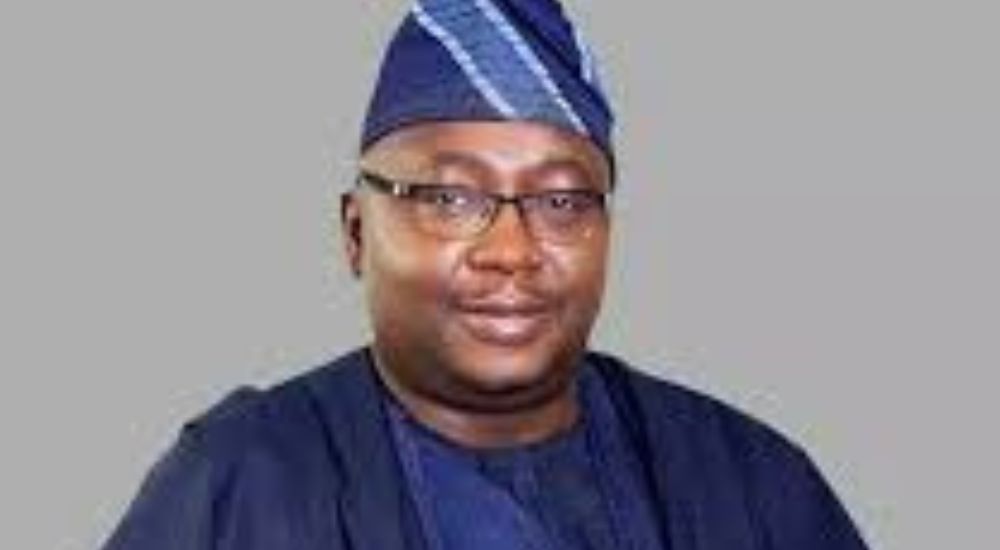
…Seeks Recapitalisation Of Power Distribution Firms
The Minister of Power, Chief Adebayo Adelabu, on Wednesday, resigned his appointment, ending days of speculations of his desire to contest the Oyo State Governorship election.
The immediate past Minister reportedly met with President Bola Ahmed Tinubu on Tuesday to inform the president about his desire to exit his cabinet.
In a letter dated April 22, 2026, addressed to the president and submitted to the Secretary to the Government of the Federation, Senator George Akume, Adelabu declared that he resigned to fulfil his age-long ambition of ruling Oyo State.
Adelabu, a member of the ruling All Progressives Congress (APC), THE WHISTLER recalls contested for the same position in 2023 under the Accord Party but lost to the incumbent governor, Engr Seyi Makinde, who is of the PDP.
Advertisement
“My decision to step down is informed by my intention to focus fully on my gubernatorial ambition in Oyo State.
“This aspiration, which dates back to 2016 during my service as Deputy Governor of the Central Bank of Nigeria, ultimately led to my voluntary resignation from the Central Bank in 2018 to pursue the same goal.
“In line with the provisions of the Amended Electoral Act 2026, which precludes political office holders from contesting elections, I consider it both appropriate and necessary to resign at this time”, his resignation letter sighted by our reporter, reads in part.
However, the immediate past Minister of Power, who some Nigerians had crowned as “Minister of Darkness”, recommended the appointment of the Coordinating Minister of Energy to improve power supply in the country.
Adelabu, who noted that his tenure witnessed significant growth, identified gas supply constraints, infrastructure vandalism, and the need for full commercialisation across the value chain.
Advertisement
He, however, recommended the implementation of cost-reflective tariffs with targeted subsidies for vulnerable citizens to ensure financial sustainability while protecting the poor, among others to stabilise the sector.
Adelabu said, “The sector has also undergone a major financial reset through tariff reforms and the commencement of a N4tn debt restructuring programme.
“These measures have significantly improved market revenue (2023: N1tn, 2024: N1.7tn, 2025: N2.3tn), restored investor confidence, and positioned the sector on a stronger path toward sustainability and long-term growth.
“Furthermore, progress in rural electrification and renewable energy deployment has expanded electricity access to underserved communities and isolated Educational and Health Institutions across the country.
“Despite these achievements, the sector continues to face important challenges, particularly in the area of gas supply constraints, infrastructure vandalism, and the need for full commercialisation across the value chain.
“Addressing these issues remains essential to sustaining the gains already recorded and achieving a stable and reliable electricity supply nationwide.
Advertisement
“In view of this, I respectfully recommend the following actions to consolidate progress and accelerate sector transformation:
(i) Implementation of cost-reflective tariffs with targeted subsidies for vulnerable citizens to ensure financial sustainability while protecting the poor.
“Recapitalisation and restructuring of the distribution segment to improve governance, technical capacity, and service delivery; Accelerated nationwide metering to eliminate estimated billing and strengthen market transparency.
” Sustained investment in transmission infrastructure to enhance grid stability and wheeling capacity; Stronger enforcement of performance standards and contractual obligations across the value chain;
“The appointment of a Coordinating Minister for Energy to provide strategic oversight and alignment across critical sectors such as power, gas, water resources, and environment. This integrated approach is essential to unlocking synergies required to boost thermal power generation through improved gas supply, optimise hydroelectric power development through better water resource management”.