
FEATURE: Despite Ban, Alcohol Sales Thrive In Lagos Motor Parks
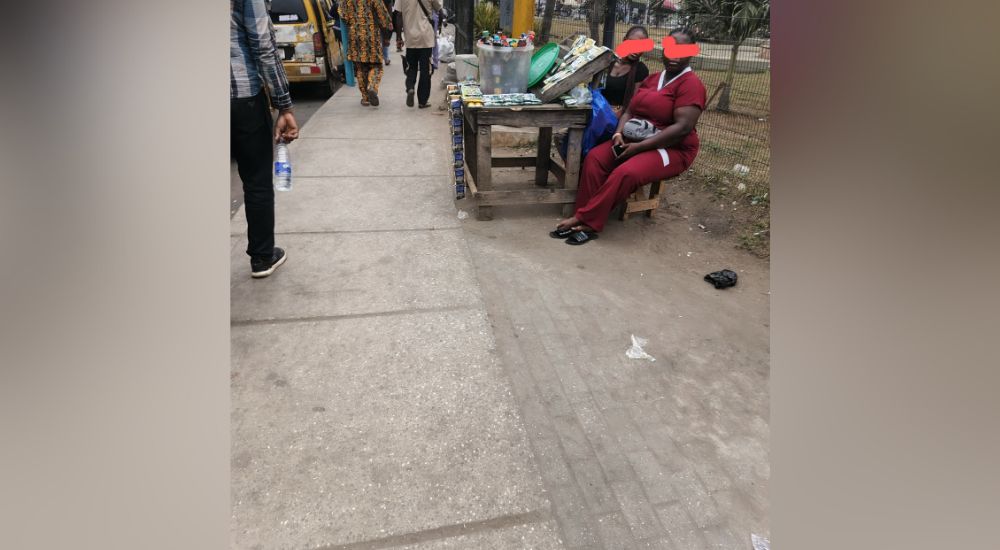
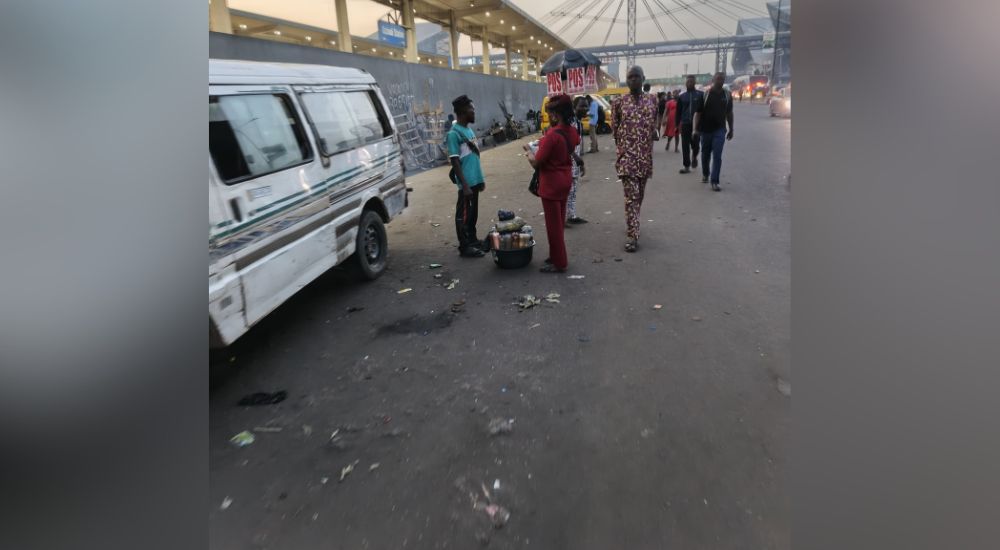
A short distance from the Bus Rapid Transit (BRT) terminal in Oshodi, Lagos, lies a busy loading bay serving routes to Palmgrove, Onipanu, and Yaba. Across the road, buses heading towards Gbagada line up for passengers. Within this bustling transport hub, however, another activity quietly thrives — the open sale and consumption of alcohol.
When THE WHISTLER correspondent visited the area shortly before 9:00 a.m., a group of young men gathered at a corner initially appeared to be engaged in a routine meeting. A closer look revealed otherwise. The spot was an informal alcohol stand, where the men were drinking and smoking.
Notably, they were not limited to street urchins. Many were commercial drivers operating from the nearby loading bay — individuals responsible for transporting passengers across the city.
Over a period of about two months, THE WHISTLER monitored multiple garages and loading bays across Lagos, including Obalende, Oshodi, Iyana-Ipaja, Agege, Abule-Egba, and Kola. A consistent pattern emerged: the visible sale and consumption of alcohol within these transport hubs, despite an existing ban.
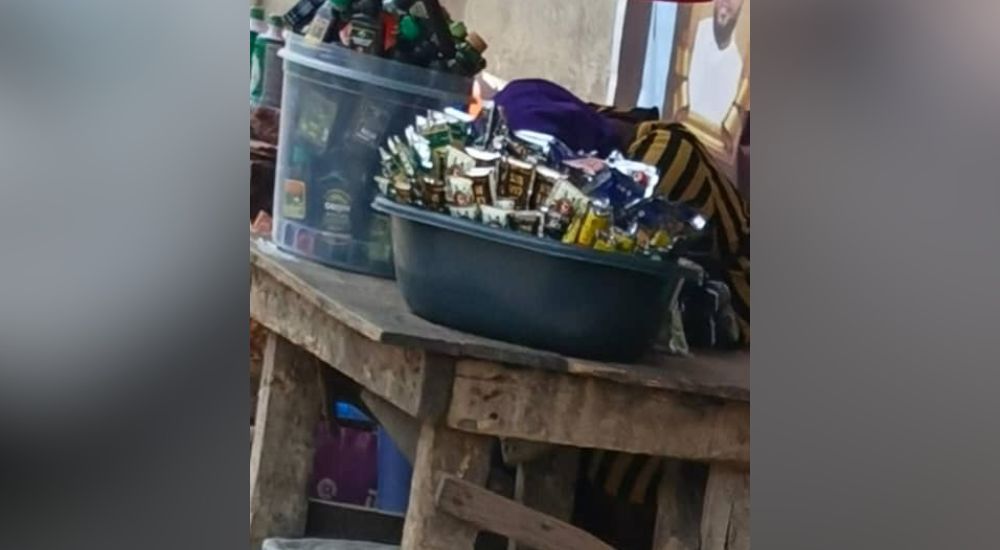
In several instances, drivers were observed consuming sachet alcohol while on duty — in Kola, Ikeja, and Oshodi — raising concerns about road safety and enforcement gaps.
Advertisement
Government Crackdown
In August 2024, operatives of the Lagos Environmental Sanitation Corps (LAGESC), popularly known as KAI, confiscated alcoholic drinks worth over N1m during raids at garages across the state.
Advertisement
The enforcement exercise targeted locations including Olupese Terminal Park and Oshodi-Bolade garages. According to LAGESC, the operation formed part of broader efforts by the state government to curb alcohol consumption among commercial drivers — a practice identified as a major contributor to road accidents.
At the time, the Corps Marshal, Major Olatunbosun Cole (retd.), reiterated that the ban on alcohol sales in parks and garages remained in force, adding that arrested traders would be prosecuted.
“These drinks remain banned for sale in all parks and garages of the state and the street traders who have since been arrested will be prosecuted in accordance with the state Environmental Laws,” Cole said.
He further highlighted the psychological and cognitive risks associated with alcohol consumption, noting that it impairs reasoning and increases the likelihood of poor decision-making among drivers.
Passengers, he added, should take responsibility for their safety by reporting drivers found consuming alcohol while on duty.
Legal Backing And Sanctions
Advertisement
The Lagos State Traffic Management Authority (LASTMA) has also reinforced the prohibition. In April 2025, the agency warned that eating, drinking, or smoking while driving constitutes an offence under the Lagos State Transport Sector Reform Law of 2018.
In a statement shared on its official X (formerly Twitter) handle, LASTMA stressed that such behaviours amount to distracted driving and endanger public safety.
“Smoking, drinking and eating while driving is an offence according to the Lagos State Transport Sector Reform Law 2018,” the agency stated.
Offenders risk penalties including vehicle impoundment, a three-month jail term, or up to six months of community service, depending on the severity of the violation and court rulings.
Rising Toll Of Alcohol-Related Accidents
Despite these measures, alcohol-related incidents continue to occur.
In May 2025, a commercial bus driver under the influence of alcohol crashed into a pole in the Alausa area of Ikeja, leaving multiple passengers seriously injured. Among them were a couple seated in the middle row of the vehicle.
According to LASTMA spokesperson Adebayo Taofiq, preliminary investigations confirmed that the driver lost control due to alcohol impairment.
“The ferocity of the impact triggered widespread alarm and resulted in significant injuries to several passengers,” Adebayo said, noting that four severely injured victims were rescued and stabilised by nearby LASTMA officials.
Statistics from enforcement agencies further underscore the risks. In December 2025, the Federal Road Safety Corps (FRSC) disclosed that at least 91 people died in road crashes across Lagos between January and November of that year.
The Lagos Sector Commander, Kehinde Hamzat, attributed major cause of road accidents to human factors, which includes reckless driving and substance abuse.
More recently, LASTMA reported that 69 people died in road accidents in the first quarter of 2026, with 246 others sustaining injuries. The agency also handled over 600 accident scenes and recorded nearly 18,000 traffic offences through technology-driven enforcement systems.
Research Evidence On Substance Abuse Among Drivers
Empirical research supports these concerns. A study published in the International Journal of Humanities and Social Studies, titled “Drug Use, Driving Behaviour, Accident Rate and Passengers’ Injury among Commercial Drivers in Oshodi, Lagos”, found significant links between substance use and risky driving behaviour.
The study, which surveyed 478 commercial drivers, revealed a drug use prevalence rate of 36.4 per cent, with 47.7 per cent exhibiting risky driving behaviours. It also recorded an accident rate of 13.4 per cent and passenger injury rate of 7.5 per cent.
Findings indicated that both the frequency and quantity of substance use significantly predicted accident rates and injury outcomes among passengers.
No Level Of Alcohol Consumption Is Completely Risk-Free, WHO Warns
The World Health Organisation (WHO) stated in 2024 that alcohol and alcoholic beverages contain ethanol, a psychoactive and toxic substance with dependence-producing properties, noting that its consumption is linked to significant health risks and harm.
The organisation emphasised that alcohol consumption does not only affect the individual drinker but also causes considerable harm to others. It explained that a substantial portion of alcohol-attributable disease burden stems from injuries, particularly road traffic accidents. According to WHO, in 2019, of the 298,000 deaths recorded from alcohol-related road crashes, 156,000 were caused by someone else’s drinking.
WHO further stressed that no level of alcohol consumption is entirely risk-free, as even low levels can pose health risks and cause harm.
“The level of risk depends on several factors, including the amount consumed, frequency of drinking, the health status of the individual, age, sex, and other personal characteristics, as well as the context in which alcohol consumption occurs,” the organisation stated.
It added, “Some groups and individuals who are vulnerable or at risk may have a higher susceptibility to the toxic, psychoactive and dependence-inducing properties of alcohol. On the other hand, individuals who adopt lower-risk patterns of alcohol consumption may not necessarily face a significantly increased likelihood of negative health and social consequences.”

Persistent Challenges, Public Attitudes
In February 2026, Lagos State Commissioner for Information and Strategy, Gbenga Omotoso, reportedly raised concerns about what he described as a growing “culture” of sachet alcohol consumption among commercial drivers.
Speaking during a virtual forum hosted by the Akin Fadeyi Foundation, Omotoso noted that enforcement efforts are often undermined by resistance from drivers and public indifference.
“They (drivers) just put it in their mouth, open it and start drinking before driving. Nobody does anything about that,” he said.
He linked the issue to broader challenges in traffic enforcement, including disregard for road regulations and a tendency to label enforcement actions as corruption.
While acknowledging lapses among some officials, Omotoso cautioned against generalisations.
”There are bad government officials; there are bad policemen. But those who are bad do not represent all the others who are doing very well,” he said.
A Lingering Safety Threat
Despite repeated crackdowns, legal provisions, and public awareness campaigns, the open sale and consumption of alcohol at Lagos garages persist.
Speaking on government efforts to address rising concerns, the Special Adviser on Media and Publicity to Governor Babajide Sanwo-Olu, Gboyega Akosile, explained that the government is fully aware of activities in motor parks, including the sale and consumption of alcoholic beverages, but has largely prioritised sensitisation and engagement as key intervention strategies.
According to him, the administration is working through sustained advocacy campaigns targeted at transport unions and stakeholders.
He noted that the state is collaborating with major transport unions, including the National Union of Road Transport Workers (NURTW) and the Road Transport Employers Association of Nigeria (RTEAN), to discourage the presence and consumption of alcohol and other substances within motor parks.
“The government is aware of what’s going on everywhere, especially at the motor parks. But, you know, like everything else, what we’re doing mostly is advocacy,” Akosile told THE WHISTLER.
He added, “We work with the unions, the NURTW and RTEAN, at different parks to ensure that they leave (keep) their parks off all of these drugs, not just alcohol.”
Akosile added that relevant ministries — including Environment, Health, and Transportation — are jointly involved in coordinated efforts aimed at improving discipline and safety in transport hubs across the state.
Although the Lagos State Transport Sector Reform Law of 2018 prohibits drinking and driving, he stressed that legislation alone is not sufficient without strong enforcement, continuous advocacy, and sustained community engagement.
“The law itself is not enough. We need a lot of enforcement, we need a lot of advocacy, (and) we need a lot of community engagement. We need a lot of talking to, (and) stakeholders’ meetings here and there,” Akosile noted.
Efforts to reach the spokesperson of LAGESC, Ajayi Lukman, were unsuccessful as his phone number was not reachable.
Similarly, LASTMA spokesperson, Adebayo, promised to call back when contacted by THE WHISTLER, but as of the time of filing this report, he had yet to do so.
For many commuters, the sight of drivers drinking before or during work hours has become almost routine — a normalised risk in a city already grappling with traffic congestion and road safety challenges.
As enforcement and advocacy efforts struggle against the deeply rooted culture of alcohol sale and consumption at motor parks, how the Lagos State Government intends to effectively tackle the menace of alcohol abuse by commercial bus drivers remains a major concern.