From Windfall To Wipeout: How Market Volatility Is Killing Nigeria’s Food Storage Practices
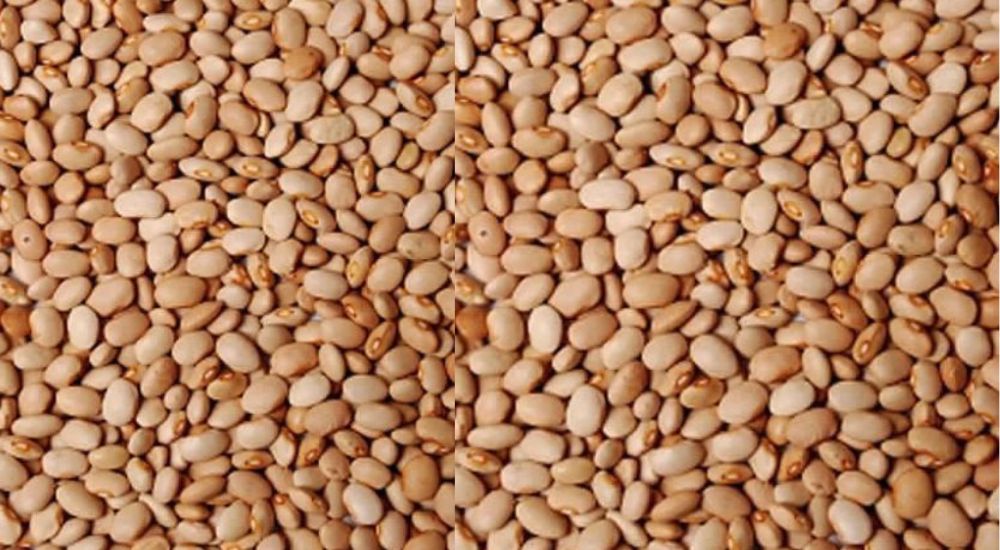
When Blessing Obilezuru invested over N12m in beans storage in February 2025, she believed she was making a strategic decision grounded in experience.
The previous year had delivered extraordinary returns. The scarcity season had transformed stored beans into windfall profits. Expanding from 50 to 100 bags felt logical even conservative.
Months later, her confidence has thinned.
“I invested over N12m in beans storage in February 2025. Currently, I have yet to account for N9m, and I’m still struggling to sell off the beans. Normally, this is the period where I restock, but it’s not a financially wise decision to purchase beans at the moment.”
Her predicament captures a wider shift unfolding quietly across major grain markets in Nasarawa State and beyond.
Advertisement
What once functioned as a predictable seasonal investment cycle is now destabilised by economic volatility, weakened consumer purchasing power and erratic demand patterns.
At stake is not just profit but a deeply rooted culture of food storage that has historically supported rural wealth, labour systems and food security buffers across Nigeria.
Nigeria’s food inflation accelerated sharply throughout 2024, intensifying hardship for consumers while creating unusual speculative opportunities for commodity traders.
By September 2024, food inflation stood above 37 per cent year-on-year, according to data from the National Bureau of Statistics (NBS).
Staple foods recorded persistent increases, driven by exchange rate instability, high transportation costs, insecurity in farming communities and structural supply chain disruptions.
Advertisement
Amid mounting public concern, the Federal Government in 2025 initiated the rebasing of the Consumer Price Index (CPI), updating the basket of goods and consumption weights used to calculate inflation.
The objective was to reflect current spending realities more accurately.
However, while rebasing may improve statistical representation, traders argue that it does not address the structural forces driving unpredictable commodity pricing.
In physical markets, they say, planning has become increasingly risky.
A market survey conducted by THE WHISTLER at Masaka Market — known for rice, millet, guinea corn and corn and Kugbaru Market, a hub for multiple bean species, reveals a growing reluctance among traders to commit capital to long-term grain storage.
Advertisement
A Tradition Built On Foresight & Seasonal Logic
For generations, food storage has been both an economic strategy and a cultural institution. Farmers harvested during periods of abundance, stored produce securely, and released it during scarcity months when prices traditionally climbed. The cycle rewarded patience and foresight.
This system funded farm expansion, paid labourers, supported household obligations and strengthened rural resilience. It functioned as an informal insurance mechanism against hunger and income shocks.
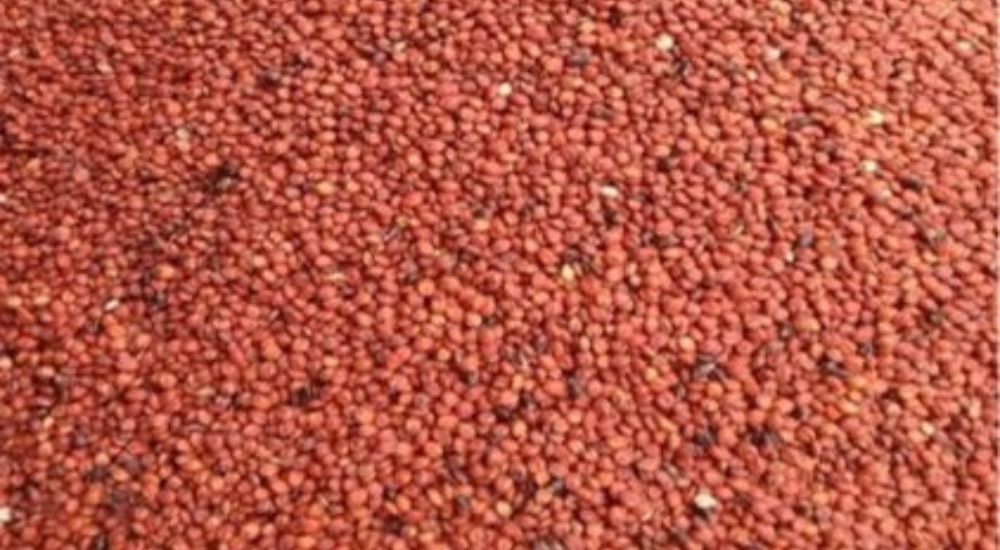
Commonly stored commodities include beans, millet, guinea corn, corn, rice, yam tubers and palm oil. Among these, traders say beans and grains have historically delivered the most dramatic seasonal returns until recently.
The 2024 Surge: Extraordinary Gains
In January 2024, a mudu of beans sold between N800 and N1,000, depending on species and location. With 90 to 100 mudus per bag, average bag prices ranged between N80,000 and N100,000.
Mudu, a traditional measuring scale, is used commonly in the northern parts of the country.
Millet, guinea corn and corn traded between N400 and N500 per mudu, translating to N40,000–N50,000 per 100-mudu bag during its harvest seasons.
As scarcity deepened between June and September 2024, prices escalated rapidly.
Beans purchased at an average of N90,000 per bag surged to between N350,000 and N380,000.
This represented increases ranging from approximately 337 per cent to 375 per cent. Every month, prices rose from an average of N900 to N3,800 a 322 per cent increase.
Even after accounting for storage costs, logistics and spoilage risk, traders reported profit margins exceeding 400 per cent in some cases.
While for grains, a 100 mudu bag, was sold at an average of N100,000, signalling over a 100 per cent increase.
Economic analysts attribute the 2024 surge to a combination of constrained supply from insecurity-affected regions, high fuel costs affecting distribution, exchange rate pressures and panic buying amid inflation fears. As real incomes eroded, consumers front-loaded purchases during uncertainty, intensifying scarcity spikes.
The 2024 boom reshaped expectations.
The 2025 Reversal: Demand Weakens, Prices Collapse
Between December 2024 and February 2025, fresh harvests entered the market. Beans sold at N1,300 to N1,400 per mudu about 44 per cent higher than early 2024 levels, yet traders remain unbothered.
Encouraged by previous gains, traders expanded exposure. Instead of acquiring bags at N90,000, many purchased at N130,000, a 44 per cent increase in capital cost anticipating a repeat of the previous year’s scarcity spike.
But the anticipated demand surge did not materialise.
By the June–September 2025 season, beans expected to reach N3,800 per mudu instead dropped to N1,000. That represents a 73.7 per cent decline from projected prices and roughly 23 per cent below the N1,300 acquisition cost.
In some cases, traders reduced prices further to N800 per mudu a 38.5 per cent loss relative to February purchase levels.
Commodity analysts suggest several converging factors: weakened consumer purchasing power after prolonged inflation, reduced speculative hoarding, tighter liquidity conditions, and cautious buying behaviour following the extreme 2024 spike.
With fewer bulk buyers willing to lock in large volumes, market supply outpaced demand, triggering forced sell-offs.
The collapse marked a psychological turning point.
Hadiza Yakubu, a beans farmer and trader from Faskari in Katsina State operating at Kugbaru Market, described how the shift has altered planting and storage decisions.
“I used to make more money this season, due to demand” she lamented.
Explaining further she said, “During this period, I decide the level of production to explore between the June to September rainy season.
“We sell our produce, go back, take out the interest, reinvest the capital into the market, amplify production, employ more labourers and settle financial needs.”
However, her financial expectations remain blurry as she noted that, bulk buyers have retreated.
“A customer who previously purchased over 100 bags recently refused to exceed 30 bags” according to her has imposed financial constraints on transporting unsold farm produce back home while facing mounting uncertainty.
Veteran trader Babuga Abubakar warned that continued instability could reshape production patterns.
“I am taking note of the market performance, the outcome will determine the 2026 planting approach. because this is the time when we make a profit.
“Because of low patronage, we agreed to slash the prices of beans to N800 but people are not willing to buy in bulk. People are afraid.
“If this continues, I would have to lay off labourers back home in Malumfashi.”
With over 30 years in food farming and trading practice, Abubakar noted the 2026 sales period as the worst ever recorded.
“When bean prices were sold for N400 to N500 per mudu years back, we were certain of sales and could predict gain, now we are left at the mercy of how the markets perform.
“This is the worst year of sales I have encountered in over 30 years, and if not addrssed farmers might forfeit bean farming in the planting seasons” he warned.
Their concerns extend beyond individual loss.
Reduced planting decisions could translate into lower national output in subsequent seasons, creating a delayed supply contraction.
Obilezuru emphasised that volatility is not isolated to beans.
“Beans are not the only food buisness that is bad for storage currently, millet, guinea corn and corn should also be avoided, as their prices has remain unstable over the year.
“For now, I’m not interested in the food storage business until the market stabilises.”
Similarly, Idris Yuhana admitted that the 2025 downturn left him struggling to recover. He now buys in small quantities while monitoring the 2026 outlook.
Yuhana said, “I am observing current market performances for other food produce, you need knowledge before commitment. I lost millions in 2025. It was a struggle to sell off my stored grains.”
Further inquired if he purchased beans and grains this harvest season, Yuhana said, “Yes I did, but in small quantities, we are uncertain what crashed the prices in 2025, it’s best not to invest so much for now.”
Agricultural economists note that when storage investors retreat, farmers lose a reliable off-season demand channel.
That weakens planning and discourages labour hiring, potentially shrinking rural income multipliers.
Recall in July 2024, the Federal Government, had announced the implementation of strategic measures aimed at addressing the high food prices nationwide, prices of the items would crash in the next 180 days (January 2025).
It said the measures which include the suspension of duties, tariffs, and taxes for the importation of certain food commodities through land and sea borders, as well as the importation of 500,000 metric tonnes of wheat and maize, would tackle the rise in food prices.
The Minister of Agriculture and Food Security, Abubakar Kyari, explained that the imported food commodities would be subjected to a recommended retail price to maintain the required and acceptable standard.
Kyari had said, “Our administration has unveiled a series of strategic measures to address the high food prices currently affecting our nation.
“These measures will be implemented over the next 180 days: a 150-day duty-free import window for food commodities; suspension of duties, tariffs, and taxes for the importation of certain food commodities through land and sea borders. These commodities include maize, husked brown rice, wheat, and cowpeas.
“Imported food commodities will be subjected to a recommended retail price. We understand concerns about the quality of these imports, especially regarding their genetic composition. The government assures that all standards will be maintained to ensure the safety and quality of food items for consumption.

“The Federal Government will import 250,000 metric tonnes of wheat and 250,000 metric tonnes of maize. These semi-processed commodities will be supplied to small-scale processors and millers across the country; engagement with relevant stakeholders to set a GMP (good manufacturing practices) and purchase surplus food commodities to restock the National Strategic Food Reserve.”
Commenting on the plans, the All Farmers Association of Nigeria has noted that the initiative of lifting taxes on food importation, as well as the importation of 500,000MT of wheat and maize was necessary to address the in-country food production, which had been insufficient.
The South-West Chairman of AFAN, Femi Oke, pointed out that food prices in Nigeria had continued to rise due to low production, stressing that it was the right thing to do by importing these items.
He stated, “It is a welcome development because the prices of food items have continued to rise and are now very high for most Nigerians. So we believe that with the introduction of a duty-free importation policy on the food items, the cost of these commodities will drop,” he stated.
When asked if the policy would not adversely impact local food production, the AFAN official replied, “No it can’t, because what we are producing in the country is not even enough. Our population is increasing every day and removing the taxes would lead to the importation of more food into the country.
“As the food importation increases, the price of food items in the country will reduce. So the initiative is encouraging this time because the prices of food items are so high and this is affecting all sectors of the economy.”
Amid grain turbulence, palm oil stands out as comparatively stable.
Amos Nnadozie told THE WHISTLER that staple grains have become unreliable for long-term storage, but palm oil has maintained a more predictable seasonal trend over the years.
According to him, between February and April when palm oil is in surplus, a 25kg container of agric palm oil sells for about N20,000, while native palm oil goes for N28,000. Traders typically purchase in bulk during this surplus window and store for the scarcity period.
He explained that during the off-season months of August through December, the same 25kg can spike to between N70,000 and N80,000.
Even in less aggressive seasons, he said the lowest selling price during scarcity hardly falls below N60,000 to N65,000.
Using the “agric palm oil example”, a purchase price of N20,000 rising to N50,000 reflects a 150 per cent increase, while a spike to N60,000 represents a 200 per cent surge.
For native perm oil bought at N28,000 and sold at N70,000, the increase stands at 150 per cent. At N80,000, the rise is approximately 185.7 per cent.
Although he noted that in 2025 palm oil peaked at N80,000 higher than the N60,000 ceiling recorded in previous years he maintained that the pattern remains consistent and predictable compared to grains.
He emphasised that quality plays a critical role in profitability, explaining that customers tend to return or refer others when oil quality is high. For that reason, he avoids agric oil and focuses on native palm oil, which he considers more stable and reputation-driven.
Unlike beans and grains, which suffered dramatic price crashes below capital cost in 2025, palm oil has not recorded such reversals in its experience. Even during surplus seasons, Nnadozie said prices rarely collapse beyond profitable margins.