
Opinion: Alex Otti Through The Lens Of World Bank
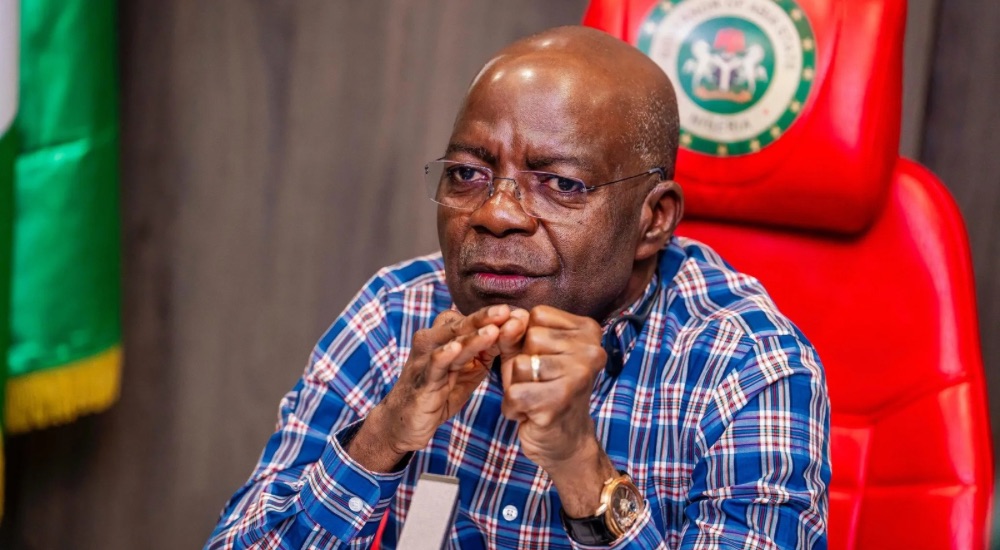
On April 9, 2026, the World Bank delivered an extraordinary verdict on the state of Abia’s healthcare system. A delegation led by Senior
Health Specialist Dr. Olumide Okunola did not merely offer polite applause. They announced that Abia State had set a national benchmark
for service delivery.
For a state that only a few years ago was synonymous with decay, abandoned projects, and a comatose public
health system, this recognition from a global financial institution signals a profound governance revolution.
To understand the full scope of Governor Alex Otti’s exploits, one must move beyond the headline and dissect the specific, interconnected strategies that the World Bank mission uncovered and celebrated.
𝑻𝒉𝒆 𝑭𝒊𝒏𝒂𝒏𝒄𝒊𝒂𝒍 𝑴𝒂𝒏𝒂𝒈𝒆𝒎𝒆𝒏𝒕 𝑹𝒆𝒗𝒐𝒍𝒖𝒕𝒊𝒐𝒏 𝒂𝒔 𝒂 𝑭𝒐𝒖𝒏𝒅𝒂𝒕𝒊𝒐𝒏
The World Bank’s mission was explicitly a Public Financial Management Mission focused on how financial systems support healthcare delivery. This choice of focus is critical. Dr. Alex C. Otti , a former banker, understood from his first day in office that no amount of policy rhetoric can fix a broken health system if public funds are opaque, misappropriated, or inefficiently channeled.
Advertisement
The World Bank selected Abia as a case study precisely because the state has demonstrated a structural shift in how money flows from the treasury to the primary healthcare center.
Governor Otti’s exploit here is twofold. First, he has institutionalized budget discipline. His admission that his administration allocates 15 percent of the state budget to health and 20 percent to education is not a casual statistic. It is a binding fiscal rule. In a country where many states pay lip service to the Abuja Declaration on health funding, Otti has moved from promise to practice.
The World Bank team found clear evidence of massive investments in renovating healthcare facilities, recruiting workers, and improving remuneration. This evidence based finding confirms that the allocated funds are actually being released and utilized, a feat that many previous administrations failed to achieve due to bureaucratic bottlenecks or outright diversion.
Second, Otti has introduced a results oriented financial culture. The World Bank’s mission engaged with the Commissioners for Health, Budget and Finance, as well as the Secretary to the State Government. That level of cross departmental engagement suggests that financial management is no longer a siloed function of the Ministry of Finance. Instead, it is an integrated chain where budget planning directly aligns with health sector goals.
The Governor’s insistence on minimum standards, availability of consumables, qualified personnel, and functional infrastructure before any primary healthcare center is deemed operational is a financial accountability measure. It ensures that money is tied to verifiable outputs, not just inputs.
Advertisement
𝑯𝒖𝒎𝒂𝒏 𝑪𝒂𝒑𝒊𝒕𝒂𝒍 𝑫𝒆𝒗𝒆𝒍𝒐𝒑𝒎𝒆𝒏𝒕: 𝑻𝒉𝒆 𝑾𝒐𝒓𝒌𝒇𝒐𝒓𝒄𝒆 𝑻𝒖𝒓𝒏𝒂𝒓𝒐𝒖𝒏𝒅
One of the most devastating legacies of previous administrations in Abia was the flight of healthcare workers. Poor remuneration, delayed salaries, and appalling working conditions drove nurses, midwives, and doctors to other states or out of the country entirely. Governor Otti has reversed this brain drain by making human capital the centerpiece of his strategy.
The World Bank delegation noted with satisfaction the improvement in remuneration to attract and retain skilled professionals. This is not simply about paying higher salaries. It is about dignity and predictability. Governor Otti has consistently paid salaries on time, cleared backlogs of inherited arrears, and introduced performance incentives for health workers in rural primary healthcare centers. By doing so, he has signaled that the state values its medical personnel.
The result, as the World Bank observed, is a growing pool of skilled professionals willing to work in Abia’s public facilities. This human capital turnaround is perhaps Otti’s most underrated exploit. Without competent, motivated staff, even the most beautifully renovated clinic is a mausoleum. With them, a modest facility becomes a lifeline.
𝐈𝐧𝐟𝐫𝐚𝐬𝐭𝐫𝐮𝐜𝐭𝐮𝐫𝐞 𝐑𝐞𝐡𝐚𝐛𝐢𝐥𝐢𝐭𝐚𝐭𝐢𝐨𝐧 𝐚𝐬 𝐚 𝐂𝐨𝐧𝐟𝐢𝐝𝐞𝐧𝐜𝐞 𝐁𝐮𝐢𝐥𝐝𝐢𝐧𝐠 𝐌𝐞𝐚𝐬𝐮𝐫𝐞
Governor Otti’s pledge to rehabilitate 200 primary healthcare centers is audacious. He himself admitted that the timeline is aggressive. But ambition without method is chaos. The Governor’s method is to insist on quality and sustainability over speed. The World Bank’s on site assessments of primary healthcare facilities across the state confirmed that these are not cosmetic renovations. They involve functional infrastructure: reliable electricity through solar panels or dedicated power lines, clean water supply, proper waste disposal systems, and stocked essential drug cabinets.
Advertisement
This infrastructure drive is a deliberate strategy to rebuild public trust. Governor Otti correctly diagnosed that low utilization of public health facilities is not because people are indifferent to their health. It is because years of neglect have taught citizens that government clinics are places of frustration, where they will find
broken equipment, absent staff, and empty shelves. Many have resorted to unqualified traditional healers, sometimes with fatal consequences.
By rehabilitating 200 centers, Otti is physically demonstrating that the state has changed. He is creating visible, tangible evidence of a new compact between the government and the people. Every renovated center becomes a billboard for the administration’s competence.
𝐓𝐡𝐞 𝐆𝐨𝐯𝐞𝐫𝐧𝐦𝐞𝐧𝐭 𝐃𝐢𝐠𝐢𝐭𝐢𝐳𝐚𝐭𝐢𝐨𝐧 𝐒𝐭𝐫𝐚𝐭𝐞𝐠𝐲
Perhaps the most forward looking exploit highlighted in the story is Governor Otti’s adoption of an all government approach integrating healthcare, education, and budgeting systems through digitalization. This is not a narrow health sector reform. It is a governance paradigm shift.
Digital integration means that a child born in a primary healthcare center can be automatically enrolled into the state’s education system for future planning. It means that budget releases for health can be tracked in real time by the Ministry of Budget and Planning, the Ministry of Finance, and even civil society observers. It means that patient data, supply chain logistics for drugs, and personnel attendance can be monitored on a single platform.
For a World Bank team on a Public Financial Management Mission, this digital backbone is a gold standard. It reduces leakages, eliminates ghost workers, prevents stockouts of essential medicines, and generates data that can be used for evidence based policy making.
Governor Otti’s background in banking informs this exploit. He knows that a unified digital system creates accountability loops. When a health worker clocks in using a digital system tied to payroll, and when drug dispensations are recorded against patient visits, it becomes very difficult to steal time or commodities.
This transparency is why the World Bank has reaffirmed its commitment to sustaining its partnership with Abia across critical sectors including health, education, and water resources. Donors are willing to invest where they can see where every naira goes.
𝐄𝐝𝐮𝐜𝐚𝐭𝐢𝐨𝐧 𝐚𝐬 𝐭𝐡𝐞 𝐓𝐰𝐢𝐧 𝐏𝐢𝐥𝐥𝐚𝐫 𝐨𝐟 𝐇𝐮𝐦𝐚𝐧 𝐂𝐚𝐩𝐢𝐭𝐚𝐥 𝐃𝐞𝐯𝐞𝐥𝐨𝐩𝐦𝐞𝐧𝐭
While the World Bank mission was focused on health, Governor Otti used the opportunity to reiterate his administration’s equal commitment to education. The allocation of 20 percent of the budget to education is not incidental. It is the logical complement to health reform. A state cannot develop if its children are unhealthy and its youth are uneducated.
Governor Otti’s exploits in education mirror those in health. He has renovated hundreds of primary and secondary schools, provided free textbooks, improved teacher training, and introduced digital learning tools. The integration of education into the digitalization agenda means that student performance data can be tracked, teacher attendance can be monitored, and budget releases for school infrastructure can be verified.
The World Bank’s willingness to engage with Abia in education and water resources alongside health suggests that the Governor’s reforms are being recognized as a coherent, multi sectoral agenda, not a collection of isolated projects.
𝐀𝐝𝐝𝐫𝐞𝐬𝐬𝐢𝐧𝐠 𝐭𝐡𝐞 𝐔𝐭𝐢𝐥𝐢𝐳𝐚𝐭𝐢𝐨𝐧 𝐂𝐡𝐚𝐥𝐥𝐞𝐧𝐠𝐞 𝐰𝐢𝐭𝐡 𝐇𝐨𝐧𝐞𝐬𝐭𝐲
A striking feature of Governor Otti’s response to the World Bank was his honesty about the remaining challenge: low utilization of public health facilities. He did not bask in the commendation or claim victory. Instead, he pointed out that people are not used to functional primary healthcare centers and that rebuilding confidence will take time. This admission is itself a leadership exploit. Many politicians would hide such data or blame the people. Otti uses it to refine his strategy.
His administration has responded by launching community health outreach programs, engaging traditional rulers and religious leaders to spread the message that government clinics are now reliable, and introducing nominal user fees that are waived for pregnant women, children under five, and the elderly. The goal is to change behavior gradually.
The World Bank’s recommendation to sustain the current momentum and ensure long term efficiency aligns perfectly with Otti’s own recognition that this is a marathon, not a sprint.
𝑴𝒖𝒍𝒕𝒊𝒍𝒂𝒕𝒆𝒓𝒂𝒍 𝑷𝒂𝒓𝒕𝒏𝒆𝒓𝒔𝒉𝒊𝒑 𝒂𝒔 𝒂 𝑽𝒂𝒍𝒊𝒅𝒂𝒕𝒊𝒐𝒏 𝒐𝒇 𝑮𝒐𝒗𝒆𝒓𝒏𝒂𝒏𝒄𝒆
The presence of the World Bank delegation and its commitment to continued support is not just a financial opportunity for Abia. It is a validation of Governor Otti’s governance credentials. Multilateral institutions do not partner with states that are chaotic, corrupt, or unaccountable. They seek out subnational governments that have demonstrated capacity, transparency, and a results oriented culture. By selecting Abia as a case study for other Nigerian states to learn from, the World Bank is essentially certifying that Governor Otti has built a functional system.
The Governor’s team, including the Secretary to the State Government, the Commissioner for Health, the Commissioner for Budget and Planning, and key advisers on multilateral and donor agencies, has successfully positioned Abia as a destination for development support. This will unlock additional technical assistance, potential financing, and peer learning opportunities. More importantly, it sends a powerful signal to private investors and other development partners that Abia is open for business in the business of governance.
𝑨 𝑩𝒆𝒏𝒄𝒉𝒎𝒂𝒓𝒌
Governor Alex Otti’s exploits in developing Abia State, as validated by the World Bank’s commendation, rest on four pillars: disciplined public financial management, strategic investment in human capital, quality driven infrastructure rehabilitation, and a digitalized all of government approach. The World Bank’s declaration that Abia has set a national benchmark is not hyperbole. It is an evidence-based conclusion drawn from on site assessments, financial audits, and interviews with state officials.
What makes Otti’s record particularly impressive is his refusal to ignore the hard problems. He knows that low utilization is a legacy of broken trust. He knows that digital integration is a long term project. He knows that maintaining the momentum requires continuous learning and openness to frameworks. However, he has done what few Nigerian governors have achieved: he has turned a failing health system into a model of efficiency, transparency, and hope.
The World Bank will take the lessons from Abia to other states. But for the citizens of Abia, the most important lesson is already clear. Their governor has kept his promises, and their health is finally a priority.
𝐀𝐧𝐨𝐤𝐰𝐮𝐫𝐮 𝐂𝐡𝐫𝐢𝐬𝐭𝐢𝐚𝐧 𝐔𝐜𝐡𝐞 (𝐏𝐡𝐃) is the
𝐒𝐩𝐞𝐜𝐢𝐚𝐥 𝐀𝐝𝐯𝐢𝐬𝐞𝐫 𝐨𝐧 𝐏𝐨𝐥𝐢𝐜𝐢𝐞𝐬 𝐚𝐧𝐝 𝐈𝐧𝐭𝐞𝐫𝐯𝐞𝐧𝐭𝐢𝐨𝐧𝐬