
The Kano Chessboard: Can Abba Yusuf Overcome Kwankwaso In 2027
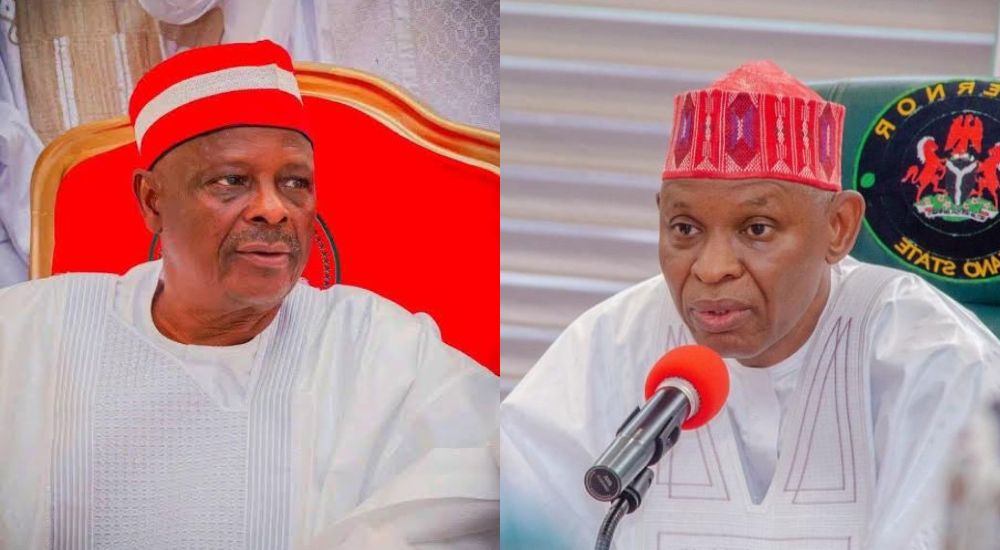
In Nigeria’s most electorally consequential northern state, a battle of mentors and mentees, structures and sentiments, is quietly but decisively taking shape
There is a political proverb that resonates deeply within the corridors of Kano’s power: “The student who does not eventually surpass the teacher has wasted his schooling.
Whether Abba Kabir Yusuf, the sitting governor of Kano State and the APC’s governorship candidate for 2027, has truly surpassed his political godfather, Senator Rabiu Musa Kwankwaso, remains the defining question shadowing the northwest’s most consequential state as Nigeria inches towards the 2027 general elections.
What began as one of Nigerian politics’ most celebrated mentor-protégé relationships has curdled into one of its fiercest rivalries.
The Kano political space, always restless and always pivotal to any national political equation, now finds itself at a critical crossroads of split between loyalty to the man who built the structure and confidence in the man currently sitting inside it.
Advertisement
Understanding who holds the edge requires more than a scorecard. It demands a reckoning with history, geography, sentiment, and the brutal arithmetic of electoral politics in a state of 5,921,370 registered voters as at 2023 general elections.
The Making and Unmaking of an Alliance
Abba Kabir Yusuf, popularly called Abba Gida Gida, did not stumble into the Kano Government House by accident.
He rode there on the wheels of the Kwankwasiyya political movement, a formidable and decade-old political machinery built around Kwankwaso’s personal brand, grassroots penetration, and a carefully cultivated network of loyalists spanning virtually every ward in Kano’s 44 local government areas.
In 2023, Kwankwaso, then the presidential flagbearer of the New Nigeria Peoples Party (NNPP), handed Yusuf the governorship ticket, confident that his movement’s structure would deliver the state and it did.
Advertisement
Yusuf defeated the incumbent APC governor, Abdullahi Ganduje, in a result that stunned many political observers and sent tremors through the APC’s national leadership.
But victory, as Kano’s political history repeatedly shows, has a way of reshaping allegiances.
Almost immediately after the inauguration dust settled, cracks began to emerge. Yusuf, now armed with the power of incumbency and the patronage levers of a state government, began to assert independence. Appointments were made without Kwankwaso’s blessing.
Political foot soldiers who had served the movement began gravitating toward the new power centre — Government House, Kano — rather than the senator’s mansion in Abuja.
Kwankwaso, never one to mask his displeasure, did not mince words. “What I built in Kano, I built with my sweat, my resources, and my time,” he had noted in one public address in late January 2026, signalling his irritation at what he perceived as ingratitude. “Nobody should forget where they are coming from.”
Yusuf, for his part, has consistently projected confidence in his independent capacity. “The people of Kano elected me to serve them, and I answer to Kano people first,” he said at a public function, in remarks widely interpreted as a declaration of political self-determination.
Advertisement
The marriage, it seemed, had produced a child who no longer needed his parents.
Kwankwaso’s Strengths: The Structure That Built a Dynasty
To dismiss Rabiu Musa Kwankwaso in 2027 would be to misread twenty years of Kano political history. The man remains, by almost any objective assessment, the most organisationally formidable politician in the northwest.
THE WHISTLER learnt that Kwankwasiyya movement is not merely a fan base but a structured, grassroots political network with ward-level coordinators, youth mobilisers, and a deeply emotional following that views loyalty to Kwankwaso as a near-ideological commitment.
His track record in Kano governance as two terms governor, a stint as Minister of Defence, and a Senate seat, gives him credibility across policy areas that matter to northern voters: education, infrastructure, and security.
The red caps synonymous with his movement remain an unmistakable symbol of political solidarity in Kano’s streets, markets, and mosques.
Kwankwaso, having now officially joined the African Democratic Congress (ADC), retains significant influence within the party’s national structure, which gives him a distinct organisational platform through which to mount his 2027 challenge.
Should the two forces reach an irreconcilable break, the question of who controls politics in Kano as its machinery, its symbols, and its legal platform could become a decisive battleground.
Furthermore, Kwankwaso’s presidential ambitions, frustrated in 2023, have not entirely evaporated.
There are whispers in Abuja corridors that he remains in active negotiation with major political forces, including elements within the APC and PDP, for a potential realignment that could redraw the political map of the northwest ahead of 2027.
His ability to play at the national level gives him leverage that a sitting state governor, however powerful, cannot easily replicate.
In an Interview with THE WHISTLER, Prof. Kamil Sani Fagge, a political scientist at Bayero University, Kano, and a close observer of the state’s political evolution, argues that Kwankwaso’s greatest asset remains the emotional bond his movement commands at the grassroots.
“What many analysts underestimate about Kwankwaso is that the Kwankwasiyya is not just a political structure, it is a social identity,” Fagge told THE WHISTLER.
He noted that the fallout between Kwankwaso and Yusuf has changed the terrain, but not the balance of power.
“Even though Abba Kabir is now governor and controls state resources, I don’t think he is comparable to Kwankwaso in terms of followership,” he said flatly.
“Kwankwaso has an almost cultish followership among his core loyalists, and these loyalists are the majority of active voters in Kano. Just because he has lost Abba Kabir does not mean his political power is waning. I doubt that very much.”
Fagge invoked history to make his case. When Kwankwaso lost his second term bid as governor, he held his movement together for eight years without a government platform — then came back and won.
“That should tell you something about the depth of his grassroots influence,” he said.
He also flagged Kwankwaso’s official move to the African Democratic Congress as a development the political establishment cannot afford to ignore.
“Come 2027, the greatest challenge that Governor Abba Kabir and the APC will face in Kano is Kwankwaso’s influence — regardless of which platform he moves to.”
Then came what he described as Kwankwaso’s most potent weapon heading into 2027 — public fury over economic hardship.
“Many people will not associate Kwankwaso with the poverty, inflation, and hunger that ordinary Nigerians are suffering. In fact, a significant number will see him as a messiah.”
His conclusion was unambiguous: “Come 2027, we are going to see a very tough political contestation in Kano.”
Abba Yusuf’s Advantage: The Power of the Present
Yet governance is not sentiment, and the power of incumbency is not a trivial variable in Nigerian politics.
Abba Kabir Yusuf controls the machinery of the Kano State Government and its budget, its appointments, its contracts, and its daily interaction with millions of ordinary citizens. In Nigeria’s political economy, this translates directly into electoral capital.
Yusuf has moved assertively to consolidate his own political identity. Since assuming office, his administration has launched visible infrastructure projects, intervened in the education sector, and demonstrated a governing style that is distinct from and in many ways, competitive with the Kwankwaso legacy.
He is building a record that he intends to defend on the ballot, independent of his political father’s endorsement.
Critically, many of Kano’s political stakeholders who were previously in the Kwankwasiyya orbit have quietly shifted their allegiance to the state government. The logic is cold but familiar: whoever controls resources controls loyalty.
As one Kano political analyst noted privately, “In Kano, structure follows money, and money is now in Government House.”
Yusuf also benefits from the sympathy of a new generation of Kano voters from younger, urban, and increasingly impatient with old political hierarchies.
His relatively younger profile and social media visibility give him a connection to this demographic that Kwankwaso, now firmly in the elder statesman mould, struggles to maintain as organically.
His relationship with the Federal Government under President Bola Tinubu also bears watching.
As a fellow APC member and the party’s 2027 governorship standard-bearer in Kano, there have been visible working interactions between Abuja and the Kano State Government on key projects, suggesting that Yusuf’s alignment with the ruling party has strengthened rather than isolated him.
Abdullahi Lawan, a political commentator in Kano, offers a sharper case for Yusuf’s growing resilience.
“People keep talking about Kwankwaso’s structure as though it is frozen in 2015,” he said.
“It is not. Structures decay when they are not fed, and the feeding happens at the state level through appointments, empowerment programmes, constituency projects, and daily governance.
“Abba Yusuf has spent two years systematically redirecting those loyalty streams toward himself.
“By 2027, a significant portion of what people call the Kwankwasiyya structure will, in practice, be answering to Government House.”
Lawan further notes that Yusuf’s gender-inclusive governance approach and visibility among women’s groups, a historically decisive voting bloc in Kano, could prove a quiet but significant differentiator.
“Women turn out in large numbers in Kano. If Yusuf continues to invest in that constituency, Kwankwaso will find it very difficult to counter him, because his movement has traditionally been more male-dominated in its optics and messaging.”
The Wild Cards: APC, PDP, and the National Chessboard
No analysis of the 2027 Kano contest is complete without accounting for the role of the APC.
Humiliated by its 2023 loss in a state it considered a stronghold, the ruling party at the national level has been working quietly to reclaim Kano.
The former governor Abdullahi Ganduje who was the former National APC chairman and the current Chairman of the Board of the Federal Airports Authority of Nigeria (FAAN), and his continued influence over a segment of Kano’s political class, means the APC will not enter 2027 as a spent force.
The critical question is whether the APC, now bearing Yusuf as its candidate, can consolidate its internal factions, negotiate the Kwankwaso threat, or find a modus vivendi with other forces. Each scenario produces a dramatically different electoral outcome.
The PDP, long diminished in Kano, also remains a factor at the margins, capable of siphoning votes from any candidate who fails to consolidate his base fully.
Both analysts agree that the most dangerous scenario for Yusuf would be a formal Kwankwaso-led ADC challenge energised by federal opposition sentiment — a convergence of the movement’s grassroots energy and widespread economic discontent.
“That combination,” Prof. Fagge warns, “would be very difficult for any sitting governor to survive, regardless of how well he has performed.”
Lawan, while acknowledging the threat, is less convinced such an alliance would hold together beyond the campaign season.
“Kwankwaso and the APC have too much bad blood. Even if they shake hands for 2027, the question is whether their foot soldiers on the ground will honour that handshake.”
The Verdict: Balanced on a Knife’s Edge
A dispassionate reading of the evidence suggests that, as of today, Governor Abba Kabir Yusuf holds a structural advantage heading into 2027 — but it is neither decisive nor irreversible.
He controls the government. He controls the purse. He controls daily interaction with constituents. And he is building a track record, however imperfect, that gives undecided voters something to judge beyond political lineage.
Kwankwaso, however, controls something harder to quantify but equally powerful: the emotional architecture of a movement. His followers do not merely support him but many of them identify with him. That identity politics, deeply rooted in Kano’s social fabric, does not dissolve overnight simply because the structure has a new tenant.
The 2027 election in Kano will ultimately be decided by three variables: whether Kwankwaso, now firmly anchored in the ADC, identifies and backs a credible challenger to Yusuf; whether Yusuf successfully converts government performance into popular affection; and whether national political realignments shift the calculations sufficiently to tip the balance.
What is already beyond dispute is that the contest, when it crystallises, will be one of the most consequential gubernatorial battles in the country. Kano is not merely a state. It is a statement of a political barometer that tells the rest of Nigeria which direction the north is blowing.
And in 2027, that barometer is pointing in two directions at once.