
2027: Inside City Boy Movement’s South-East Push For Tinubu
Advertisement
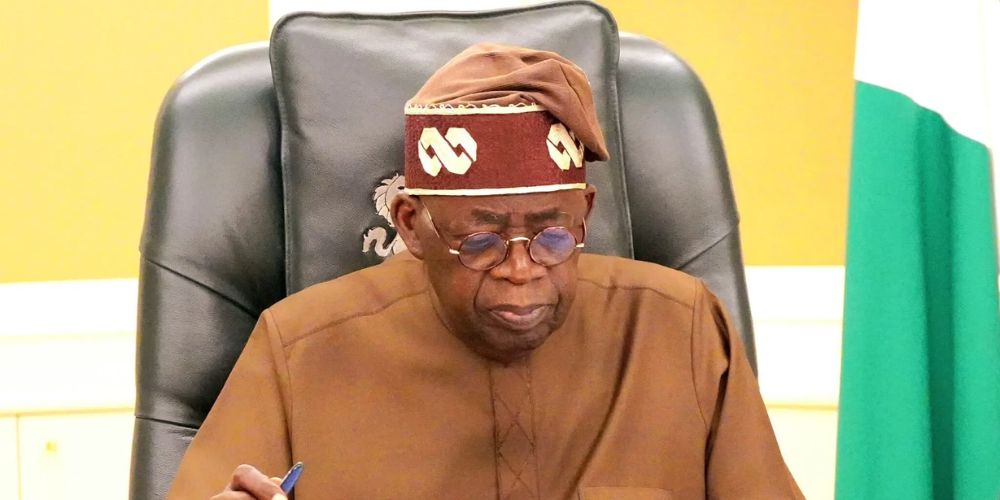
The growing influence of the City Boy Movement in Nigeria’s South East has sparked divisions, with political actors and stakeholders expressing contrasting views on its motives and implications ahead of the 2027 elections.
The Movement, instituted around 2022 by its Grand Patron, Seyi Tinubu, the president’s son, was initially anchored on youth empowerment, political sensitisation, participation, and mobilisation until 2024, when it assumed a more overt political outlook.
With new state structures and leadership appointments ahead of the 2027 general elections, the Movement drew increased attention in January 2026 following the appointment of socialite Obinna Iyiegbu, popularly known as Obi Cubana, as its South East Zonal Director.
Consequently, Iyiegbu and his team have engaged with high-profile personalities in the region, including South East governors. One such meeting was held at the Enugu Government House, where he suggested that the region lacked adequate engagement in political discourse.
“There is a movement called the City Boy Movement. It is not a political party; it is designed primarily to support Mr President’s reelection bid. The unique aspect of this initiative is that it comprises young people—mostly businessmen, not politicians—who are committed to the betterment of Alagbo,” Iyiegbu said.
“Our people lack knowledge, and our work is largely to educate, provide orientation, and ensure that we do not put all our eggs in one basket in the future. Today, we believe in the government of Asiwaju,” Iyiegbu added, remarks that have since triggered backlash from many Southeasterners both at home and abroad.
Advertisement
ADC: ‘Movement Is Political Immorality’
Iyiegbu’s remarks angered many Southeasterners, some of whom described his tone as condescending.
His comments also unsettled the African Democratic Congress (ADC), one of the opposition parties contesting against the ruling All Progressives Congress (APC) in the forthcoming general election.
According to the party’s Chairperson for the membership re-registration and validation exercise in Anambra State, Hon. Ben Nwosu, the Movement is a charade that exploits the nation’s economic hardship as bait for electoral gain.
Speaking to THE WHISTLER in an interview, Nwosu, a former member of the Anambra State House of Assembly, described the Movement as “political immorality,” arguing that most of its promoters are not grounded in politics but are driven by what he termed “cash politics,” often dispensed through palliatives.
Advertisement
“Their approach to what they call support for the president is a celebration of poverty and a mockery of the masses,” he said, citing what he described as a “city boy versus village boy clash” over palliatives during the just-concluded ‘Renewed Hope’ Tour in Owerri, Imo State.
Nwosu maintained that despite the Tinubu administration’s promises, the country continues to grapple with widespread hunger and worsening insecurity. “The basic things promised by this government have not been met,” he said.
“For instance, Tinubu said during the campaign that if he does not provide electricity for Nigerians, then he does not deserve to be reelected—and today I say, Amen! Because another four years with this government and its cabinet would be disastrous,” Nwosu added.
The party chieftain further criticised proponents of the ruling party for galvanising support for the president’s reelection based on ongoing or abandoned federal projects in the region. “Are we fools?” he asked, condemning the Movement for trading political support in exchange for basic rights.
City Boys Making Our Work Easier — NADECO
Nwosu’s views align in part with those of Emejulu Okpalaukwu, an early pro-democracy advocate and member of the National Democratic Coalition (NADECO).
Advertisement
Okpalaukwu argued that while “money-driven politics” is often criticised today, its roots predate the current political dispensation, tracing back to when opulence began to shape Nigeria’s political culture.
In a separate interview with THE WHISTLER, he emphasised the need for merit-based leadership, where competence and willingness—not wealth—determine access to power.
“Nigerians are not ready to work for fundamental change. We may be moving towards it, but the majority still worship money, so people get the leaders they deserve, not the ones they desire,” he said.
“So, forget about what anyone is saying now. Look at the ADC—can someone without money succeed there? No. They will still sell their tickets to the highest bidder.
“How many people, under the ‘Oyi Igbo’ presidency movement in 2023, who became senators or governors under the Labour Party are performing according to its ideology? None. They are merely playing to the gallery. We do not have real politicians in Igboland.”
Okpalaukwu described the nation’s political ecosystem as “ugly,” noting that while the Movement may yield short-term political gains in the region, it does not necessarily translate into systemic reform.
“They will deliver at least 25 per cent of the votes in the region to the ruling party because many people are willing to exchange their votes for money. If you do not buy votes, people may not turn out,” he said.
“Also, the Movement is making our job easier—especially for those of us working based on the realities on the ground—to ensure that the Igbo do not repeat past political mistakes,” he added.
Bargaining Chip
One of such “mistakes,” according to the Movement’s Media Director in Anambra State, Chidiebele Obika, is the lack of active participation by Ndi Igbo in political discourse.
Despite the criticism surrounding the Tinubu-led reelection campaign, Obika told THE WHISTLER that the president has done more for the South East than any recent administration, which forms the basis of the Movement’s sensitisation efforts.
“Our people need to understand the achievements of President Tinubu. He is currently constructing the Enugu-Onitsha Road, as well as the Umunya–Tansian University–Nkwelle-Ezunaka Road, a dual carriageway linking the Onitsha expressway to the Second Niger Bridge.
“There is also a project that, when completed, will shorten travel time from Anambra to Abuja by about three hours—the Umueze Anam–Oro Etiti–Ibaji Federal Highway in Kogi State,” Obika said, countering Nwosu’s argument that road construction should not be a basis for commendation.
Obika maintained that despite limited support from the region in 2023, the president has continued to deliver projects, and his reelection would enable further progress—albeit with expectations from the region.
“One of our demands is the creation of a sixth state for the South East. We are the only geopolitical zone with just five states.
“With a sixth state, we will have increased representation and a stronger voice to protect our interests. If the president achieves this, it will be a major win for us.
“Additionally, most of our people are business-oriented, with imports from countries such as China, Taiwan, and India often registered under Igbo names.
“We need to improve the ease of doing business in Nigeria, particularly by addressing administrative bottlenecks and import tariffs affecting businesspeople.
“Thirdly, there is a need for more federal road construction. For instance, the Oba–Akokwa Road in Imo State should be upgraded to a dual carriageway due to heavy traffic. This would connect to the Uga Road and extend to Amawbia, boosting the local economy.
Obika also called for the expedited completion of the Anambra–Ibaji Federal Road, which would shorten travel time between Anambra and Abuja, and urged the appointment of more Southeasterners into key government positions.
Background
The City Boy Movement, with Seyi Tinubu as its Grand Patron, operates a national structure led by Director-General Tosin Shoga and is driven by the slogan “Empowering the Youths.”
The Movement focuses on youth mobilisation, political sensitisation, and engagement with the president’s policies and programmes.
Between 2023 and 2024, it utilised its Instagram platform to highlight presidential activities and promote youth-focused initiatives, primarily in Lagos.
By 2025, the Movement had expanded into several states, including Imo, Benue, Ondo, Plateau, Kwara, and Edo.
During one such engagement in Edo, Governor Monday Okpebelo pledged 3.5 million votes to the president in 2027.
In Edo, the Movement also empowered youths with grants ranging from N100,000 to N150,000 after an application process, with beneficiaries largely comprising artisans and traders.
By January 2026, it had established structures across all geopolitical zones, with zonal and state coordinators tasked with grassroots mobilisation.
By February, the Movement introduced a national female leadership structure.
The Executive Commissioner for Corporate Services at the Federal Competition and Consumer Protection Commission (FCCPC) was appointed as the Movement’s National Woman Leader.
Additionally, Sophie Uzodimma, daughter of Imo State Governor Hope Uzodimma, was named Deputy Woman Leader.
In states such as Anambra, Adaora Soludo, daughter of the state governor, was appointed as the Movement’s State Woman Leader.