
Customs Deploys AI To Boost Revenue
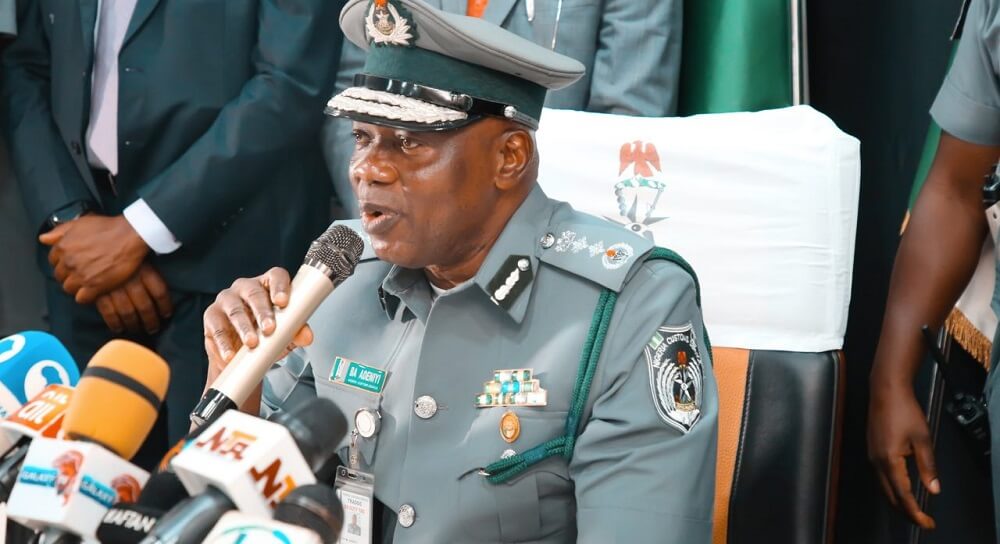
The Comptroller-General of the Nigeria Customs Service, Adewale Adeniyi, has revealed plans to deploy artificial intelligence (AI) to strengthen revenue generation, improve remittance processes, and reduce audit queries.
He disclosed at the opening of a three-day training on AI-powered revenue generation, remittance, and reconciliation in Abuja.
Adeniyi said the initiative reflects a strategic shift in the Service’s operations as it moves from a reactive system driven by legislative summons to a more proactive and collaborative framework.
He explained that the new approach strengthens engagement with the National Assembly, focusing on partnership, transparency, and shared responsibility in fiscal management.
“We all know that in a presidential system of government, the oversight power of the executive lies squarely with the parliament, and this is exercised through committees such as the Public Accounts Committee in both chambers. What we have been used to over the years are summons asking us to explain our revenue, our processes, and our operations,” he said.
He added that whether through summons or invitations, the goal remains unchanged ensuring transparency in public accounts and enforcing fiscal discipline.
Advertisement
“These summons are binding under the Constitution, and we have no option but to comply. But today, we are deliberately flipping that narrative. It is now the Customs that has invited the distinguished committees to engage with us,” he said.
Adeniyi noted that technology has long supported Customs operations, but said artificial intelligence would significantly enhance efficiency, accuracy, and compliance systems.
He explained that AI would improve trade classification, risk management, and scanning processes used to detect anomalies in imported goods.
According to him, these innovations are essential in addressing revenue leakages and improving operational transparency.
He also highlighted that revenue generation and reconciliation involve a wide chain of stakeholders, including banks, auditors, and key fiscal institutions such as the Revenue Mobilization Allocation and Fiscal Commission and the Federation Account Allocation Committee.
Advertisement
“These processes involve a long value chain, and while we are taking this leap forward, we encourage other stakeholders to adopt similar innovations so that collectively we can maximise the benefits of AI,” he added.
In his remarks, Chairman of the House of Representatives Public Accounts Committee, Bamidele Salam, said the engagement reflects improved collaboration between lawmakers and revenue-generating agencies.
He said parliamentary oversight is not intended to be punitive but to strengthen governance and ensure compliance with established laws.
Salam noted that reforms within Customs have contributed to a decline in audit-related infractions in recent years.
He added that the growing national budget requires stronger revenue performance from agencies like Customs to support fiscal sustainability.
Earlier, Deputy Comptroller-General of Customs in charge of Finance, Administration and Technical Services, Kikelomo Adeola, described the training as a major milestone in the Service’s reform agenda.
Advertisement
She said artificial intelligence presents significant opportunities to improve transparency, efficiency, and accountability in public revenue management.
A representative of the Revenue Mobilization Allocation and Fiscal Commission, Ibrahim Mambo, commended the initiative, describing it as timely and essential for strengthening fiscal governance.
The Customs Service said the initiative comes amid increasing pressure on revenue-generating agencies to boost collections and block leakages as Nigeria grapples with rising fiscal demands.
The three-day training is expected to strengthen institutional capacity and deepen collaboration among stakeholders across Nigeria’s revenue ecosystem as efforts to improve fiscal discipline intensify.