
Trap After Battle: ISWAP’s Insurgency Against Nigeria’s Military Commanders
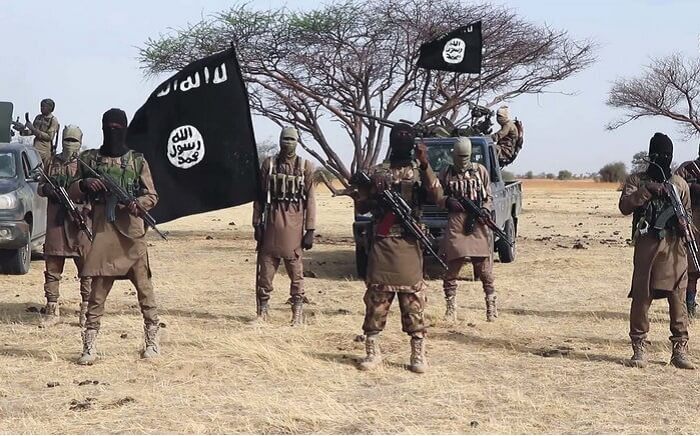
When Colonel I.A. Muhammad climbed into his vehicle late Sunday night to personally assess the aftermath of a repelled attack in Monguno, he was doing what commanding officers are trained to do. Lead from the front, account for his men, and secure the ground.
He never made it back.
His vehicle struck an Improvised Explosive Device. The colonel and six of his soldiers died at the scene, killed not in the heat of battle, but in the deliberate, calculated silence that followed it.
A Two-Stage Kill
Troops of Sector 3, Joint Task Force (North East), had come under an insurgent infiltration attempt at Charlie 13 location in Monguno, Borno State, in the late hours of April 12. The soldiers engaged the attackers in a fierce gun battle, eventually forcing them to retreat and securing the perimeter.
But the withdrawal was a ruse.
Advertisement
As the dust settled and the Commanding Officer moved forward to assess the situation, his convoy rolled over a pre-planted IED, a weapon that had been quietly waiting in the earth long before the first shot was fired.
Security analyst and counter-insurgency expert Mubashir Adamu told THE WHISTLER the pattern is unmistakable.
“What we are seeing is a two-stage ambush strategy. The initial attack is designed to draw troops into a response, while the IED is pre-positioned along the most likely route of advance. The intent is specifically to eliminate leadership,” he said.
“When you lose a CO at that level, you don’t just lose a man but you lose institutional knowledge, unit cohesion, and operational momentum.
“ISWAP understands this. They are deliberately targeting commanders to create confusion and slow down military operations.”
Advertisement
ISWAP which broke away from Boko Haram in 2016 following ideological disputes over the killing of civilians who has over the past decade transformed from a rag-tag splinter faction into arguably the most sophisticated jihadist organisation operating in Sub-Saharan Africa.
Unlike its predecessor under Abubakar Shekau, which relied heavily on suicide bombings and mass civilian targeting, ISWAP has pursued a calculated dual strategy: cultivating local populations through taxation and social services, while deploying increasingly precise military tactics against security forces.
The group controls significant swathes of territory across the Lake Chad Basin, with strongholds in the Sambisa Forest, the Tumbus islands on Lake Chad, and the Bindul-Jilli axis in Gubio Local Government Area of Borno State at the same corridor that has been at the centre of military airstrikes in recent days.
By most estimates, ISWAP commands between 3,500 and 5,000 fighters, with a fluid logistics network spanning Borno, Yobe, and parts of Niger and Chad.
The IED as a Weapon of Strategic Attrition
The use of IEDs is not new in the Northeast theatre. Since 2011, improvised explosive devices have claimed more Nigerian military lives than any other single weapon system deployed by insurgents.
Advertisement
In January 2026 alone, an IED attack along the Bindul-Gubio axis killed eight soldiers moving from Gubio towards Damasak, an incident the military cited as one of the triggers for the April 11 airstrike on Jilli market.
A 2023 report by the Armed Conflict Location and Event Data Project (ACLED) documented over 1,200 IED incidents in the Lake Chad Basin between 2020 and 2023, with Nigerian security forces accounting for the majority of fatalities. The Northeast remains the most IED-dense theatre in West Africa.
What has changed, analysts said, is the sophistication of deployment.
“ISWAP has moved from opportunistic IED placement to deliberate command-targeting,” Adamu explained.
“They study movement patterns, they know post-engagement procedures, and they exploit the predictable human instinct of a commander to go forward after a fight. This is not random. This is studied.”
A Week of Blood
April 12 deaths did not occur in isolation. The Monguno ambush is the latest in a concentrated wave of ISWAP activity that has shaken the Northeast over the past week alone.
On April 9, coordinated attacks were recorded simultaneously in Ngamdu and Benisheik, that led to the death of Brigadier general Braimoh.
The two towns along the critical Maiduguri-Damaturu highway with both strikes reportedly supported by the same ISWAP logistics network based in Jilli.
On April 11, the Air Component of Operation HADIN KAI responded with precision airstrikes on the Jilli axis, destroying what it described as a major terrorist logistics base and killing scores of insurgents.
A teenage ISWAP logistics courier, 15-year-old Tijjani, was subsequently arrested in Ngamdu carrying N850,000 intended for fighters in the field. He confessed to participating in the Benisheik attack.
The same week, public outrage erupted over civilian casualties from the Jilli airstrike, with casualty figures ranging from 40 to over 200, an incident that has drawn condemnation from Amnesty International, former Vice-President Atiku Abubakar, and a growing chorus of human rights groups.
For the military, the week crystallises the impossible mathematics of counterinsurgency: strike hard enough to degrade ISWAP, but not so indiscriminately as to push civilians into the arms of the very group you are fighting.
The Human Cost of 16 Years
The numbers tell a story of extraordinary endurance and extraordinary loss.
Since Boko Haram’s insurgency began in 2009, the conflict has claimed an estimated 35,000 to 40,000 lives, according to the United Nations. Over 2 million people remain internally displaced across the Northeast, making it one of the world’s most protracted displacement crises.
The Nigerian military has lost thousands of personnel to the conflict, with IEDs, ambushes, and coordinated assaults accounting for the bulk of battlefield deaths.
In 2024 and 2025 alone, multiple senior officers were killed in the theatre, including several ambushes along the Damasak and Gubio corridors.
Despite sustained military pressure, including airstrikes, ground offensives under Operation HADIN KAI, and multinational cooperation through the Multinational Joint Task Force, ISWAP has demonstrated a remarkable capacity to absorb punishment and reconstitute.
Defence and security consultant Musa Nura said the Monguno incident exposes a structural vulnerability in how the military conducts post-engagement operations, one that costs lives and cannot be addressed through firepower alone.
“The problem is doctrine. When a fight ends, the instinct is to push forward and assess. But ISWAP has learned to weaponise that instinct. Every time a CO moves to the front after contact, he becomes the target the enemy was waiting for,” Nura said.
He called for an immediate overhaul of battle damage assessment procedures, insisting that no senior officer should advance into post-contact terrain without a full IED sweep.
“Route clearance must be mandatory and non-negotiable after any engagement. You do not send a colonel forward on an unsecured road. Full stop. That is a doctrinal failure, not a personal one,” he said.
Nura also warned that the military’s current reliance on air power, while tactically effective, was strategically insufficient without a parallel investment in ground-level human intelligence.
“You cannot bomb your way out of this insurgency. ISWAP survives because it is embedded in communities that either support it out of ideology or comply out of fear. The military needs a robust human intelligence architecture for people on the ground, trusted community sources, real-time information, not just ISR drones and airstrikes,” he said.
Adamu echoed the call for reform, adding that the institutionalisation of civilian harm mitigation mechanisms must go hand in hand with military reform.
“Every civilian killed in an airstrike is a recruitment poster for ISWAP. Every commander lost to an IED is a morale blow for the troops. Both problems have the same solution but better intelligence, better doctrine, and better accountability,” he said.
The Men Who Fell
Lt. Col. Sani Uba, Media Information Officer of Operation HADIN KAI, confirmed the deaths on Monday morning, describing Colonel Muhammad as a symbol of courage, sacrifice, and unwavering commitment to duty.
The identities of the six soldiers killed alongside him had not been officially released as of press time. Their families are yet to be notified through official channels.
They were, as the military’s statement put it, men who wore the nation’s uniform with pride. Men who stood their ground when terror came. Men who, even in death, left the field secured.
Their country is still at war. And it is running out of easy answers.