
OPINION: Hope Uzodimma’s Senate Bid And The Constitution
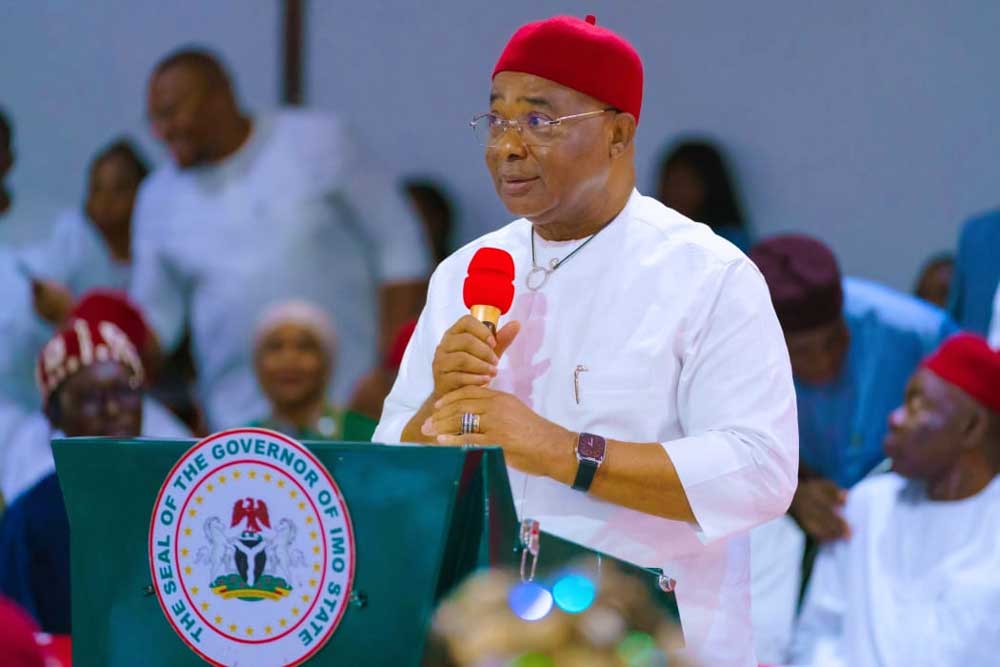
Nigeria rewards politicians who read the Constitution the way grandmasters read a chess board. Governor Hope Uzodinma picking up the APC ticket for the February 2027 Senate race, while his gubernatorial tenure runs until January 2028, looks to the crowd like opportunism. To the lawyer, it looks like timing.
This is not a loophole. It is a deliberate use of the space the Constitution leaves between running for office and holding office.
- The separation that matters
Uzodinma’s move rests on one clean distinction: contesting is not occupying.
The Constitution sets qualification to contest in one place, and it deals with vacation of seat in another. You can win an election in February, remain Governor until you choose to resign, and only then take your Senate oath. That interval is not prohibited; it is anticipated.
- What the text actually says
Advertisement
Section 65 gives the entry requirements for the Senate: Nigerian citizenship, 35 years of age, education to at least School Certificate level, and sponsorship by a political party. Nothing more is demanded to be on the ballot.
Section 66 lists disqualifications: dual citizenship issues, unsound mind, recent convictions for dishonesty, undischarged bankruptcy, secret society membership, indictment for fraud, forged certificates, and crucially, being a person employed in the public service who has not resigned 30 days before the election.
A sitting Governor is not caught by Section 66(1)(f). The Constitution defines “civil service of the Federation” and “civil service of a State” as service in a civil capacity as staff of ministries, departments, and offices, while “public service” is defined to include clerks, court staff, commission staff, local government staff, and employees of statutory corporations. An elected Governor is a political office holder, not staff. The 30-day resignation rule simply does not apply to him.
Section 68(1)(d) then handles the other end of the problem. It provides that a Senator shall vacate his seat if he becomes President, Vice-President, Governor, Deputy Governor, Minister, Commissioner, or Special Adviser. Read properly, it works in reverse as well: you cannot hold both at the same time, so you must choose. It does not stop you from contesting.
- The Electoral Act 2026 does not move the goalposts
Advertisement
The new Act, signed on 18 February 2026, tightens electronic transmission and funding timelines for 2027, but it does not rewrite constitutional qualifications. Section 30 of the Act bars double nomination for two different offices in the same election cycle. Uzodinma is seeking one office, the Senate. The earlier controversies about appointees resigning before primaries were resolved in favour of constitutional supremacy, and the 2026 amendments focus on process, not on inventing new disqualifications.
- The jurisprudence is settled
The Supreme Court has been consistent: you cannot add disqualifications that the Constitution did not write. That principle underpinned Attorney-General v Atiku Abubakar (2007), where the Court held that a President cannot declare a Vice-President’s seat vacant outside the express constitutional grounds. The same logic protects Uzodinma here.
The often cited lines from Onyerum v INEC and Panti v Shinkafi simply restate it: courts do not manufacture eligibility criteria, and elected executives are not civil servants for the purpose of Section 66(1)(f). Once the text is clear, moral discomfort is not a ground for disqualification.
- The 2027 calendar, step by step
Uzodinma’s path is not mysterious. It is sequential:
Advertisement
February 2027: Wins Senate election while still Governor. No constitutional breach, because winning is not sitting.
May/June 2027: Tenders resignation as Governor of Imo State, ahead of Senate inauguration.
June 2027: Deputy Governor is sworn in to complete the term to January 2028.
June 2027: Uzodinma takes oath as Senator. Section 68(1)(d) is satisfied because he no longer holds executive office.
Resigning a few months early costs him little in Imo and buys him perfect compliance in Abuja.
- Verdict: law over optics
Critics will call it unseemly. Unseemly is not unlawful. The Constitution does not punish foresight, it rewards precision.
Uzodinma has taken the document at its word: qualify under Section 65, avoid the express disqualifications in Section 66, respect the anti-dual-office rule in Section 68, and time your resignation to match. That is not contortion. That is craftsmanship.
In Nigerian politics, where many gamble on sentiment, he has gambled on law . And on this point, the law is on his side.
-Ude, a legal practitioner, author, and public commentator, can be reached via charlesude2014@gmail.com